Python Programming Fundamentals
Introduction to Python
Meet Python
Python is a programming language known for its simplicity and readability. Think of it less like a cryptic code and more like a set of structured English instructions. This design makes it one of the easiest languages for beginners to learn, but don't let its simplicity fool you. It's also incredibly powerful.
One of Python's key features is its versatility. Programmers use it for a huge range of tasks. It's a driving force behind web applications, data analysis, artificial intelligence, scientific computing, and even game development. Companies like Google, Netflix, and Spotify rely on Python to power parts of their services. Its vast collection of pre-written code, called libraries, makes it easy to tackle complex problems without starting from scratch.
Setting Up Your Workspace
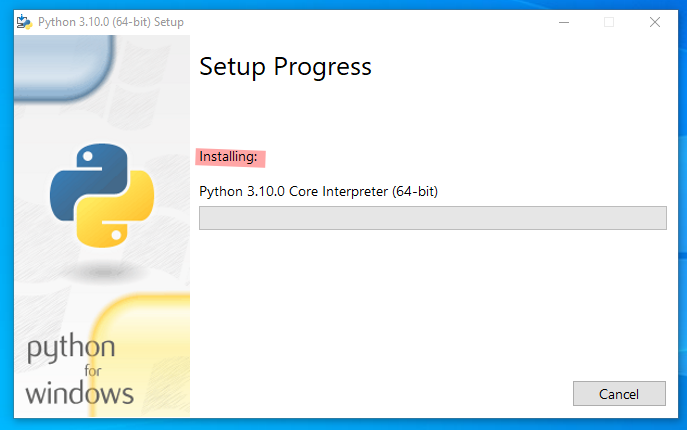
Before you can start writing Python, you need to install it on your computer. The official Python website is the best place to get the installer. It’s a straightforward process, much like installing any other software.
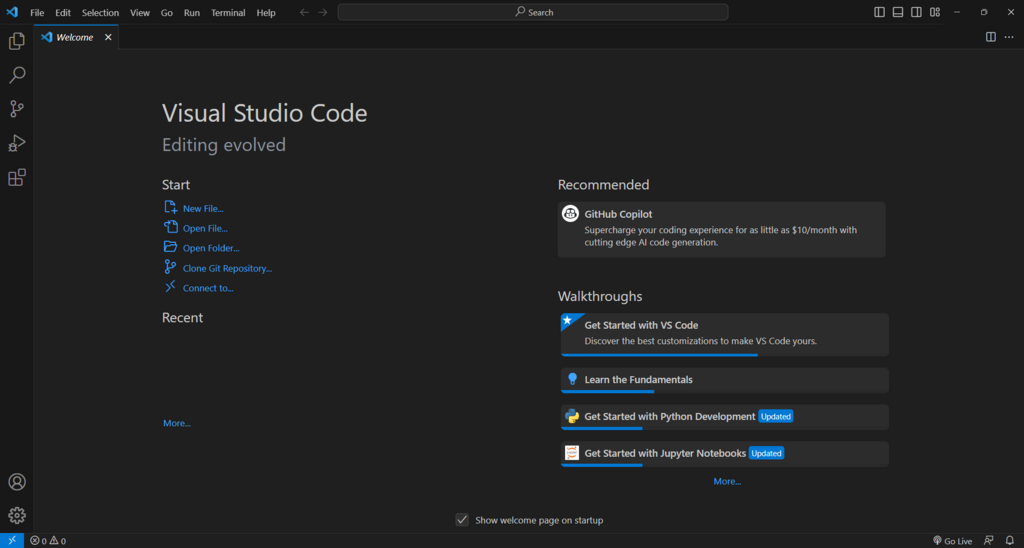
Once Python is installed, you'll need a place to write your code. While you could use a simple text editor, most developers use an Integrated Development Environment, or IDE. An IDE is a software application that combines a text editor with other helpful tools, like a debugger for finding errors and a terminal for running your code.
Think of an IDE as a specialized workshop for a programmer. It has all the tools you need, organized and ready to go.
There are many great IDEs, but two are especially popular for Python: Visual Studio Code (VS Code) and PyCharm. Both are excellent choices for beginners. They offer features like syntax highlighting, which colors your code to make it easier to read, and code completion, which suggests code as you type.
Your First Program
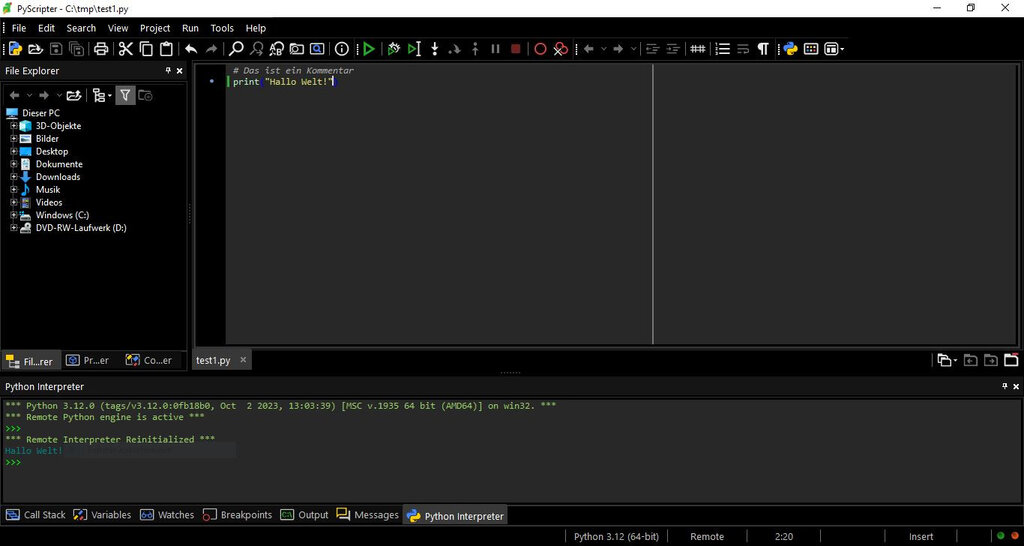
It's a tradition in programming to make your first program display the text "Hello, World!". This simple task confirms that your setup is working correctly and gives you a first taste of the language's syntax. In Python, this is incredibly simple. It takes just one line of code.
print("Hello, World!")
Let's break that down:
print()is a function, a pre-defined command that tells the computer to perform an action. In this case, the action is to display something on the screen."Hello, World!"is the argument. It's the information we give to the function. We're tellingprint()what to display. The quotation marks indicate that this is a piece of text, also known as a string.
To run this program, you'll save the code in a file (for example, hello.py), and then execute it using the terminal in your IDE or your computer's command prompt. When you do, you'll see the words Hello, World! printed out. Congratulations, you've just written and run your first Python program!
According to the text, what is a key characteristic of the Python programming language?
Which line of code correctly prints the text "Hello, World!" to the screen in Python?
That's your first step into the world of Python. You've learned what it is, how to set it up, and how to write a basic command.