Python Programming Fundamentals
Introduction to Python
What Is Python?
Python is a powerful and popular programming language. It’s known for its clear, readable syntax, which looks a lot like plain English. This design choice makes it one of the easiest languages for beginners to learn, but it's also robust enough for experts to build complex applications.
Think of it as a versatile tool. Whether you're building websites, analyzing data, automating tasks, or diving into artificial intelligence, Python has the features and community support to get the job done.
A Brief History
Python was created in the late 1980s by Guido van Rossum in the Netherlands. He wanted to design a language that was both powerful and easy to read. As a hobby project, he started working on a successor to a language called ABC, aiming to fix its frustrations.
The name doesn't come from the snake. Van Rossum was a big fan of the British comedy troupe Monty Python's Flying Circus, and he wanted a name that was short, unique, and a little mysterious. Python was officially released in 1991 and has been maintained and improved by a global community of developers ever since.
The Zen of Python
Python's core philosophy is captured in a set of 19 guiding principles known as "The Zen of Python." These principles emphasize simplicity, readability, and beauty in code. They are the reason Python code is often so clean and understandable.
Some key ideas from the Zen of Python include: • Beautiful is better than ugly. • Simple is better than complex. • Readability counts.
This philosophy means that writing Python feels less like giving cryptic instructions to a machine and more like writing out a clear, logical set of steps. It uses indentation with whitespace, like tabs or spaces, to define code blocks instead of relying on braces or keywords. This enforces a visually clean and consistent layout, making it easier for anyone to read and understand the code.
How It Works
Two key features make Python particularly friendly for developers: dynamic typing and automatic memory management.
Dynamic typing means you don’t have to declare a variable's type before you use it. You can create a variable x and set it to the number 5. Later, you can assign the text "Hello" to the same variable. Python figures out the type on the fly, which makes the code more concise and flexible.
Automatic memory management, or garbage collection, means Python handles allocating and deallocating memory for you. You can create objects and variables without worrying about cleaning them up later. Python automatically reclaims memory that is no longer in use, preventing common bugs and letting you focus on solving your problem.
Python is also a multi-paradigm language. This is a fancy way of saying it supports different programming styles. You can write simple, step-by-step instructions (procedural programming), organize your code into reusable blueprints called objects (object-oriented programming), or treat computation like the evaluation of mathematical functions (functional programming). This flexibility allows developers to pick the best approach for their specific task.
What Is Python Used For?
Python’s versatility and extensive collection of pre-built code, called libraries, have made it a top choice across many fields. Its applications are everywhere.
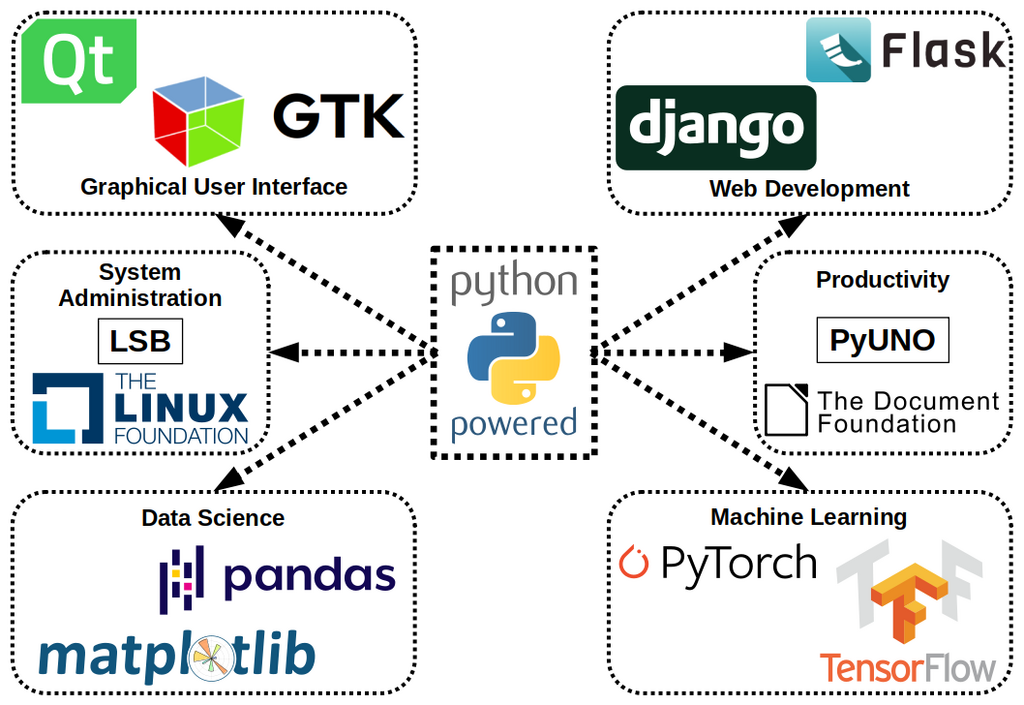
It's a dominant force in:
- Data Science and Machine Learning: Libraries like pandas, NumPy, and TensorFlow make Python the go-to language for analyzing data, building machine learning models, and conducting scientific research.
- Web Development: Frameworks such as Django and Flask allow developers to build powerful and scalable websites and web applications quickly.
- Automation and Scripting: Python is perfect for writing small scripts to automate repetitive tasks, like organizing files, sending emails, or scraping data from websites.
- Software Development and Testing: It's also used to build desktop applications, games, and frameworks for testing other software.
What does it mean that Python is a 'dynamically typed' language?
The Python programming language was named after...