Python Language Fundamentals
Introduction to Python
What is Python?
Python is a programming language known for its clear, readable syntax. It was created in the late 1980s by Guido van Rossum, who wanted a language that was easy to write and understand. Think of it as a set of instructions a computer can follow, but written in a way that’s closer to plain English than many other languages.
One of Python's biggest strengths is its versatility. It’s used for all sorts of tasks, from building websites and automating repetitive jobs to analyzing data and powering machine learning. Companies like Google, Netflix, and NASA all rely on Python for various parts of their operations. Its simple structure makes it a popular first language for beginners, but it's powerful enough for experts to build complex systems.
Getting Set Up
Before you can write Python code, you need to install it on your computer. You can download the latest version from the official website, python.org. The installation process is straightforward for Windows, macOS, and Linux.
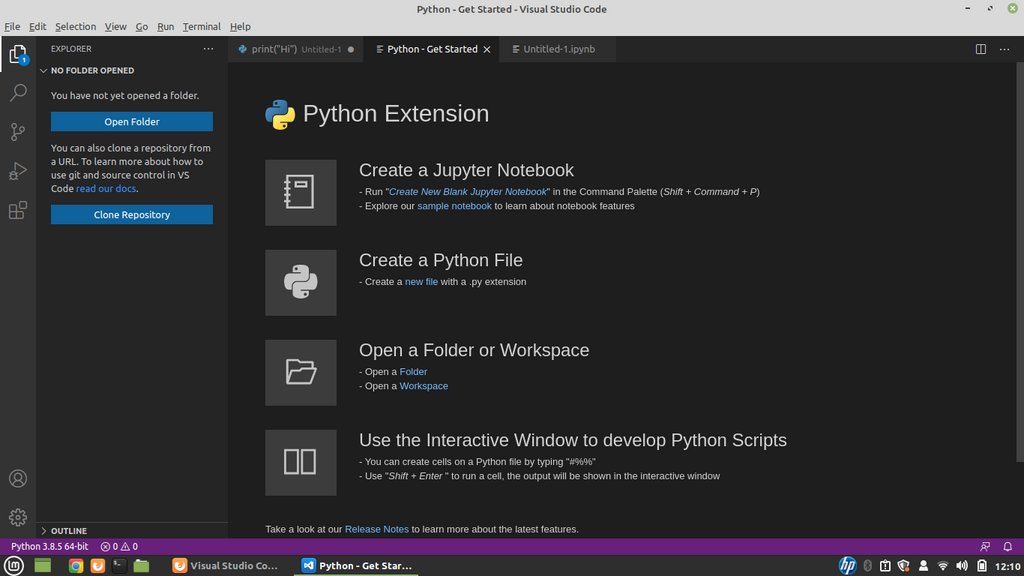
Once Python is installed, you need a place to write your code. While you could use a simple text editor, most developers use an Integrated Development Environment, or IDE. An IDE is like a specialized workshop for programmers. It combines a text editor with other helpful tools, like a debugger for finding errors and a way to run your code easily.
Think of an IDE as a chef's kitchen. You could cook with just a campfire and a pot, but a full kitchen with counters, a stove, and utensils makes the process much smoother.
Two popular IDEs for Python are Visual Studio Code (VS Code) and PyCharm. Both are free and offer features like syntax highlighting, which colors your code to make it more readable, and code completion, which suggests how to finish what you're typing. For now, just pick one and install it. You can always switch later.
Your First Program
It's a tradition in programming to start with a simple program that just displays "Hello, World!" on the screen. It's a quick way to confirm that your setup is working correctly.
In Python, this is incredibly simple. Open your IDE, create a new file, and save it as hello.py. The .py extension tells the computer that this is a Python file. Then, type the following line of code:
print("Hello, World!")
This code uses the built-in print() function to display text. The text you want to display, which is called a string, goes inside the parentheses and is enclosed in quotation marks.
To run the program, you can usually click a "run" button in your IDE. Alternatively, you can open your computer's command line or terminal, navigate to the folder where you saved hello.py, and type python hello.py. You should see this output:
Hello, World!
That's it! You've just written and executed your first Python program.
Who is the original creator of the Python programming language?
What is the standard file extension for a Python program file?