Python Fundamentals Explained
Introduction to Programming
What Is Programming?
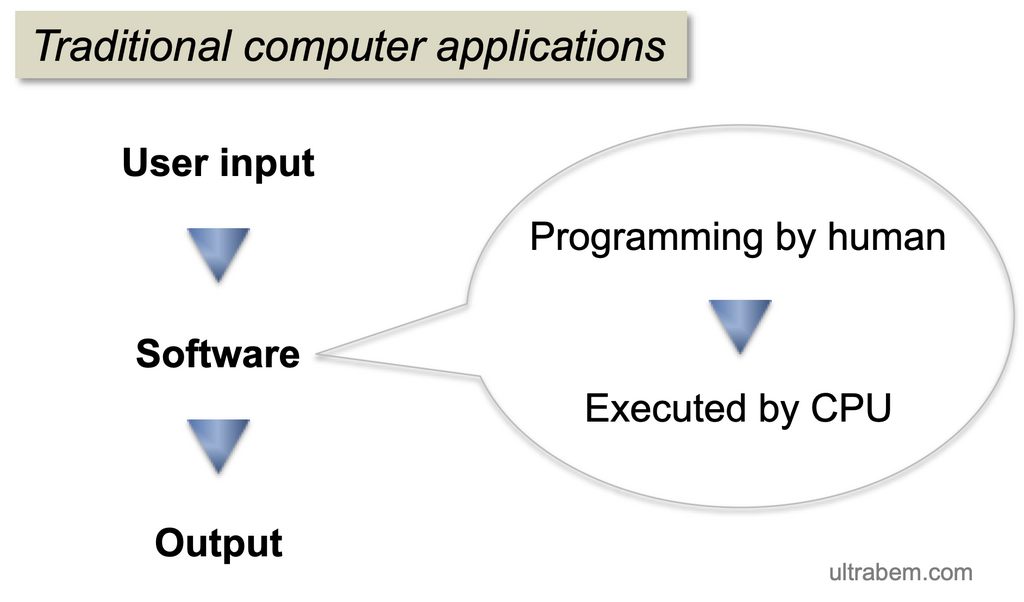
At its core, programming is the act of giving instructions to a computer. Think of it like writing a recipe. You list ingredients and provide a sequence of steps to follow. If the steps are clear and logical, you end up with a delicious cake. If a step is missing or out of order, you get a mess.
A computer is like a very obedient, but extremely literal-minded, chef. It will do exactly what you tell it to do, nothing more and nothing less. It can't guess your intentions or fill in the blanks. Programming is the skill of writing those instructions perfectly.
Programming
noun
The process of creating a set of instructions that tell a computer how to perform a task.
These instructions, collectively called a program or software, are everywhere. They power your smartphone, your car's navigation system, the video games you play, and the apps you use to order food. In medicine, programs analyze medical images to help doctors detect diseases earlier. In science, they simulate complex climate models. Programming has become a fundamental tool for solving problems and creating new possibilities in nearly every field.
How Computers Process Instructions
So how does a computer actually understand our instructions? It's not as simple as typing “show me a picture of a cat.” At the most basic level, computers only understand electricity being on or off. We represent these two states with the numbers 1 and 0. This system is called binary, and it's the native language of computer hardware.
Every instruction, no matter how complex, must ultimately be broken down into a long sequence of ones and zeros called machine code. Trying to write instructions directly in machine code would be incredibly tedious and difficult for a human. It would be like trying to build a car by arranging individual atoms.
A computer's native language is binary (1s and 0s), which is difficult for humans to read and write.
This is where programming languages come in. They act as a bridge, allowing us to write instructions in a way that is much closer to human language. A special program, called a compiler or an interpreter, then translates our human-readable code into the binary machine code that the computer can execute.
This translation process allows us to work at a higher level of abstraction. We can focus on the logic of our problem without worrying about the specifics of the computer's hardware.
The Purpose of a Language
There are thousands of different programming languages, each with its own strengths and weaknesses. Some, like C++, give the programmer a lot of control over the computer's hardware. Others, like Python, are designed to be easier to read and write, allowing for faster development.
Despite their differences, they all share the same fundamental purpose: to provide a structured way for humans to communicate their intentions to a machine. They provide the vocabulary (keywords like if, for, while) and the grammar (syntax rules) we need to write clear, unambiguous instructions that a computer can follow.
Now that we've covered the basics of what programming is, let's test your understanding.
What is the fundamental purpose of programming?
The text compares a computer to a "very obedient, but extremely literal-minded, chef." What does this analogy illustrate?
Understanding these core ideas is the first step on your journey. Next, you'll start to see how these concepts are applied in a real programming language.