Python Fundamentals
Introduction to Python
What is Python?
Python is a programming language known for its readability. Its syntax is clean and straightforward, which makes it one of the most beginner-friendly languages to learn. Think of it less like a dense legal document and more like a set of clear, logical instructions.
It was created in the late 1980s by Guido van Rossum, who wanted a language that was both powerful and easy to read. This focus on simplicity and developer-friendliness has helped it grow into one of the world's most popular programming languages.
Python’s design philosophy emphasizes code readability with its notable use of significant indentation.
Besides its simple syntax, Python has a few other key features:
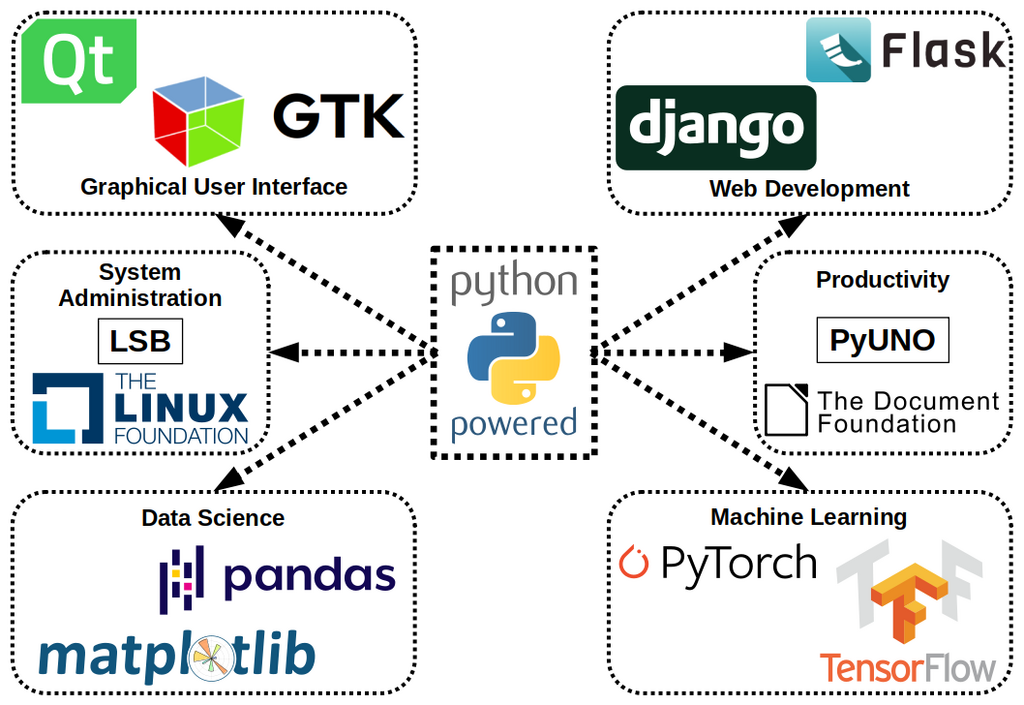
- Versatile: You can use Python for almost anything, from building websites and automating repetitive tasks to conducting complex data analysis and building machine learning models.
- Large Community: A massive global community supports Python. This means if you ever get stuck, an answer is likely just a quick search away.
- Extensive Libraries: Python comes with a huge standard library, which is a collection of pre-written code you can use. This saves you from having to write everything from scratch.
Setting Up Your Workspace
Before you can start writing Python code, you need to install the Python interpreter. The interpreter is a program that reads your Python code and carries out its instructions. It's the engine that makes your scripts run.
To get it, head over to the official Python website, python.org, and download the latest version for your operating system. The installation is straightforward; just follow the on-screen instructions. A crucial step during installation on Windows is to check the box that says "Add Python to PATH." This lets you run Python from any directory on your computer.
Once installed, you can verify it's working by opening your computer's command line (Terminal on Mac/Linux, Command Prompt or PowerShell on Windows) and typing:
python --version
If it's installed correctly, you'll see the Python version number printed back to you.
While you can write Python code in a simple text editor, most developers use an Integrated Development Environment, or IDE. An IDE is a software application that combines a code editor, a debugger (for finding errors), and other helpful tools in one place. It makes the process of writing and testing code much smoother.
For beginners, some great options are:
- Visual Studio Code (VS Code): A popular, free, and highly extensible editor.
- PyCharm Community Edition: A powerful IDE specifically designed for Python.
- Thonny: A simple IDE designed for learning and teaching programming.
Pick one, download it, and install it. For VS Code, you'll also want to install the official Python extension from its marketplace to get the best experience.
Your First Python Program
It's a tradition for new programmers to start by making the computer say "Hello, World!". Let's do that now.
Open your IDE or a plain text editor and create a new file. Type the following line of code into the file:
print("Hello, World!")
This line uses the built-in print() function to display the text inside the parentheses on the screen. The text itself, "Hello, World!", is called a string, which is just a sequence of characters enclosed in quotes.
Now, save the file. Be sure to give it a name that ends with the .py extension, which tells your computer that it's a Python file. For example, you could name it hello.py.
To run your program, go back to your command line. Navigate to the directory where you saved your file. Once you're in the correct folder, type the following command and press Enter:
python hello.py
If everything is set up correctly, you should see the following output on your screen:
Hello, World!
Congratulations! You've just written and executed your first Python program. This simple act of printing text is a fundamental building block for creating much more complex and interesting applications.
Ready to check your understanding?
What is a primary design philosophy of the Python programming language?
Which command would you use in your terminal to check if Python is installed correctly and to see its version number?
You now have a working Python environment and have run your first script. You're ready to start exploring the core components of the language.