Python for High School Beginners
Introduction to Python
What Is Python?
Python is a programming language, which is a way to give instructions to a computer. Think of it like a recipe. You write down the steps, and the computer follows them to create something, like a website, a game, or a tool for analyzing data.
It was created in the late 1980s by a programmer named Guido van Rossum. He named it after the British comedy troupe Monty Python, not the snake. A key goal for Python was to be easy to read and write, even for people new to programming. Its syntax, or grammar rules, is clean and looks a lot like plain English.
This focus on simplicity means you can often write programs in Python with fewer lines of code than you would need in other languages like Java or C++.
What's It Used For?
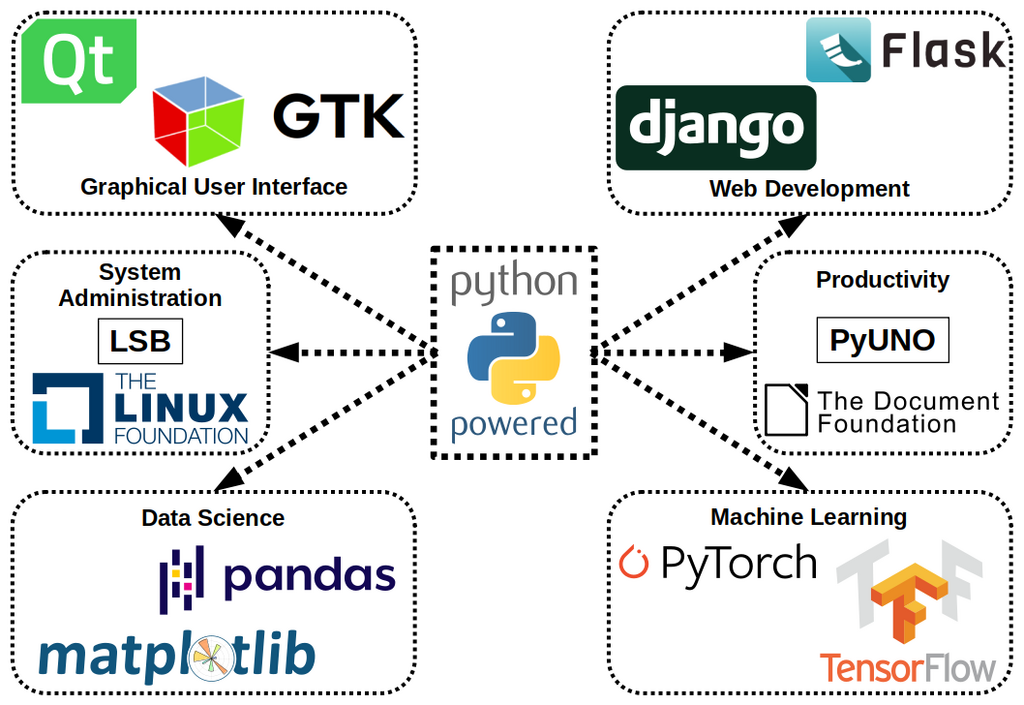
Python is incredibly versatile. It's not just for one specific task; it's more like a multi-tool used across many different industries. Some of the most common applications include:
- Web Development: Building the parts of a website that users don't see, like databases and server logic. Frameworks like Django and Flask make this process much faster.
- Data Science and Machine Learning: Analyzing huge amounts of data, creating visualizations, and building artificial intelligence models that can make predictions.
- Automation and Scripting: Writing small programs (scripts) to automate repetitive tasks, like renaming thousands of files or filling out online forms.
- Software Development: Creating all sorts of applications, from video games to productivity tools.
Getting Set Up
To start writing Python, you need two things: the Python interpreter itself and a place to write your code. The interpreter is what reads your code and translates it into instructions the computer can understand.
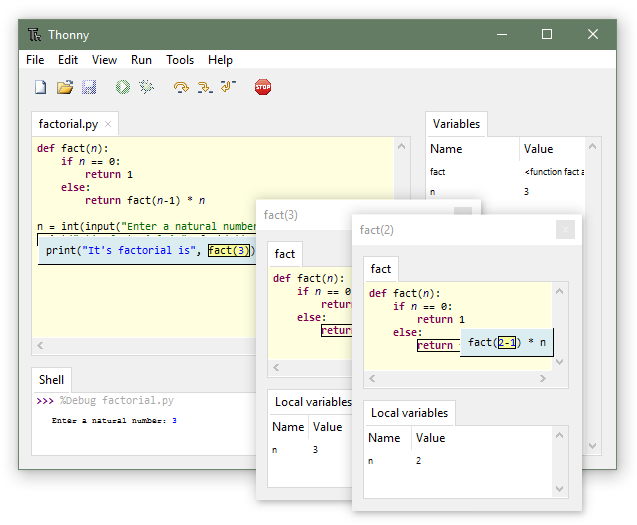
For writing code, we use a text editor or an Integrated Development Environment (IDE). An IDE is like a specialized workshop for programmers. It bundles a text editor with other helpful tools, like a way to run your code easily and features that help you find mistakes.
For beginners, a simple IDE called Thonny is a great place to start. It's designed for learning and comes with Python already included, so you only need one download.
To get it, just search for "Thonny IDE" online and follow the installation instructions for your operating system (Windows, Mac, or Linux) on its official website.
Your First Program
It's a tradition for new programmers to start by making the computer say "Hello, World!". Let's do that now.
Open Thonny. You'll see a main window where you can type. Enter this single line of code:
print("Hello, World!")
This code uses a built-in Python command called print(). Whatever you put inside the parentheses and quotation marks will be displayed as output.
Now, run the program. You can usually do this by clicking a green "Run" button or by pressing F5. Thonny will ask you to save the file first. You can name it anything you like, such as hello.py. The .py extension is important because it tells the computer this is a Python file.
After you save and run it, you should see the text Hello, World! appear in a separate panel in Thonny called the "Shell" or "Console". You've just written and executed your first computer program.
Time to check your understanding of these first steps.
What is the primary role of the Python interpreter?
According to the text, why is Python often considered a good language for beginners?