Python for Generative AI
Introduction to Generative AI
The Creative Machine
Most artificial intelligence you encounter is analytical. It's designed to recognize patterns, classify information, or predict outcomes based on data it has already seen. Think of a spam filter identifying junk email or a navigation app predicting the fastest route. It's incredibly useful, but it works with existing information.
Generative AI is different. It doesn't just analyze; it creates. It learns the underlying patterns and structures from a vast amount of data—like text, images, or music—and then uses that knowledge to generate something entirely new. It's like the difference between a music critic who can identify a Beethoven symphony and a composer who can write a new one in Beethoven's style.
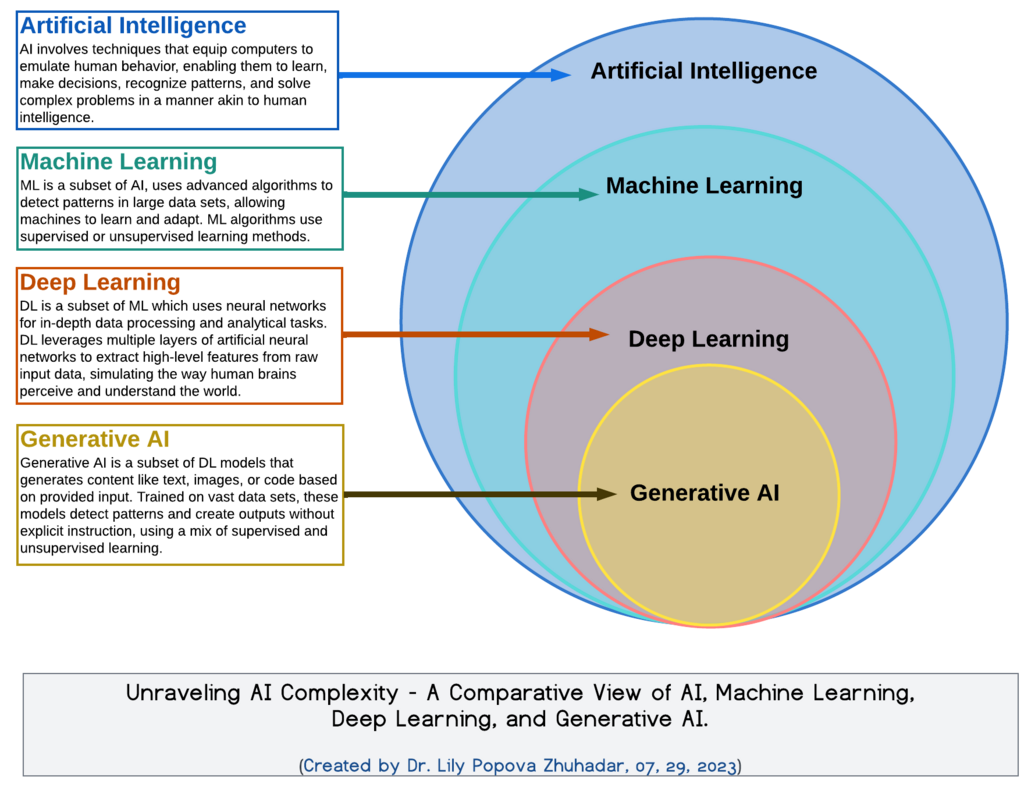
At its core, generative AI is a type of artificial intelligence that creates new content—text, images, audio, or code—by learning from existing examples.
This ability to generate novel content is what makes it so powerful and transformative. It shifts AI from a tool of analysis to a tool of creation, acting as a partner in brainstorming, art, and problem-solving.
A Look at the Models
How does a machine actually learn to create? The magic lies in different types of models, each with a unique approach to generation. We don't need to get into the deep math, but understanding their basic strategies is helpful.
Generative Adversarial Networks (GANs) Imagine an art forger and an art detective in a constant battle. The forger (the "generator") creates fake paintings, trying to pass them off as real. The detective (the "discriminator") tries to spot the fakes. At first, the forger is terrible and the detective easily wins. But with every failure, the forger learns and gets better. Eventually, the forger becomes so skilled that the detective can no longer tell the difference between a real painting and a fake. At that point, the generator is skilled enough to create highly realistic, original images.
Variational Autoencoders (VAEs) Think of a VAE as a skilled artist who first creates a rough sketch of an idea and then fills in the details. It takes a complex piece of data, like a photo of a face, and compresses it into a simple summary of its core features—a "latent space." It then learns to reconstruct the original photo from that simple summary. By tweaking the summary, it can generate new, similar faces that never existed, effectively exploring all the variations possible within its learned understanding.
Transformers This is the architecture behind many of the large language models you see today, like ChatGPT. Transformers are exceptionally good at understanding context and relationships in sequential data, like the words in a sentence. They use a mechanism called "attention" to weigh the importance of different words when generating the next word in a sequence. This allows them to produce text that is not only grammatically correct but also coherent and contextually relevant over long paragraphs.
Real-World Applications
The applications of generative AI are already widespread and growing every day.
- Content Creation: It can write emails, draft articles, and generate marketing copy. It can even write computer code, accelerating software development.
- Art and Design: Artists use generative tools to create stunning visuals, while designers can quickly generate product prototypes or architectural mockups.
- Entertainment: Generative models compose original music, create realistic sound effects for movies, and are even used to generate characters and environments in video games.
- Scientific Research: In fields like medicine, it can help design new drug molecules or generate synthetic patient data to train other AI models without compromising real patient privacy.
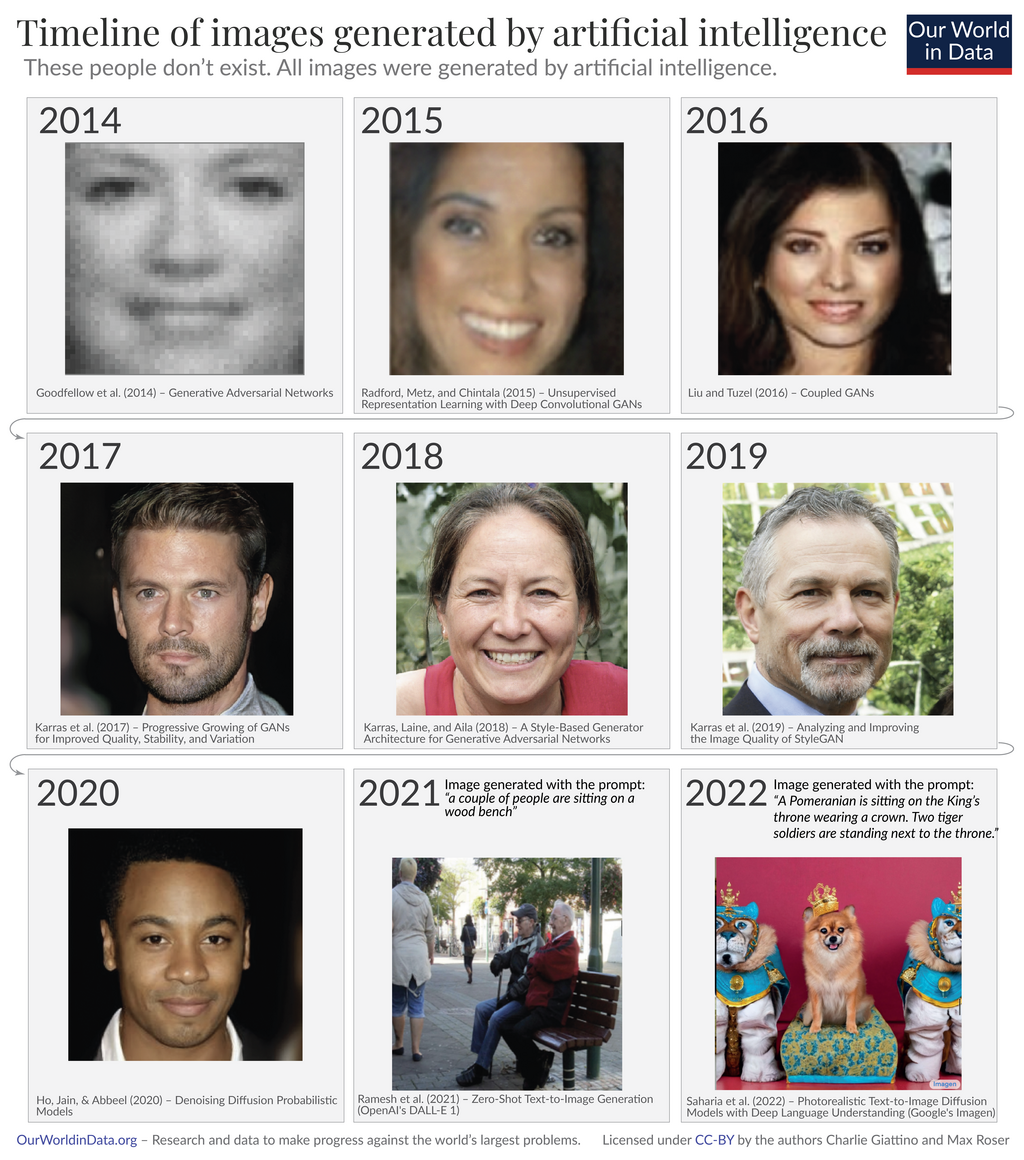
As these models become more sophisticated, they will continue to reshape industries, changing how we work, create, and interact with technology.
Time to check your understanding of these core concepts.
What is the primary characteristic that distinguishes generative AI from analytical AI?
The analogy of an art forger (generator) and an art detective (discriminator) learning from each other is used to describe which type of model?
Generative AI is more than just a technical curiosity; it's a fundamental shift in what machines can do. By moving from analysis to creation, these tools open up new possibilities for innovation and creativity.