Python for App Building and CS Fundamentals
Introduction to Computer Science
What is Computer Science?
Many people think computer science is just about programming. That's a big part of it, but it's not the whole story. At its heart, computer science is the study of how to solve problems efficiently using computers. It’s a field focused on computation, information, and automation.
Think of it as the art of telling a computer, a very literal-minded machine, exactly how to perform a complex task.
This involves designing and analyzing processes, called algorithms, to handle information. Computer science is everywhere. It’s in the GPS that guides you, the apps on your phone, the medical equipment in hospitals, and the systems that predict the weather. It’s about creating logical frameworks to make things work, from the smallest microchip to the global internet.
The Recipes of Computing
To solve a problem, a computer needs a precise set of instructions. This step-by-step guide is called an algorithm. Think of it like a recipe for baking a cake. The recipe lists the ingredients you need and the exact steps to follow, in the right order. If you miss a step or do it wrong, you won't get a cake. Algorithms work the same way; they provide a clear, unambiguous path to a solution.
Just as important as the recipe are the ingredients and how you organize them. In computer science, these are data structures. A data structure is a specific way of organizing and storing data so it can be accessed and used efficiently. If your recipe ingredients are scattered all over the kitchen, it will take you longer to bake the cake. But if they're neatly organized on the counter, the process is much faster. Similarly, choosing the right data structure can make an algorithm run much more quickly.
Algorithms are the action plan, and data structures are the organizational system for the information the plan uses.
The Machine's Blueprint
To understand how a computer runs our algorithms, we need a basic picture of its internal structure, or computer architecture. Imagine a kitchen again. You have a chef, a countertop, and a pantry.
| Component | Kitchen Analogy | Function |
|---|---|---|
| CPU (Central Processing Unit) | The Chef | Executes instructions and performs calculations. |
| Memory (RAM) | The Countertop | Holds the data and instructions the CPU is currently working on. It's fast but temporary. |
| Storage (Hard Drive) | The Pantry | Stores data long-term, even when the power is off. It's slower to access than RAM. |
When you want to run a program, the instructions are moved from the slow pantry (storage) to the fast countertop (memory). The chef (CPU) then grabs the instructions and data from the countertop to do the work. This basic flow is fundamental to how all modern computers operate.
Speaking to the Machine
So how do we give instructions to the CPU? We can't just talk to it in English. Human languages are full of ambiguity and nuance. Computers need absolute precision. That's where programming languages come in. They are formal languages with strict rules of syntax and grammar, designed to communicate instructions to a computer.
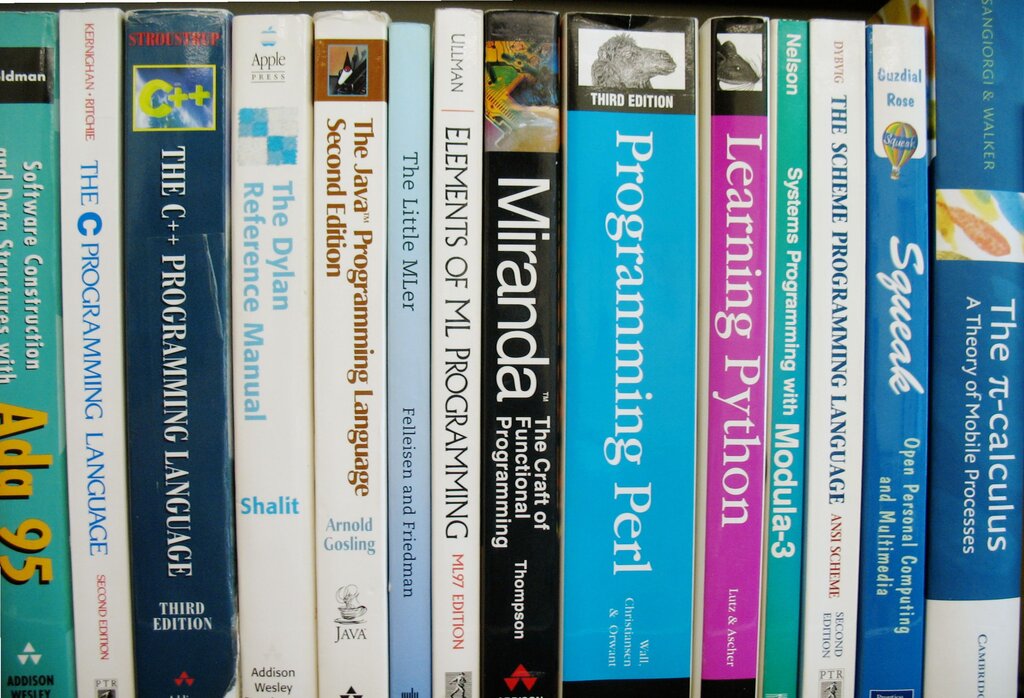
Think of programming languages as tools in a toolbox. You'd use a hammer for a nail and a screwdriver for a screw. Similarly, a developer might use Python for data analysis, JavaScript for building websites, or C++ for high-performance games. Each language provides a way for humans to write algorithms that a computer can understand and execute. You'll be learning Python, a powerful and popular language known for its readability and versatility.
Let's check your understanding of these core ideas.
At its core, what is computer science primarily about?
What is an 'algorithm' in the context of computer science?
These four pillars—the scope of computer science, algorithms and data structures, computer architecture, and programming languages—form the foundation for everything you'll learn about programming. With this context, you're ready to start writing your first instructions.