Python Flow Control Essentials
Introduction to Flow Control
Directing Your Code
Imagine following a recipe. You typically read and perform each step in order, from top to bottom. Most computer programs work the same way by default. They execute line one, then line two, then line three, and so on, without deviation. This is called sequential execution.
But what if the recipe says, "If you're using fresh tomatoes, chop them. Otherwise, open a can"? Suddenly, the path isn't a straight line. You have to make a decision that changes what you do next. This is the essence of flow control.
Flow control is the ability to direct the order in which your program's instructions are executed, breaking away from the simple top-to-bottom sequence.
Without flow control, programs would be incredibly limited. They couldn't react to user input, handle different situations, or repeat tasks efficiently. By controlling the flow, we give our programs the power to think, react, and perform complex operations with simple instructions.
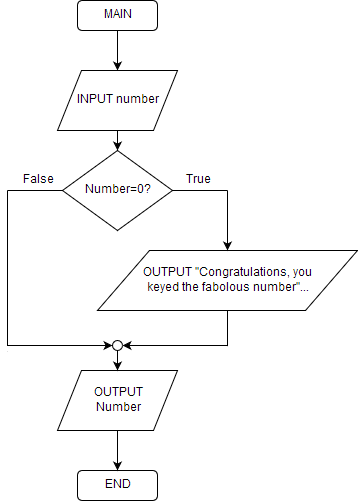
The Two Main Paths
In programming, we direct traffic using two main types of control structures: conditionals and loops.
Conditional
noun
A control structure that allows a program to execute different sets of instructions based on whether a specified condition is true or false.
Conditionals are like forks in the road. They use statements like if, else, and elif to ask a question. Is the user's age over 18? If the answer is yes, the code follows one path. If the answer is no, it follows another. This allows a program to make decisions.
Loops, on the other hand, are for repetition. They allow you to execute the same block of code over and over again until a certain condition is met. This is incredibly efficient. Instead of writing the same line of code 100 times, you can just tell the program to loop through it 100 times.
Common loop types are
forloops, which repeat a task for every item in a sequence, andwhileloops, which repeat a task as long as a condition remains true.
Understanding these two concepts is the first major step toward writing dynamic, intelligent programs. They are the fundamental building blocks of logic in nearly every programming language, including Python.
What is the primary function of "flow control" in a computer program?
You are writing a program for a login screen. Which type of flow control structure would be most appropriate to check if a user's entered password is correct?
With conditionals and loops, you can start telling your computer not just what to do, but how and when to do it.