Python Data Structures and Algorithms
Introduction to Data Structures and Algorithms
What Are Data Structures and Algorithms?
Think about your kitchen. You have ingredients stored in different ways. Spices are in a rack, vegetables are in a crisper, and canned goods are on a shelf. The way you organize these items—your storage system—makes it easier or harder to cook. In the world of programming, how you organize data is just as important.
Data Structure
noun
A specialized format for organizing, processing, retrieving, and storing data.
A data structure is simply a container for data that organizes it in a specific way. An array, which is a list of items, is a simple data structure you might already know. Others, like trees and graphs, organize data in more complex ways.
Now, let's go back to the kitchen. You have your organized ingredients (the data structure), and now you need a recipe to make a meal. The recipe is a set of step-by-step instructions to follow.
Algorithm
noun
A process or set of rules to be followed in calculations or other problem-solving operations, especially by a computer.
An algorithm is that recipe. It’s a sequence of steps for solving a problem or accomplishing a task. Data structures and algorithms go hand in hand. You choose a data structure to store your data, and then you use algorithms to work with that data.
Data structures are the nouns of programming (the things), and algorithms are the verbs (the actions you take on those things).
Why Your Choice Matters
Imagine looking for a specific book. If you're in a library where books are sorted by genre and author, you can find it quickly using the catalog. But if you're in a room where thousands of books are just thrown in a giant pile, finding that same book could take hours, or even days.
The same principle applies in programming. The way you structure your data directly impacts how efficiently you can work with it. A well-chosen data structure makes your program fast and uses memory wisely. A poor choice can make a program slow and resource-hungry.
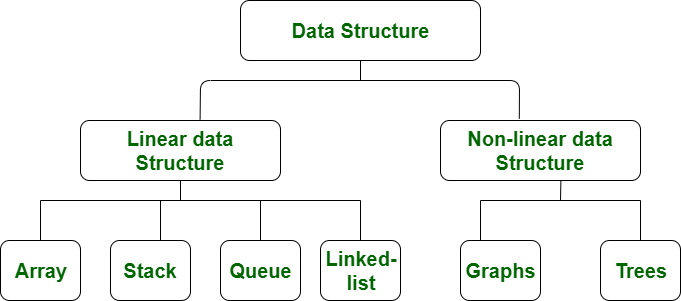
Consider a program that needs to store a million usernames and check if a new username is already taken. If you store the names in a simple, unsorted list, you'd have to check every single name one by one. But if you use a more suitable data structure, like a hash set, you could check for the name almost instantly. The difference can be between a program that feels snappy and one that is frustratingly slow.
Thinking in Steps
Algorithmic thinking is the process of breaking down a problem into a clear, finite series of steps. It’s a skill that goes beyond coding. It’s about creating a logical, repeatable process that anyone (or any computer) can follow to get the same result every time.
Let’s think about a simple, everyday task: making a peanut butter and jelly sandwich. You could break it down like this:
- Get two slices of bread.
- Open the peanut butter jar.
- Spread peanut butter on one slice.
- Open the jelly jar.
- Spread jelly on the other slice.
- Put the two slices of bread together.
This is an algorithm. It's a precise set of instructions to achieve a goal. Computers need this level of precision because they can't make assumptions. You have to tell them exactly what to do, step by step.
In this course, we'll practice breaking down complex problems into these manageable, logical steps and then translating them into code.
Why Python?
We'll be using the Python programming language to explore data structures and algorithms. Python is an excellent choice for several reasons:
- Readability: Python's syntax is clean and easy to read, almost like plain English. This lets you focus on the logic of the algorithms rather than getting bogged down in complex language rules.
- Built-in Data Structures: Python comes with powerful, easy-to-use data structures like lists, tuples, dictionaries, and sets right out of the box. They are great starting points for understanding more complex structures.
- Versatility: It's a powerful language used for everything from web development to data science and artificial intelligence. The skills you learn here are widely applicable.
Let's look at a quick example of Python code. This snippet creates a list of numbers and then uses a simple loop to print each one.
# A list is a basic data structure in Python
numbers = [1, 2, 3, 5, 8]

# An algorithm to print each item
for number in numbers:
    print(number)
Even if you've never seen Python before, you can probably guess what that code does. Its simplicity allows us to focus on the core concepts of how we solve problems, which is the heart of learning data structures and algorithms.
Now that you understand the basic concepts, let's test your knowledge.
What is a data structure?
According to the analogy in the text, an algorithm is like a ______, and a data structure is like an organized ______,
With these fundamentals in place, you're ready to start exploring the specific data structures and algorithms that form the toolkit of every great programmer.