Project Management Essentials
Project Management Overview
What Is Project Management?
At its core, project management is the process of planning, executing, and overseeing a project to achieve specific goals within a set timeframe and budget. Think of it like building a house. You don't just start laying bricks randomly. You need a blueprint (the plan), a foreman (the project manager), a crew (the team), and a client (the stakeholder). The foreman's job is to make sure the foundation is poured correctly, the walls go up on schedule, and the roof is on before the rainy season hits, all while staying within the client's budget.
This structured approach isn't just for construction. It's used everywhere, from developing a new smartphone app and organizing a music festival to conducting a scientific research study. Without it, teams risk facing delays, going over budget, and delivering a final product that doesn't meet expectations. Good project management brings order to chaos and turns a great idea into a tangible reality.
Defining project managementProject Management is the action of utilizing methods, processes, tools, and procedures for the purpose of accomplishing the planned targets within the time and cost estimations of the project.
The Key Players
Every project has a cast of characters, but two roles are central to its success: the project manager and the stakeholders.
Project Manager
noun
The person responsible for leading the project from start to finish. They organize the team, manage the schedule and budget, and communicate with everyone involved to ensure the project meets its goals.
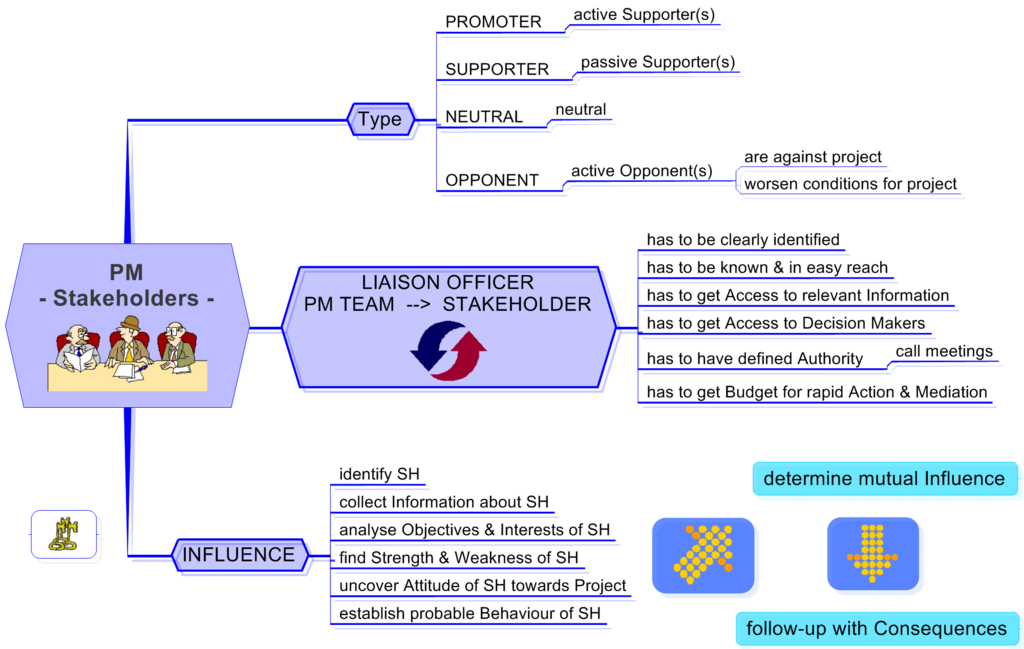
Stakeholders are anyone with an interest or stake in the project's outcome. This includes the client paying for the project, the end-users who will use the product, the team members building it, and even company executives. The project manager's job is to balance the needs and expectations of all these different groups.
The Project Lifecycle
Projects don't happen all at once. They move through a series of distinct phases, known as the project lifecycle. This framework helps organize the work and ensures that important steps aren't missed. While different methodologies exist, most follow a similar five-phase pattern.
1. Initiation This is the starting line. Here, the project's value and feasibility are determined. The main goal is to define the project at a high level. What problem are we solving? What do we hope to achieve? A project charter or a business case is often created in this phase.
2. Planning Once the project is approved, it's time to create a detailed roadmap. The project manager develops a plan that outlines the scope, cost, timeline, resources, and communication strategy. This plan will guide the team through the entire project. As the saying goes, failing to plan is planning to fail.
3. Execution This is where the work gets done. The team builds the deliverables, whether it's writing code, constructing a building, or rolling out a marketing campaign. The project manager's role shifts to leading the team, managing resources, and keeping stakeholders informed.
4. Monitoring and Controlling This phase runs alongside the execution phase. The project manager tracks progress against the plan, measures performance, and makes adjustments as needed. Are we on schedule? Are we within budget? This constant oversight helps catch problems early and keeps the project on course.
5. Closing The project is complete. This final phase involves handing off the deliverables, releasing the project team, and formally closing the project. It's also a crucial time for reflection. The team reviews what went well and what didn't, capturing lessons learned to improve future projects.
Understanding these core components—what project management is, who's involved, and the lifecycle it follows—provides the foundation for any successful project.
Ready to test your knowledge? Let's see what you've learned about the basics of project management.
What is the primary purpose of the Initiation phase in the project lifecycle?
A person or group with an interest in the project's outcome, such as an end-user or a company executive, is best described as a ______.
These foundational concepts are the building blocks for more advanced project management techniques and methodologies you'll explore later.