Professional UI UX Design Mastery
Advanced User Research
Beyond the Interview
User interviews and surveys scratch the surface. They tell you what users say they do. To uncover what they actually do, you need to go deeper. Advanced research is about observing behaviour and tracking experiences over time to find the unarticulated needs that lead to breakthrough products.
One powerful method is the , where researchers immerse themselves in a user's natural environment. Instead of asking a chef how they use a kitchen appliance in a lab, you'd spend a day in their restaurant. You observe their workflow, their frustrations, and the clever workarounds they've invented. These observations reveal pain points and opportunities that users might not even be aware of or able to articulate in an interview.

While ethnography offers a deep snapshot, longitudinal diary studies provide a moving picture. In a diary study, you ask participants to record their thoughts, feelings, and interactions with a product over an extended period, perhaps weeks or months. This could involve daily journal entries, photos, or short videos.
This method is invaluable for understanding how a user's relationship with a product evolves. It captures the initial learning curve, the moment a feature 'clicks', and the slow-burn frustrations that might lead a user to abandon an app over time.
Inside the User's Head
Observing behaviour is one part of the puzzle. Understanding the cognitive processes behind that behaviour is another. Two methods for this are cognitive walkthroughs and psychometric testing.
A is a task-focused usability inspection method. The researcher plays the role of a new user attempting to complete a goal, like booking a flight or creating a playlist. At each step, the researcher asks a series of questions:
- Will the user try to achieve the right outcome?
- Will the user notice that the correct action is available?
- Will the user associate the correct action with the outcome they expect?
- If the correct action is taken, will the user see that progress is being made?
This structured approach helps identify confusing navigation, misleading labels, and gaps in feedback before a single real user tests the interface.
Psychometric testing brings quantitative rigour to UX. It uses standardised, validated questionnaires to measure subjective attributes like perceived usability, satisfaction, or trust. For example, the System Usability Scale (SUS) is a ten-question survey that results in a single score, allowing you to benchmark your product's usability against competitors or track improvements between design iterations.
Weaving Data into Insight
Advanced research isn't about picking one method. It’s about combining them. Data is the practice of using multiple data sources to develop a more robust understanding of a problem. A finding is much more powerful if it's supported by qualitative observations from a field study, quantitative metrics from a psychometric test, and behavioural analytics from the product itself.
Striking a balance between UX research qualitative methods and quantitative research methods ensures a complete understanding of user behavior.
This synthesis of rich data allows for the evolution of user personas. Basic personas are often built on assumptions and limited interview data. Advanced personas are living documents, continuously updated with behavioural data, psychometric profiles, and ethnographic insights. They move from simple archetypes like "Tech-Savvy Sarah" to nuanced profiles that reflect real human complexity.
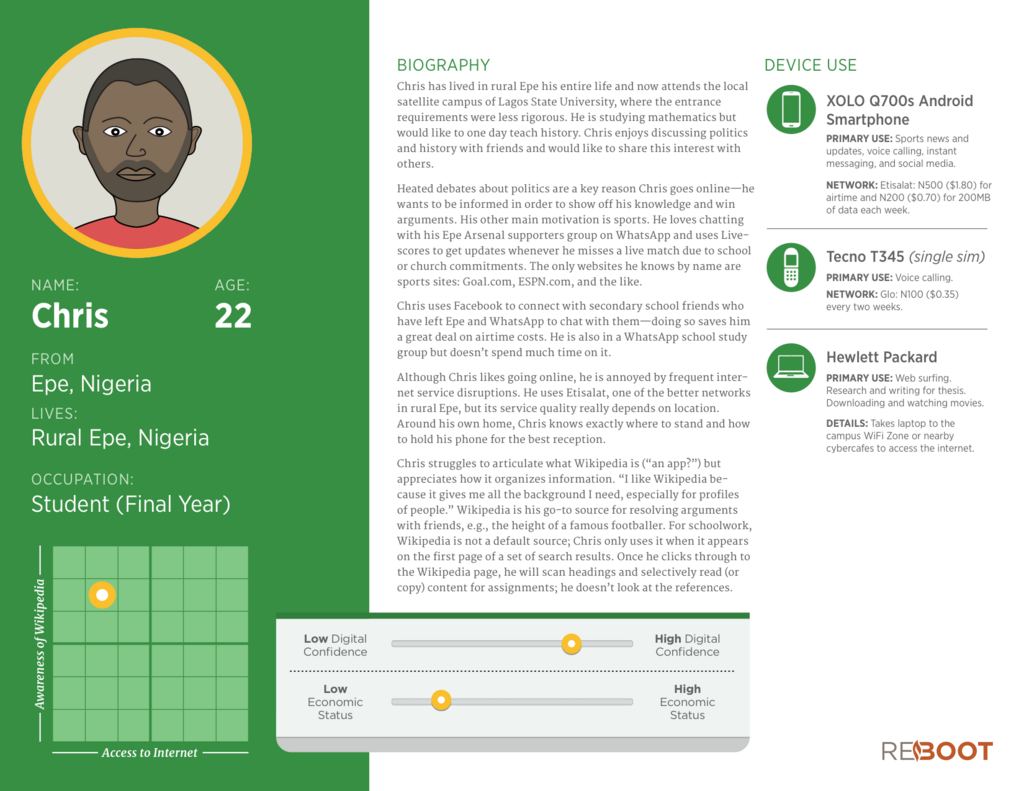
By grounding design decisions in this deep, triangulated evidence, you move beyond just building features. You start creating experiences that truly resonate with users on functional and emotional levels, because you understand not just what they do, but why they do it.
What is the primary purpose of advanced user research methods like ethnographic field studies?
A design team wants to understand how people's relationship with a new fitness app evolves over the first month of use. Which research method is most appropriate for this goal?