Professional Business Plan Development
Advanced Market Analysis
Beyond the Obvious Competitor
You already know who your direct competitors are. But a truly insightful market analysis goes deeper than just listing rival companies. It examines the entire power structure of your industry. The goal is to understand how much profit is realistically available and who holds the power to claim it. A classic tool for this is Porter's Five Forces framework.
This framework helps you assess an industry's attractiveness by looking at five key areas:
- Competitive Rivalry: How intense is the competition among existing players? A market with many undifferentiated players often leads to price wars, eroding profits for everyone.
- Threat of New Entrants: How easy is it for new companies to enter your market? High barriers to entry, like huge startup costs or strong patents, protect existing businesses.
- Threat of Substitute Products: Can customers achieve the same result with a different type of product? A coffee shop doesn't just compete with other coffee shops; it also competes with energy drinks and tea.
- Bargaining Power of Suppliers: How much control do your suppliers have over prices? If you rely on a single, specialized component provider, they hold significant power.
- Bargaining Power of Customers: How easily can your customers drive down prices? If they have many alternatives or buy in large volumes, their power increases.
By analyzing these forces, you can identify where the power lies in your industry and anticipate threats to your profitability before they happen.
Finding Your Open Water
Analyzing the existing market is crucial, but what if the best move isn't to compete at all? This is the central idea behind Blue Ocean Strategy — the creation of new, uncontested market space that makes the competition irrelevant.
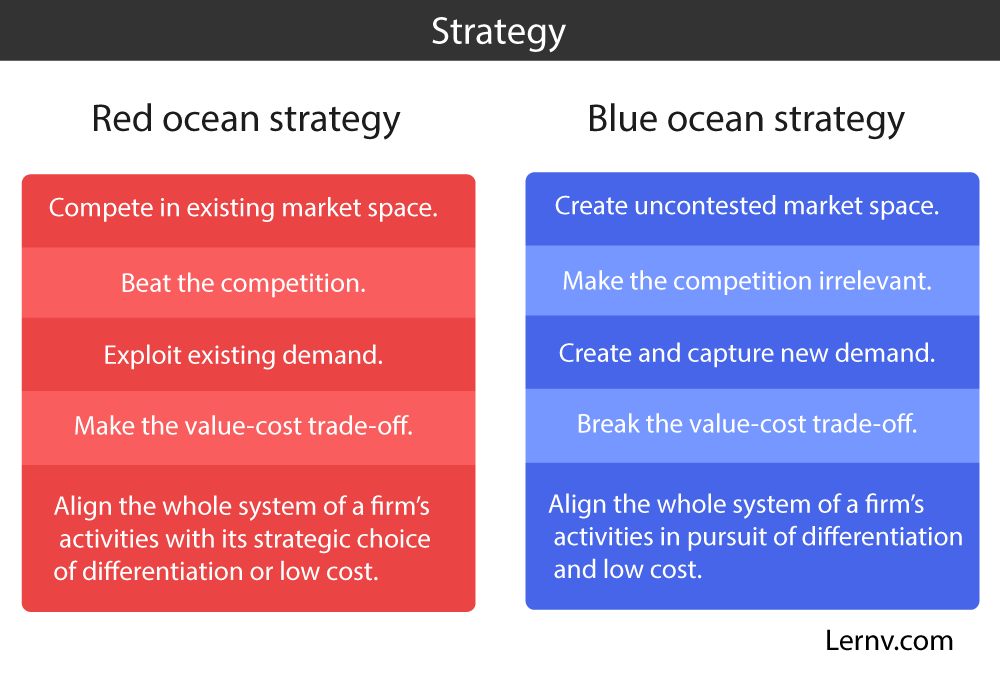
Instead of battling rivals in a bloody "red ocean" of competition, you seek to create a "blue ocean" of new demand. Think of Cirque du Soleil. It didn't try to outdo existing circuses with better clowns or more daring lion tamers. Instead, it blended circus arts with theater to create a new form of entertainment for an entirely new audience, one that was willing to pay a premium for a sophisticated experience.
To find your blue ocean, you must challenge the industry's fundamental assumptions. Ask yourself:
- What factors does our industry take for granted that should be eliminated?
- What factors should be reduced well below the industry standard?
- What factors should be raised well above the industry standard?
- What factors should be created that the industry has never offered?
This framework pushes you away from making incremental improvements and toward creating a leap in value for customers.
Sizing Your Slice of the Pie
A great idea is not enough; you need to prove there's a real, quantifiable market for it. This is where the TAM, SAM, and SOM framework comes in. It helps you and potential investors understand the true size of your opportunity in a structured way.
Let's break it down with an example. Imagine you're launching a new vegan, gluten-free pizza delivery service in San Francisco.
-
Total Addressable Market (TAM): This is the total global market for pizza delivery. It's the biggest possible number, representing everyone who might ever order a pizza. Let's say it's $150 billion annually.
-
Serviceable Available Market (SAM): This is the portion of the TAM you can actually serve. You're only in San Francisco, and you only make vegan, gluten-free pizza. So, your SAM is the total revenue from pizza delivery in San Francisco to customers who want vegan or gluten-free options.
-
Serviceable Obtainable Market (SOM): This is your realistic target. You won't capture 100% of the SAM overnight. Considering your competition, marketing budget, and production capacity, your SOM is the share of the SAM you aim to capture in the first few years. This is the number that truly grounds your business plan in reality.
Understanding Your Customer's Mind
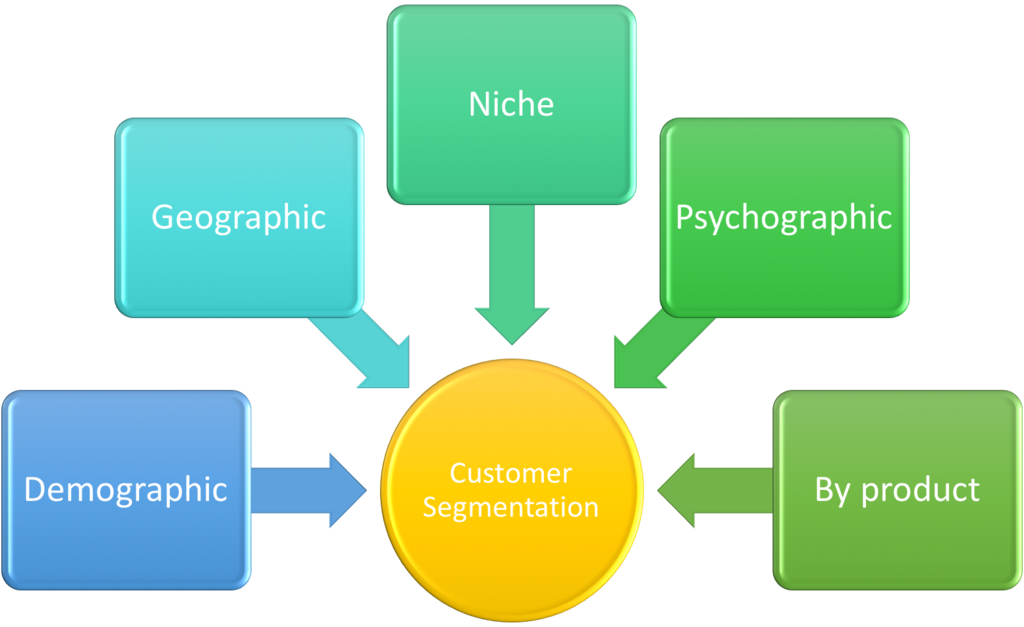
Knowing your customers' age and location (demographics) is a start. But knowing why they buy is where the magic happens. This is psychographic segmentation — grouping customers based on their personality, values, lifestyles, and beliefs. It's about understanding the person, not just the data point.
Are your ideal customers adventurous risk-takers or cautious homebodies? Do they value sustainability and social responsibility, or are they driven by status and luxury? This level of insight allows you to tailor your product, messaging, and brand to resonate on an emotional level. You can gather this data through surveys, customer interviews, and by analyzing social media behavior.
Once you have this deep understanding, you can build a Competitor Benchmarking Matrix. This isn't just a list of who sells what. It's a strategic grid that maps competitors based on key factors your customers care about. For example, you might plot competitors on a matrix with 'Price' on one axis and 'Product Customization' on the other. This visual analysis instantly reveals gaps in the market. Maybe there are plenty of low-price, low-customization options and a few high-price, high-customization ones, but nobody is serving the middle ground. That empty quadrant could be your entry point.
Ready to put these concepts to the test? Let's see how well you've grasped these advanced analysis techniques.
According to Porter's Five Forces, which of the following would be considered a 'Threat of Substitute Products' for a traditional movie theater?
What is the primary goal of a 'Blue Ocean Strategy'?