Production LLM Inference Management
Introduction to LLMs
What Are Large Language Models?
Large Language Models, or LLMs, are a type of artificial intelligence designed to understand and generate human-like text. Think of them as incredibly advanced autocomplete systems. At their core, they work by predicting the next word in a sequence, but they do this on a massive scale.
The "large" in their name refers to two things: the enormous amount of text data they are trained on (often a significant portion of the internet) and the huge number of parameters they contain. A parameter is like a knob the model can tune during training to improve its predictions. Modern LLMs can have billions or even trillions of these parameters.
An LLM isn't just memorizing text; it's learning the patterns, grammar, context, and even reasoning embedded within the data it's trained on.
The journey to today's LLMs began with simpler models. Early natural language processing (NLP) systems could only look at a few words at a time. They were good for basic tasks but struggled with understanding the broader context of a long sentence or paragraph. Over time, models like Recurrent Neural Networks (RNNs) improved this by adding a form of memory, but they still had limitations. The real breakthrough came with a new kind of architecture.
The Engine Inside: Transformers
The innovation that powers modern LLMs is the Transformer architecture, first introduced in 2017. Before Transformers, processing long sequences of text was slow and difficult. A model had to read words one by one, in order. The Transformer changed the game by allowing the model to process every word in a sentence at the same time.
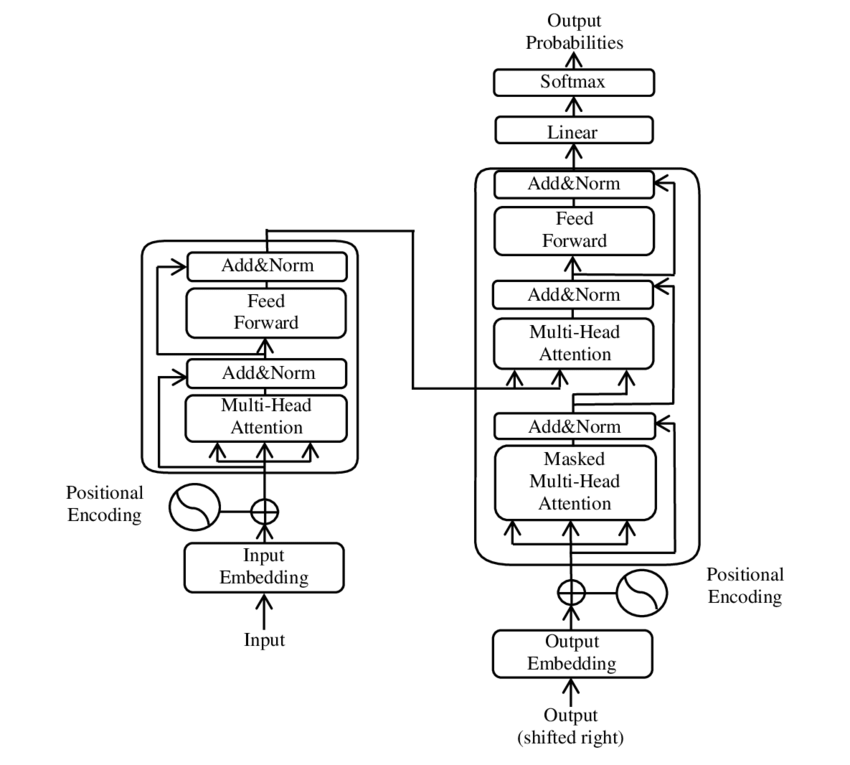
The key mechanism within the Transformer is called attention. Attention allows the model to weigh the importance of different words when producing an output. For example, in the sentence, "The robot picked up the red ball because it was round," the attention mechanism helps the model understand that "it" refers to the "ball," not the "robot."
This ability to connect related words, even if they are far apart in a text, is what gives LLMs their remarkable coherence and ability to understand complex context. The architecture is typically split into two main parts: an encoder, which reads and understands the input text, and a decoder, which generates the output text word by word.
Where LLMs Shine
Because of their deep understanding of language, LLMs have found applications in countless domains. They are not just chatbots; they are versatile tools that can be adapted for a wide variety of tasks.
| Application | Description |
|---|---|
| Content Creation | Writing articles, marketing copy, emails, and even poetry. |
| Summarization | Condensing long documents into brief summaries. |
| Translation | Translating text between different languages with high accuracy. |
| Code Generation | Writing computer code based on a natural language description. |
| Sentiment Analysis | Determining the emotional tone of a piece of text (positive, negative, neutral). |
| Question Answering | Answering specific questions by drawing from a provided text or its internal knowledge. |
Beyond these general tasks, LLMs are being integrated into specialized fields. In healthcare, they help doctors summarize patient notes. In finance, they analyze market reports. In education, they can create personalized learning materials. Their ability to process and generate language makes them a powerful assistant for anyone working with information.
Ready to check your understanding?
At their most fundamental level, what is the primary task of a Large Language Model (LLM)?
The 'large' in Large Language Model refers to which two aspects?
LLMs, powered by the Transformer architecture, represent a significant leap forward in artificial intelligence. By learning the deep patterns of human language, they provide a powerful new way to interact with information and technology.