Practical Python Foundations for Data Analysis
Python Syntax Essentials
Setting Up Your Workspace
Before you can write Python code, you need a place to write it. While you could use a basic text editor, most programmers use an Integrated Development Environment, or IDE. An IDE is like a word processor specifically for code. It helps you by highlighting syntax, catching simple errors, and managing your files.
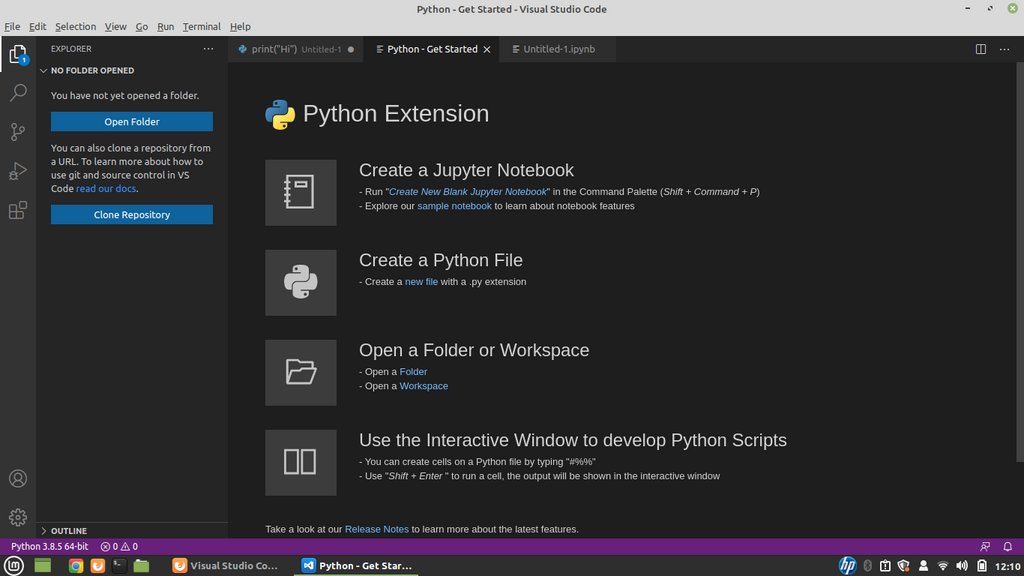
Popular choices for Python include Visual Studio Code (VS Code), PyCharm, and JupyterLab. They all offer features that make coding smoother, like code completion and debugging tools. We'll be using a simple editor for our examples, but everything you learn will work in any IDE you choose.
The Rules of the Road
Python is unique in how it structures code. Many languages use curly braces {} to group lines of code into a block. Python uses indentation. This means the amount of whitespace at the beginning of a line is not just for looks—it's part of the syntax. This forces code to be clean and readable.
In Python, structure is defined by indentation, not by braces or keywords.
# A simple conditional block
weather = "sunny"

if weather == "sunny":
    # This line is indented, so it's inside the 'if' block.
    print("Don't forget your sunglasses!")

# This line is not indented, so it's outside the block.
print("Have a great day.")
The standard convention is to use four spaces for each level of indentation. While this might seem strange at first, it quickly becomes second nature. These and other style conventions are documented in a guide called PEP 8. Following it makes your code easier for other Python developers to read and understand.
Naming and Storing Information
In programming, we store data in variables. What sets Python apart is its use of . This means you don't have to declare a variable's type before you use it. Python figures it out automatically when you assign a value.
# First, 'user_age' holds an integer
user_age = 30

# Now, we can reassign it to hold a string
user_age = "thirty"

# Python handles the type change seamlessly.
print(user_age)
When naming your variables, PEP 8 recommends using snake_case, which means all lowercase letters with words separated by underscores. Choose names that are descriptive but not overly long.
| Good Names | Bad Names | Why? |
|---|---|---|
user_name | userName | Not snake_case (this is camelCase) |
first_quarter_sales | s | Not descriptive |
is_active | Is_Active | Starts with a capital letter |
Your First Conversation
The most fundamental operation in programming is seeing the output of your code. In Python, you do this with the print() function. It's an essential tool for checking the value of variables and understanding what your program is doing at any given moment.
# Displaying a simple string of text
print("Hello, World!")

# Displaying the value of a variable
project_name = "Data Workflow Automation"
print(project_name)

# You can also print multiple items
year = 2024
print("Project started in:", year)
As you start writing more complex scripts for data workflows, you'll constantly use print() to inspect data, confirm calculations, and trace the flow of your program. It is your primary tool for simple debugging.
Time to check your understanding of these core concepts.
What is the primary role of an Integrated Development Environment (IDE) like VS Code or PyCharm?
In Python, how are blocks of code (like the body of a loop or function) defined?
With these fundamentals of syntax, style, and output, you're ready to start writing your first functional Python scripts.