Post-Quantum Cryptography Explained
Quantum Computing Threats
A New Kind of Computation
Classical computers, from your smartphone to the most powerful supercomputers, work with bits. A bit is a simple switch that can be either on or off, represented as a 1 or a 0. It's a binary system that has served us well for decades.
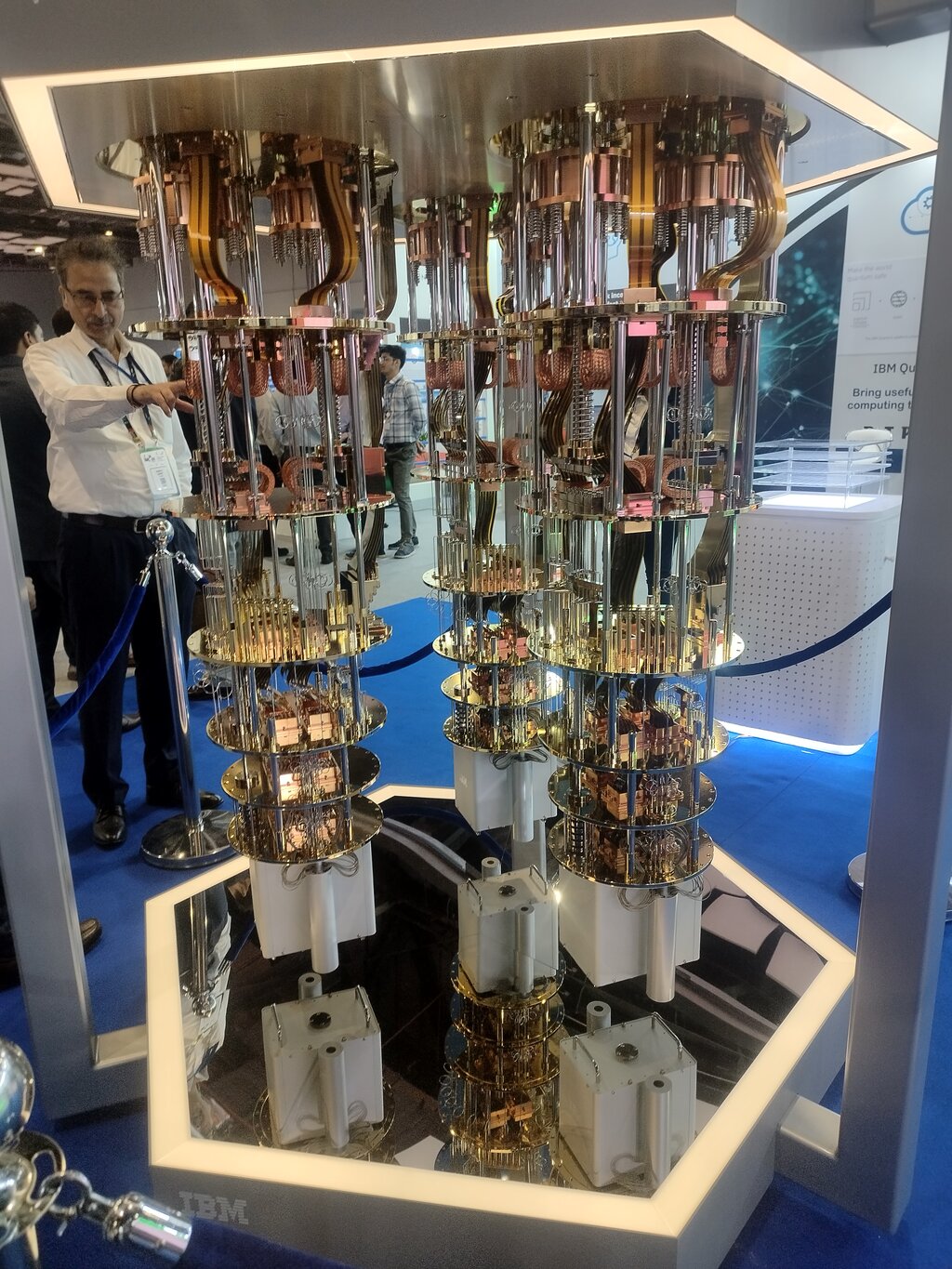
Quantum computers are fundamentally different. They use quantum bits, or qubits. Thanks to a principle called superposition, a qubit can be a 0, a 1, or both at the same time. This ability to exist in multiple states at once allows quantum computers to process a vast amount of information simultaneously.
Another key principle is entanglement. When two qubits are entangled, their fates are linked, no matter how far apart they are. Measuring the state of one qubit instantly influences the state of the other. These properties don't just make quantum computers faster; they enable them to solve certain problems that are practically impossible for classical computers.
The Algorithm That Breaks Codes
Much of our modern digital security relies on a simple fact: it's easy to multiply two large prime numbers together, but it's incredibly difficult to take the result and figure out the original primes. This is the foundation for common encryption methods like RSA (Rivest–Shamir–Adleman).
In 1994, a mathematician named Peter Shor developed a quantum algorithm that could find the prime factors of a large number with astonishing speed. Shor's algorithm uses the unique properties of quantum mechanics to find patterns in numbers, turning a nearly impossible task for classical computers into a manageable one.
This has massive implications. If a powerful enough quantum computer were built, it could use Shor's algorithm to break not only RSA but also Elliptic Curve Cryptography (ECC), another widely used standard. Everything from online banking and secure messaging to government communications would become vulnerable.
The advancements in quantum computing are a threat to classical cryptographic systems.
A Ticking Clock
So, when will this quantum threat become a reality? Experts disagree on the exact timeline, but many believe a quantum computer capable of breaking current encryption could exist within the next decade or two. While we aren't there yet, the danger is present now due to a strategy known as "harvest now, decrypt later."
Adversaries can intercept and store encrypted data today. They can't read it, but they're betting that in the future, they'll have a quantum computer that can. Sensitive information with a long shelf life, like national security secrets or personal health records, is at particular risk.
This looming threat has created an urgent need for a new generation of security protocols. The goal is to develop quantum-resistant cryptography: new encryption methods that are secure against attacks from both classical and quantum computers. The race is on to upgrade our digital infrastructure before it's too late.