PMP Certification Exam Prep
Introduction to Project Management
What Makes a Project a Project?
Think about the difference between your daily commute and building a new bridge. The commute is routine, something you do over and over. That's an ongoing operation. The bridge, however, is a one-time effort to create something unique. That’s a project.
Project
noun
A temporary endeavor undertaken to create a unique product, service, or result.
Projects have a clear beginning and end. They aren't meant to last forever. Whether it's launching a new app, organizing a music festival, or even planning a surprise party, it's a project if it's temporary and has a specific goal. Once the goal is met, the project is done.
The Project Manager’s Role
Every project needs a leader to steer the ship. That's the project manager. Their job isn't just to boss people around; it's to guide the team from the starting point to the finish line, navigating any obstacles along the way.
A project manager is like the conductor of an orchestra. The musicians are the experts in their instruments—the developers, designers, and marketers. The conductor doesn't play every instrument but knows how the music should sound. They coordinate everyone's efforts to create a beautiful, cohesive performance.
The project manager's core responsibilities include planning the work, managing the budget and schedule, communicating with everyone involved, and keeping the team focused and motivated.
They are the central point of communication. If a team member has a problem, they go to the project manager. If an executive wants a status update, they ask the project manager. This person ensures everyone has what they need to do their best work and that the project stays on track.
Why Bother with Project Management?
Without a formal approach, projects can easily spiral out of control. Deadlines get missed, budgets are blown, and the final result might not be what anyone wanted. Project management provides a framework for success.
It helps organizations use their resources wisely. By planning ahead, a project manager can allocate the right people, budget, and time to get the job done efficiently. This structured approach reduces the risk of failure and increases the chances of achieving the project's goals.
Ultimately, good project management delivers value. It ensures that the final product or service actually solves the problem it was meant to solve, leading to happier customers and a stronger business.
How an Organization Shapes a Project
A project doesn't happen in a vacuum. It's heavily influenced by the organization it lives in. The company’s culture, communication styles, and structure all play a big role.
For example, in a company where departments rarely talk to each other (a "siloed" environment), the project manager has to work extra hard to keep information flowing. In a more collaborative culture, teamwork might come more naturally. Organizational structure is another key factor.
| Structure Type | How it Works | Impact on Project |
|---|---|---|
| Functional | Employees are grouped by specialty (e.g., marketing, engineering). The project manager has limited authority. | Decisions can be slow as they must go up the chain of command. |
| Project-Oriented | The organization is structured around projects. The project manager has full authority over the team. | Teams are very focused, but it can be inefficient to move people between projects. |
| Matrix | A hybrid model where employees report to both a functional manager and a project manager. | Allows for flexible resource sharing but can create confusion about who is in charge. |
Understanding this environment helps a project manager navigate corporate politics, secure resources, and set realistic expectations for what can be achieved.
Different Recipes for Success
There's more than one way to run a project. The best approach, or methodology, depends on the project itself. Three common types are predictive, agile, and hybrid.
Predictive (or Waterfall) Imagine building a house. You need a complete blueprint before you pour the foundation. You can't easily change the number of bedrooms halfway through. This is the predictive approach. It's a linear, step-by-step process where you plan everything upfront. Each phase must be completed before the next one begins. This works best when the project goal is very clear and unlikely to change.
Agile Now think about developing a new smartphone app. You might have a core idea, but you'll discover a lot as you build and get user feedback. This is where agile comes in. Instead of one big plan, the work is broken into small, iterative cycles called sprints. The team builds and delivers a small piece of the product, gets feedback, and adjusts the plan for the next cycle. This approach embraces change and is great for complex projects in fast-moving environments.
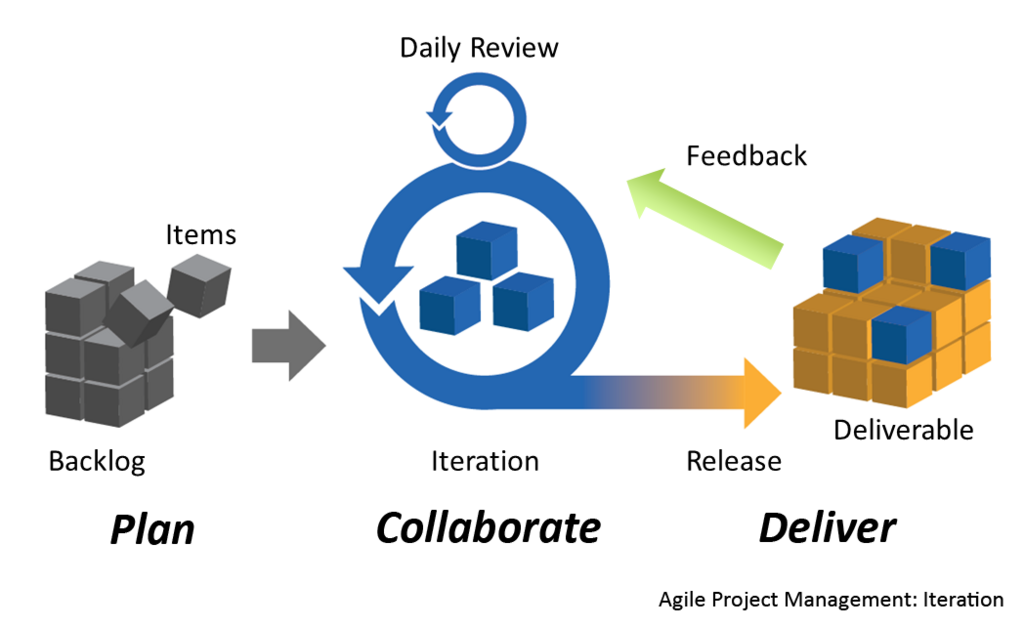
Hybrid Sometimes, neither approach is a perfect fit. A hybrid methodology mixes elements of both predictive and agile. For example, a team might use a predictive approach to plan the overall budget and timeline for a hardware project but use agile methods to develop the software that runs on it. This allows for upfront planning where needed while maintaining flexibility in other areas.
Time for a quick check on these core concepts.
What is the primary characteristic that distinguishes a project from an ongoing operation?
Which analogy best describes the role of a project manager?
Understanding these fundamentals—what a project is, the manager's role, the environment, and the different methodologies—is the first step in learning how to guide any project to a successful conclusion.