Plumbing Basics Explained
Introduction to Plumbing
What is Plumbing?
At its heart, plumbing is the network of pipes, drains, and fixtures that manages water in a building. It has two fundamental jobs: to bring clean water in for you to use and to safely take wastewater out. Think of it as your home's circulatory system. One set of vessels delivers fresh, life-sustaining water, while another carries away the used, dirty water.
Every time you turn on a faucet, flush a toilet, or run the dishwasher, you're using this system. A well-designed plumbing system does its job silently and efficiently, protecting your health by keeping the clean and wastewater streams completely separate.
The Two Sides of Your System
A residential plumbing system is divided into two distinct, non-overlapping parts: the water supply system and the drain-waste-vent (DWV) system. They work in tandem but never mix.
The water supply system is under pressure. The drain system is not; it relies on gravity.
The water supply system brings clean water (called potable water) into your house from either a municipal source or a private well. Because it's pressurized, water flows out forcefully when you open a tap. Somewhere near where the main water line enters your house, there is a main shutoff valve. It's crucial to know where this is in case of a leak or emergency.
After entering the house, the main line splits. One pipe carries cold water directly to faucets, toilets, and appliances. The other pipe runs to the water heater. From the water heater, a hot water line runs parallel to the cold water line, supplying the same fixtures and appliances.
The second part is the drain-waste-vent (DWV) system. Its job is to carry wastewater and solid waste away from the house. Unlike the supply system, the DWV system is powered entirely by gravity. All drainpipes are installed with a slight downward slope to keep things moving toward the sewer or septic tank.
This system has three parts:
- Drains: Pipes connected to sinks, showers, and tubs that collect wastewater.
- Waste lines: Larger pipes that carry waste from toilets.
- Vents: Pipes that extend from the drainpipes up through the roof. These are critical. They allow air to enter the system, which prevents suction that could slow or stop drainage. Vents also provide a safe path for unpleasant sewer gases to exit your home.
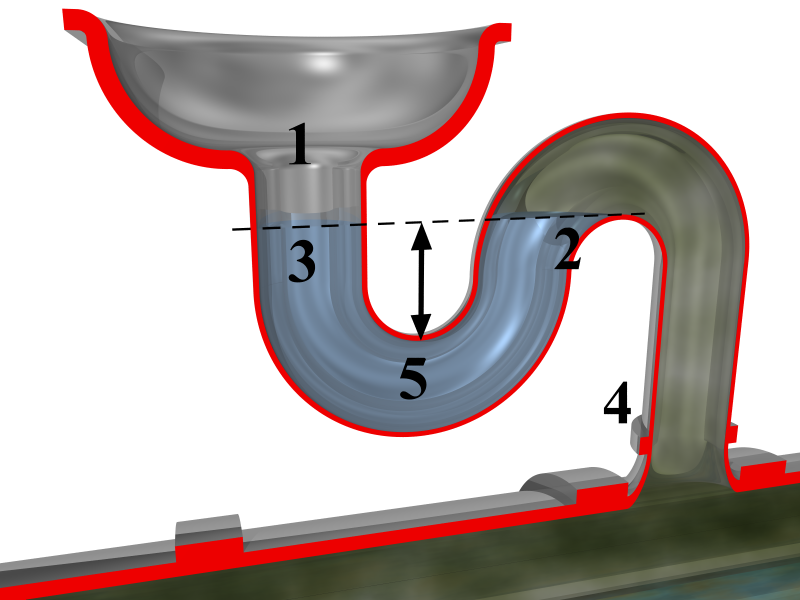
Under every sink, you'll find a U-shaped pipe called a P-trap. This curve is designed to hold a small amount of water at all times. This plug of water acts as a barrier, effectively sealing the drain and preventing sewer gases from rising up from the pipes and into your home.
Common Fixtures
Plumbing fixtures are the devices we use to access the water system. They are the endpoints where the supply and drainage systems do their work. While they seem different, most operate on simple principles.
| Fixture | Primary Function |
|---|---|
| Sinks/Faucets | Control the flow of hot and cold water for washing. |
| Toilets | Remove human waste using a siphon action triggered by a flush. |
| Showers/Tubs | Provide a controlled spray or volume of water for bathing. |
| Washing Machine | An appliance that uses hot and cold water to wash clothes and then pumps the used water into a drainpipe. |
| Dishwasher | An appliance that uses hot water jets to clean dishes and drains the wastewater away. |
Each fixture connects to the cold water supply, the hot water supply (except for toilets), and the drain system. Understanding how these basic components—supply, drainage, and fixtures—fit together is the first step to understanding your home's entire plumbing network.