Plotinus: Metaphysical Deconstruction
Porphyrian Editorial Distortion
Porphyry's Imposed Order
Reading the Enneads is not a direct encounter with Plotinus, but an encounter with Plotinus as curated by Porphyry. The most significant editorial intervention is the structure itself. Porphyry took the 54 treatises, written over a period of 16 years, and reorganized them from their chronological sequence into six thematic groups of nine, creating the six Enneads. This wasn't a neutral act of compilation; it was a profound hermeneutical move.
In general, Porphyry’s arrangement has been repeatedly criticized in the past as utterly artificial and arbitrary, echoing more the editor’s views than those of Plotinus.
The chronological order reveals a philosopher at work, grappling with problems, refining his positions, and responding to his students and intellectual opponents, such as the Gnostics. The treatises from Plotinus's early period (254-263 CE) show a different emphasis than his later works. By shuffling these texts, Porphyry obscures this intellectual development. He creates a synthetic teleology, a smooth, systematic ascent from ethics (Ennead I) to the One (Ennead VI). This structure imposes a pedagogical and spiritual program onto what was originally a more dynamic, and perhaps less consistent, body of thought. The become a perfected system, not the record of a philosophical journey.
The Hagiographic Filter
Porphyry prefaced the collection with his Life of Plotinus, a text that frames the philosopher as a semi-divine sage, detached from worldly concerns and culminating in mystical union. This biographical introduction acts as a powerful filter, instructing the reader on how to approach the treatises that follow. It primes us to see Plotinus as a spiritual guide whose writings are a map to ecstatic experience, rather than as a dialectician engaged in rigorous philosophical argument.
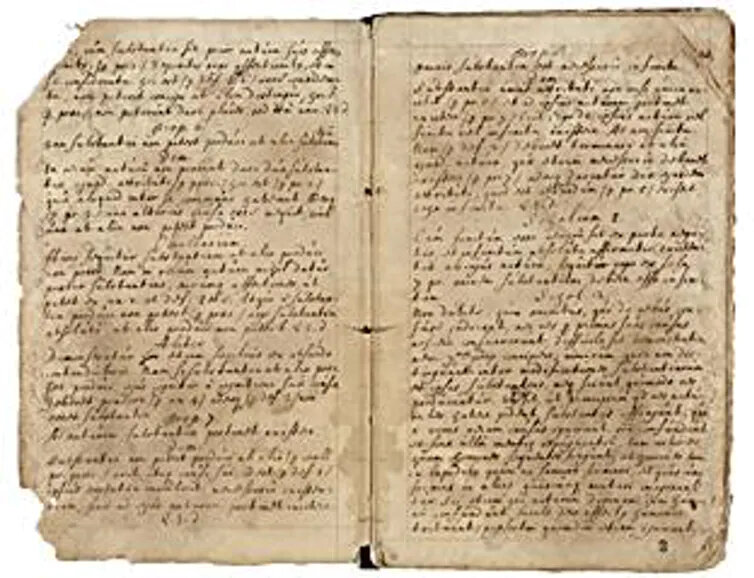
The Life presents Plotinus’s sessions as transmissions of wisdom from a master, but they were likely more akin to workshops. Plotinus would read texts from earlier Platonists like Numenius or Stoics like Cronius, followed by dialectical inquiry and debate. Porphyry’s narrative smooths over the collaborative and contentious nature of these sessions, presenting the resulting treatises as the seamless product of a single, enlightened mind. The focus on mystical ascent overshadows the logical rigor and the philosophical battles that shaped the texts.
Editorial Bias
Beyond arrangement, we must consider what Porphyry may have omitted or de-emphasized. We know he corrected the treatises, but the extent of these corrections is lost to us. His editorial agenda clearly favored presenting a coherent system that could stand as the definitive expression of Platonism. Did he downplay arguments that seemed contradictory? Were treatises that didn't fit neatly into his nine-part schema altered or, more radically, excluded?
Porphyry often develops his own unique interpretations and arguments under the guise of a commentary on Plotinus.
For example, Porphyry had a different and more skeptical view of theurgy than his own student, Iamblichus, who championed it. While Plotinus himself was critical of Gnostic ritualism, Porphyry's arrangement might subtly guide the reader towards his own specific anti-theurgical stance. Reconstructing a 'pure' Plotinus is impossible. We are left with Porphyry's Plotinus, a towering figure in the history of philosophy, but one whose work is permanently mediated through the lens of his most devoted, and most interventionist, student.
Let's test your understanding of Porphyry's editorial influence.
What was the most significant editorial intervention Porphyry made in compiling Plotinus's works?
What is the primary effect of Porphyry's thematic arrangement of the Enneads?
Understanding Porphyry's role is crucial for any serious engagement with Plotinus. It forces a critical reading that separates the philosopher's developing thought from the editor's systematic vision.