Operating System Types Explained
Operating System Basics
The Conductor of the Orchestra
Imagine a full orchestra. You have violins, cellos, trumpets, and drums, all ready to play. But without a conductor, you just have a room full of talented musicians making noise. The conductor tells everyone when to start, how fast to play, and how to work together to create beautiful music.
An operating system (OS) is the conductor for your computer. It’s the essential piece of software that manages all the hardware and other software, turning a collection of circuits and wires into a device you can actually use.
Operating System
noun
The core software that manages all of a computer's hardware and software resources, providing a stable, consistent way for applications to deal with the hardware without having to know all the details of the hardware.
Without an OS, every application would need to know the specific technical details of your computer's processor, memory, and storage. It would be chaos. The OS acts as a helpful intermediary, creating a bridge between the applications you use and the physical hardware that runs them.
The OS's Main Jobs
An operating system is a master multitasker, juggling several critical responsibilities at once to keep everything running smoothly. Think of it as the manager of a busy restaurant, overseeing everything from the kitchen to the front door.
Process Management When you have multiple applications open—a web browser, a music player, and a word processor—the OS is in charge of managing them. It decides which program gets to use the central processing unit (CPU) and for how long. This is called process management. It ensures that even though the CPU can only do one thing at a time, it switches between tasks so quickly that it feels like everything is happening at once.
Memory Management Your computer's memory, or RAM, is like a temporary workspace. The OS is responsible for allocating portions of this workspace to each running application. It also makes sure that one program doesn't accidentally write over the memory being used by another, which would cause a crash. When you close an application, the OS reclaims that memory so it can be used for something else.
File Systems How does your computer remember where you saved that photo or document? That's the file system's job. The OS organizes all your data into a structure of files and folders, keeping track of where everything is located on your hard drive or solid-state drive. It handles the details of reading and writing data, so all you have to do is click "Save" or "Open."
I/O Management Finally, the OS manages all the input and output (I/O) devices connected to your computer. This includes your keyboard, mouse, monitor, printer, and network card. It acts as a translator, converting your mouse clicks and keystrokes into actions the computer can understand, and turning the computer's data into images on your screen or documents from your printer.
A Quick Trip Through Time
Operating systems weren't always so sophisticated. In the earliest days of computing, there was no OS. Programmers had to manually load their programs using punch cards or toggle switches, interacting directly with the raw hardware. It was slow and incredibly complex.
By the 1960s, batch processing systems emerged. Computers could now run a "batch" of similar jobs one after another without human intervention, which was a big step up in efficiency. Soon after, time-sharing systems like Unix allowed multiple users to interact with a single powerful computer at the same time from different terminals.
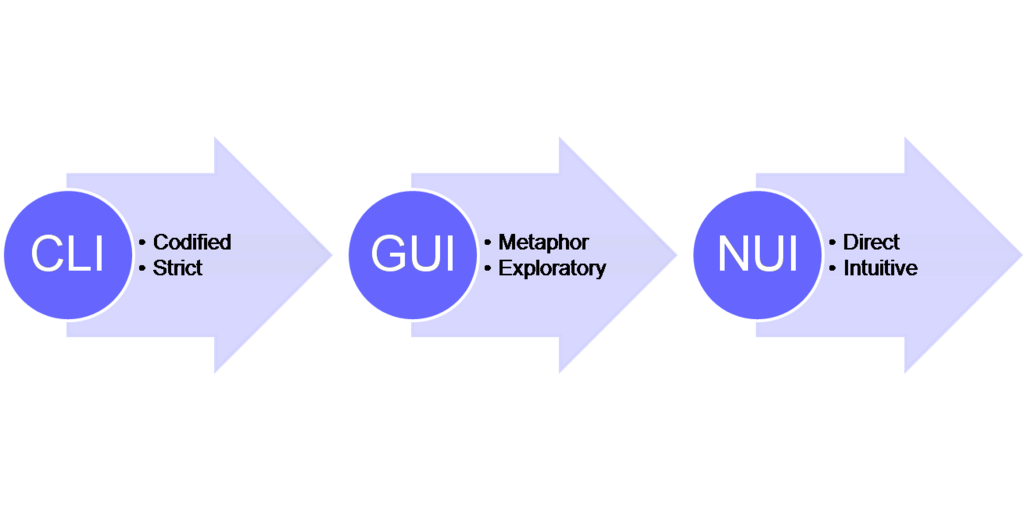
Everything changed with the personal computer in the 1970s and 80s. Operating systems like MS-DOS brought computing to desktops, but they relied on typed commands. The real revolution for everyday users was the arrival of the graphical user interface (GUI), pioneered by Apple's Macintosh. Instead of typing commands, people could now click on icons and menus. This made computers vastly more accessible and led to the modern operating systems we know today, like Microsoft Windows, Apple's macOS, and the open-source Linux.
The Core Components
Modern operating systems are incredibly complex, but they are generally built around a few key components.
The kernel is the absolute core of the operating system. It has complete control over everything in the system and is the first program loaded when the computer starts up. The kernel handles process management, memory management, and communication with hardware.
The user interface (UI) is the part of the OS that you interact with. This can be a command-line interface (CLI), where you type commands, or a graphical user interface (GUI), where you use a mouse to interact with windows, icons, and menus.
Finally, system libraries are collections of pre-written code that applications can use to perform common tasks. For example, instead of every application developer writing their own code to draw a window on the screen, they can simply use a function from a system library. This makes software development much faster and more consistent.
Together, these components work silently in the background, providing the foundation for everything you do on your computer.