Natural Rubber Composites for Corrosion Protection
Natural Rubber Properties
The Building Blocks of Rubber
Natural rubber is a remarkable polymer harvested from the latex of the Hevea brasiliensis tree, a milky white sap. At its core, this natural material is made of long, coiled chains of a molecule called isoprene. Specifically, it's cis-1,4-polyisoprene. The "poly" prefix simply means "many," indicating that thousands of isoprene units are linked together end-to-end.
The unique "cis" configuration is crucial. It means that the molecular groups along the polymer chain are all on the same side. This specific arrangement forces the chains into a tangled, kinked state when at rest. It's this coiled structure that gives natural rubber its famous elasticity.
Stretch and Strength
Natural rubber is defined by two key mechanical properties: elasticity and tensile strength.
Elasticity is the ability to stretch to great lengths and then snap back to the original shape. When you pull on a piece of rubber, the tangled polyisoprene chains uncoil and straighten out. Releasing the force allows the chains to return to their preferred, disordered state. This process can be repeated thousands of times without permanently deforming the material.
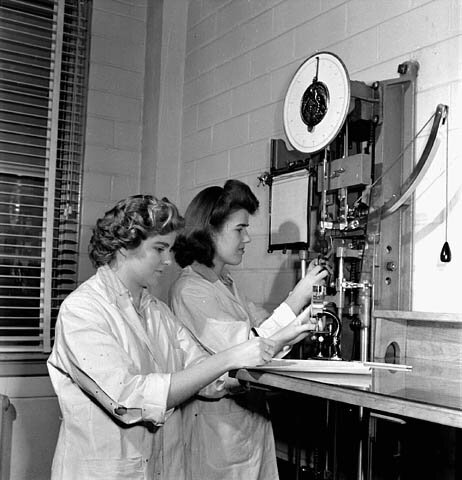
Tensile strength measures the maximum stress a material can withstand while being pulled apart before breaking. Natural rubber is impressively strong. The long polymer chains can slide past one another to a degree, but they also form temporary entanglements that resist breaking. When stretched, the chains align and crystallize, further increasing the material's strength.
Facing the Elements
While strong, natural rubber is not invincible. Its properties are sensitive to environmental conditions, particularly temperature and humidity.
High temperatures cause the polymer chains to move more vigorously, making the rubber softer and weaker. Think of a rubber band left in a hot car, it becomes gummy and easily breaks. Conversely, at very low temperatures, rubber becomes hard and brittle. The polymer chains lock into place, losing their ability to move and uncoil, which can lead to cracking under stress.
Humidity can also pose a problem. Water can be absorbed into the rubber, a process known as hydrolysis, which can slowly degrade the polymer chains and weaken the material over time. This is a crucial consideration for coatings designed to protect against corrosion, as they are often exposed to damp environments.
Natural rubber's sensitivity to heat, cold, and moisture means that in its raw form, it has a limited operating range for protective applications.
These properties have direct implications for rubber's use in protective coatings. Its excellent elasticity allows it to form a flexible barrier that won't crack when the underlying surface expands, contracts, or flexes. Its high tensile strength helps it resist punctures and abrasion.
However, its vulnerability to temperature and moisture must be addressed. For a natural rubber coating to be effective against corrosion, it often needs to be modified or blended with other materials. These additives help stabilize the rubber, extending its useful temperature range and reducing its susceptibility to water damage, ensuring it remains a durable and reliable protective layer.
Ready to check your understanding of rubber's core properties?
What is the primary chemical component of natural rubber?
What aspect of natural rubber's molecular structure is most responsible for its famous elasticity?
Understanding the fundamental chemistry and physical behavior of natural rubber is the first step in appreciating its role as a protective material.