N/A
Introduction to Pedagogical Strategies
The 'How' of Teaching
Pedagogy is the art and science of teaching. It’s not just about what you teach, but how you teach it. A pedagogical strategy is a teacher's approach to instruction. It's the thoughtful plan for helping students understand a new concept or skill. These strategies are grounded in theories about how people learn.
Let's explore three major learning theories that have shaped education.
Behaviorism: This theory focuses on observable behaviors. Learning is seen as a change in behavior resulting from a stimulus-response association. Think of it like training a pet. A specific command (stimulus) followed by a treat (positive reinforcement) leads to the desired action (response). In the classroom, this might look like a rewards system for completing homework.
Cognitivism: This approach views the mind as an information processor, like a computer. Learning involves inputting, organizing, storing, and retrieving information. Cognitivist strategies focus on mental processes like memory, problem-solving, and concept mapping to help students organize new knowledge.
Constructivism: Here, learners are seen as active builders of their own knowledge. Instead of passively receiving information, they construct understanding through their experiences and interactions. A constructivist teacher acts as a facilitator, guiding students as they explore questions and solve problems, much like a guide on an expedition.
Building a Support System
Regardless of the guiding theory, a key strategy for effective teaching is instructional scaffolding. Imagine building a house. You use scaffolding to support the structure as it's being built, then gradually remove it as the house becomes strong enough to stand on its own. The same principle applies to learning.
Scaffolding provides temporary support to help a student bridge a learning gap and master a new skill. The goal is to provide just enough help so the student can achieve the task, but not so much that they become dependent on the support. As the student's ability grows, the support is faded away.
| Scaffolding Technique | Description |
|---|---|
| Modeling | The teacher demonstrates the task or thought process aloud. (I do.) |
| Guided Practice | Students attempt the task with support and feedback from the teacher. (We do.) |
| Visual Aids | Using charts, diagrams, or graphic organizers to clarify concepts. |
| Chunking | Breaking a complex task or large amount of information into smaller, manageable parts. |
| Pre-teaching Vocabulary | Introducing key terms before a new lesson to build foundational knowledge. |
Designing for Everyone
How can we create learning experiences that work for everyone? That's the idea behind Universal Design for Instruction (UDI). The concept comes from architecture. Think of curb cuts in sidewalks. They were designed for wheelchair users, but they also help people with strollers, delivery carts, and rolling suitcases. By designing for the margins, we end up benefiting everyone.
In education, UDI means creating flexible learning environments that proactively accommodate diverse learning needs. Instead of creating one path and then making exceptions, UDI encourages designing multiple paths from the start. This involves providing:
Multiple Means of Representation: Presenting information in various formats, like text, audio, video, and hands-on activities. This gives students different ways to acquire knowledge.
Multiple Means of Action and Expression: Allowing students to demonstrate what they know in different ways, such as through writing, an oral presentation, or a creative project.
Multiple Means of Engagement: Tapping into learners' interests and motivating them in various ways, by offering choices, making content relevant, and fostering a collaborative, supportive classroom.
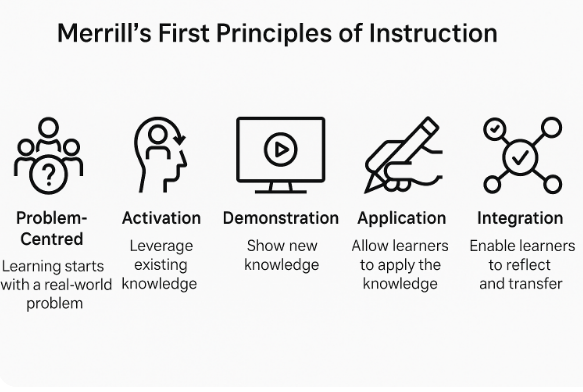
Let's review some of the core concepts we've discussed.
Now, test your understanding of these foundational strategies.
What is pedagogy?
A teacher guides students through the first few steps of a complex science experiment, then allows them to complete the remaining steps in small groups with occasional check-ins. This approach is a clear example of:
By understanding these core theories and strategies, educators can make more intentional choices about how they design learning experiences, creating environments where every student has the opportunity to succeed.