Modular Nuclear Reactors Explained
Introduction to Nuclear Energy
Energy from the Atom's Core
At the heart of every atom is a nucleus, a dense core packed with incredible energy. Nuclear energy is all about unlocking that power. The main way we do this today is through a process called nuclear fission.
fission
noun
The act of dividing or splitting something into two or more parts.
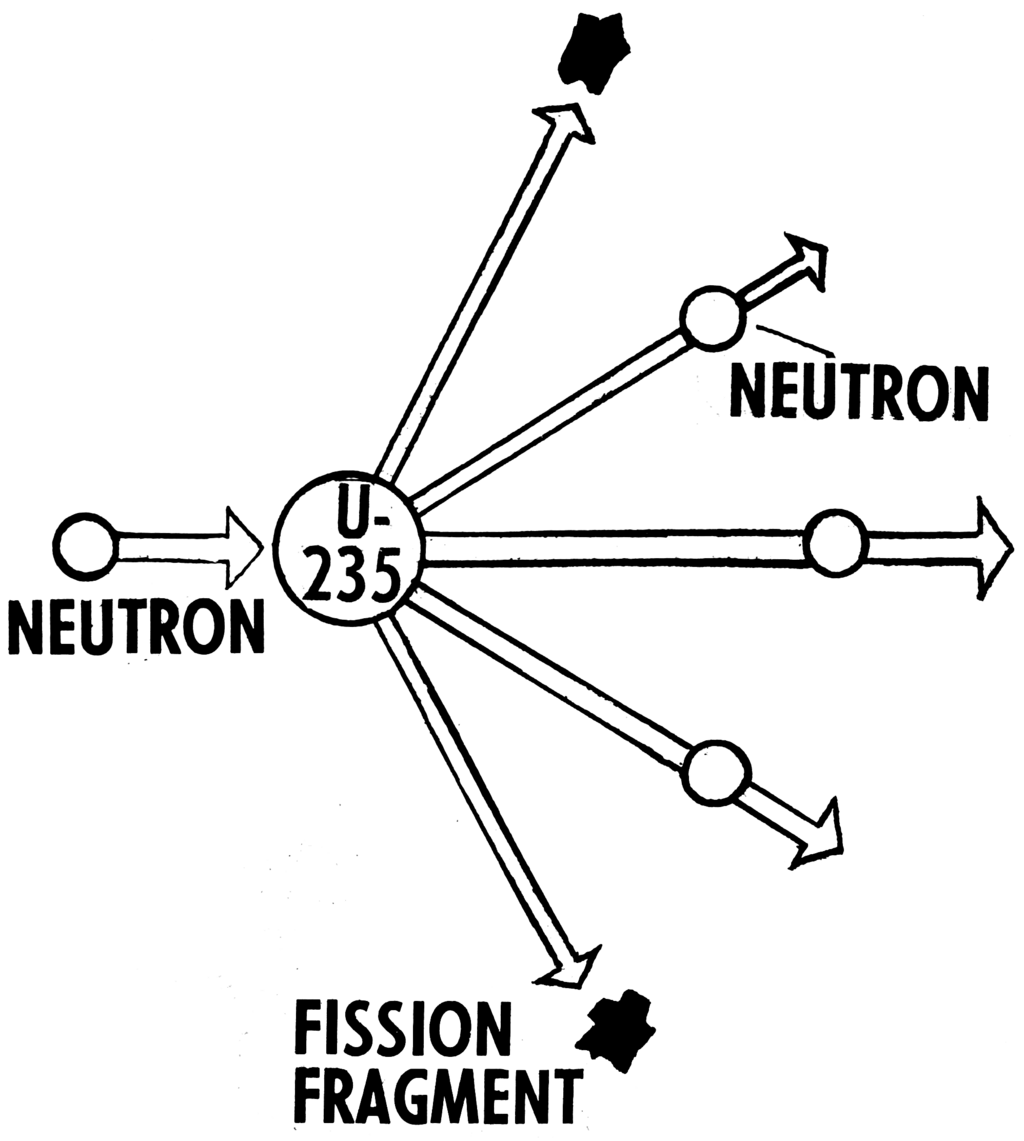
Imagine a very large, unstable atom, like Uranium-235. When a tiny particle called a neutron hits its nucleus, the nucleus splits into smaller atoms. This split releases a huge amount of energy as heat, along with a few more neutrons.
Those new neutrons can then fly off and hit other uranium atoms, causing them to split, too. This creates a self-sustaining chain reaction, releasing a continuous flow of energy.
From Experiment to Power Plant
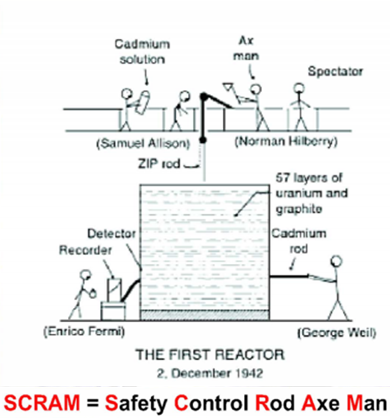
The idea of splitting the atom moved from theory to reality in the 1930s. This discovery paved the way for the Manhattan Project during World War II. In 1942, a team led by physicist Enrico Fermi achieved the first controlled, self-sustaining nuclear chain reaction in a lab underneath a football stadium at the University of Chicago.
After the war, the focus shifted to finding peaceful uses for this powerful new technology. The "Atoms for Peace" initiative in the 1950s spurred the development of commercial nuclear power plants. The first plant to generate electricity for a public grid came online in the Soviet Union in 1954, followed by others in the United States and the United Kingdom. This marked the beginning of the nuclear age for civilian energy.
Inside a Nuclear Reactor
A nuclear power plant works a lot like a traditional coal or gas plant: it uses heat to create steam, which then spins a turbine to generate electricity. The key difference is the heat source. Instead of burning fossil fuels, a nuclear plant uses the heat from a controlled fission reaction.
The entire process happens inside a secure containment building. The fission reaction heats water, turning it into high-pressure steam. This steam spins a large turbine, which is connected to a generator that produces electricity. The steam is then cooled back into water and cycled back to be heated again.
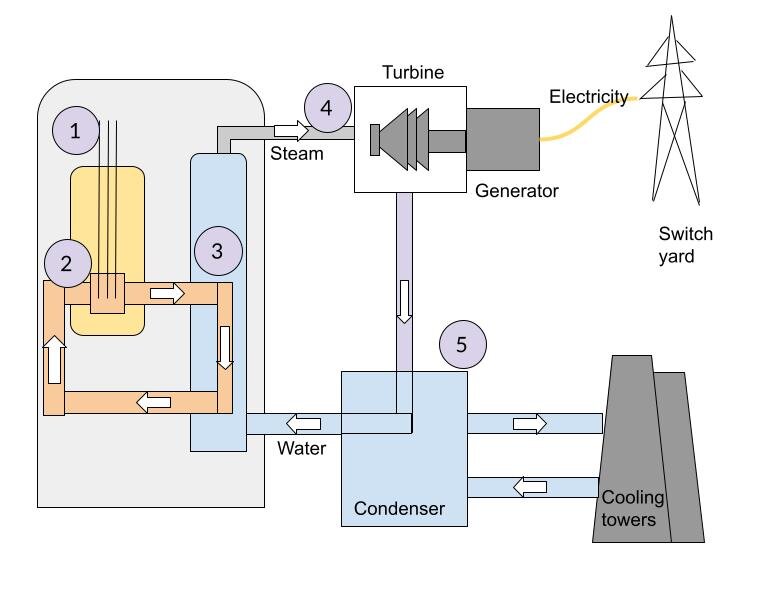
While there are many reactor designs, most traditional plants fall into two categories: Pressurized Water Reactors (PWRs) and Boiling Water Reactors (BWRs). They both use water as a coolant and to slow down neutrons, but they handle steam creation differently.
| Feature | Pressurized Water Reactor (PWR) | Boiling Water Reactor (BWR) |
|---|---|---|
| Water Pressure | Water is kept under very high pressure to prevent it from boiling. | Water is allowed to boil directly in the reactor vessel. |
| Steam Generation | Hot, pressurized water flows to a separate steam generator. | Steam is produced directly inside the reactor core. |
| Loops | Two main water loops: one in the reactor, one for the turbine. | A single water loop that goes from the reactor to the turbine. |
| Prevalence | The most common type of reactor worldwide. | The second most common type. |
Benefits and Challenges
Nuclear power has a unique set of pros and cons that make it a major topic of discussion in energy policy.
On the plus side, it's a powerful source of clean energy. Nuclear reactors don't produce greenhouse gases like carbon dioxide during operation. The amount of fuel needed is also tiny compared to fossil fuels; a single uranium fuel pellet, about the size of a gummy bear, can produce as much energy as a ton of coal.
One of the key advantages of nuclear power is its ability to provide consistent and reliable baseload electricity.
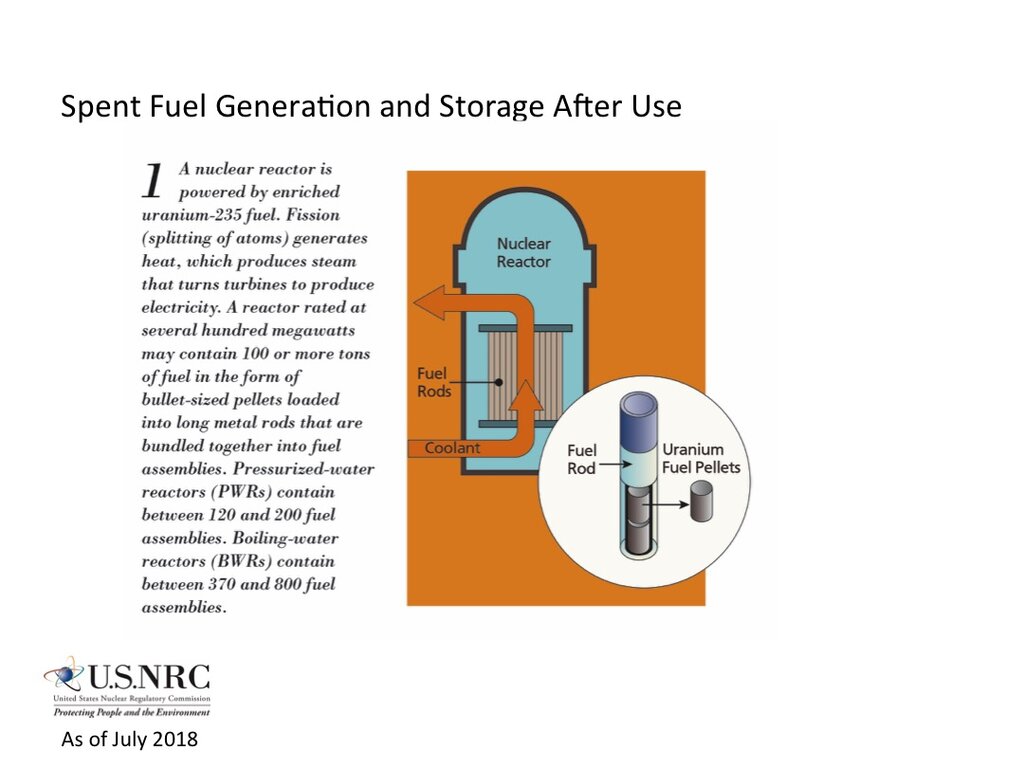
However, nuclear power also faces significant hurdles. The biggest is managing nuclear waste. The used or "spent" fuel from a reactor is radioactive and must be safely stored for thousands of years. Currently, most spent fuel is stored on-site at power plants in specially designed pools of water or in dry casks.
Safety is another major concern. While modern reactors have multiple layers of safety systems, high-profile accidents like Chernobyl in 1986 and Fukushima in 2011 have shaped public perception and led to stricter regulations. Finally, building a new nuclear power plant is a massive undertaking, requiring billions of dollars and often more than a decade to complete.
Now, let's review some of the key terms we've covered.
Ready to test your knowledge? Let's see what you've learned.
What is the primary process used in modern nuclear power plants to generate heat?
A key advantage of nuclear power is that a single uranium fuel pellet can produce as much energy as a ton of ____.
Understanding these fundamentals is the first step in appreciating the complex world of nuclear energy, from its historical roots to its potential role in a clean energy future.