Mechanisms of Biological Systems
Metabolic Flux and Bioenergetics
The Cell's Energy Economy
A cell's metabolism is like a bustling city's economy. It's a complex network of chemical reactions constantly converting resources into energy and building blocks. Just like a real economy, it's governed by strict rules of supply, demand, and efficiency. The core currency isn't money; it's energy, and the fundamental law is thermodynamics.
Every chemical reaction involves a change in free energy, denoted as . Reactions that release energy have a negative and occur spontaneously. These are called exergonic reactions. Think of them as 'downhill' processes. Reactions that require an energy input have a positive and are non-spontaneous. These endergonic, or 'uphill,' reactions won't happen on their own.
So how does a cell build complex molecules like proteins and DNA if those reactions are 'uphill'? It uses a strategy called energy coupling.
The cell pairs an energy-releasing (exergonic) reaction, like the breakdown of ATP, with an energy-requiring (endergonic) one. The energy released from the first reaction drives the second. It's like using the force of a waterfall to turn a mill wheel that grinds grain. The breakdown of ATP to ADP and phosphate is the cell's go-to waterfall, releasing just enough energy to power most cellular work.
Regulating the Assembly Line
Metabolic pathways like glycolysis and the Krebs cycle are the cell's assembly lines. They're not just running at full speed all the time. Instead, their activity is precisely tuned to the cell's needs. This regulation is primarily handled by enzymes, which act as catalysts and control points.
One of the most important regulatory mechanisms is allosteric regulation. This happens when a molecule binds to an enzyme at a site other than the active site, changing the enzyme's shape and either activating or inhibiting its function. A classic example is the enzyme phosphofructokinase-1 (PFK-1), a key control point in glycolysis. When ATP levels are high, ATP itself binds to an allosteric site on PFK-1, inhibiting the enzyme and slowing down glycolysis. The cell is essentially saying, 'We have enough energy, let's slow production.' When ATP is low and its breakdown product, AMP, is high, AMP binds to the same site and activates PFK-1, ramping up glucose breakdown.
This is a form of negative feedback, or feedback inhibition, where the final product of a pathway shuts down its own production line. It’s an elegant and efficient way for the cell to maintain homeostasis and avoid wasting resources by producing something it already has in abundance.
Cashing in the High-Energy Checks
Glycolysis and the Krebs cycle are crucial, but they produce only a small amount of ATP directly. Their main bioenergetic contribution is loading up high-energy electron carriers, NADH and FADH₂. Think of these molecules as charged batteries or cashier's checks written out for 'A Large Amount of ATP.' To cash them, the cell sends them to the electron transport chain (ETC) located in the inner membrane of the mitochondria.
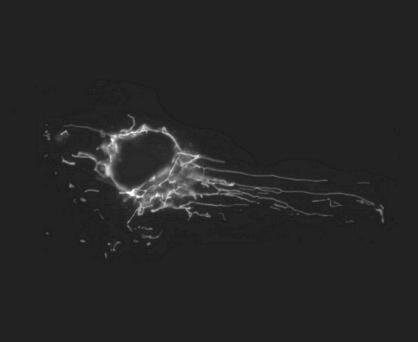
The ETC is a series of four protein complexes that pass electrons from NADH and FADH₂ down a line, a bit like a bucket brigade. As the electrons move from a higher energy state to a lower one, they release energy. This energy isn't used to make ATP directly. Instead, it's used to pump protons (H⁺ ions) from the mitochondrial matrix into the space between the inner and outer membranes. This creates a steep electrochemical gradient, a powerful source of potential energy, like water building up behind a dam.
The process that links this proton gradient to ATP synthesis is called . The protons want to flow back down their concentration gradient into the matrix. The only way they can do this is by passing through a remarkable molecular machine called ATP synthase. As protons stream through it, they cause a part of the enzyme to spin, physically driving the synthesis of ATP from ADP and inorganic phosphate. It's a stunning example of mechanical energy conversion at the molecular level.
Metabolic Trade-Offs
The entire process of oxidative phosphorylation is incredibly efficient, but it has one absolute requirement: oxygen. Oxygen acts as the final electron acceptor at the end of the ETC, combining with electrons and protons to form water. Without it, the entire chain backs up and grinds to a halt.
So what happens when oxygen is scarce, like during intense exercise? Cells switch to their anaerobic backup plan: fermentation. This process allows glycolysis to continue producing a small amount of ATP by recycling the NADH back to NAD⁺. In humans, this involves converting pyruvate into lactate. The trade-off is significant. While aerobic respiration can yield around 32-38 ATP per glucose molecule, fermentation yields only 2 ATP.
| Pathway | Oxygen Required? | Net ATP per Glucose |
|---|---|---|
| Aerobic Respiration | Yes | ~32-38 |
| Anaerobic Fermentation | No | 2 |
The ability to regulate these pathways and balance the trade-offs between speed and efficiency is fundamental to life. From the perspective of bioenergetics, every organism is a master economist, making constant, life-sustaining calculations about how to best manage its energy flux.
A chemical reaction has a positive ΔG. What does this indicate about the reaction?
In the regulation of glycolysis, high levels of ATP inhibit the enzyme phosphofructokinase-1 (PFK-1) by binding to a site other than its active site. What is this type of regulation called?