MBA Essentials for Tech Leaders
Strategic Management
Seeing the Whole Board
Strategy isn't just about having a plan. It's about making deliberate choices to win. Think of it like a game of chess. A plan might be to move your knight. A strategy is understanding why you're moving that knight, how it positions you against your opponent, and what future moves it opens up. In business, this means figuring out where to compete and how to be different.
Strategy
noun
A set of guiding principles and actions that a company takes to achieve its major objectives and secure a competitive advantage in the market.
For a technology consulting firm, this isn't about simply completing projects. It’s about deciding which clients to pursue, what services to offer, and what makes your firm the obvious choice over dozens of others. It’s the high-level thinking that guides all the day-to-day decisions.
Analyzing the Battlefield
Before you can devise a winning strategy, you need a clear picture of the landscape. Strategic analysis frameworks are tools for just that. They help you look at your organization and its environment in a structured way.
One of the most common starting points is the SWOT analysis. It’s a simple but powerful way to categorize what’s happening both inside and outside your company.
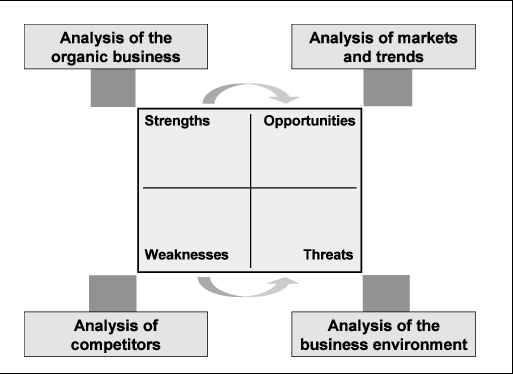
Imagine a boutique tech consultancy specializing in AI integration:
- Strengths (Internal): A team of world-class data scientists, a proprietary AI model that's faster than competitors'.
- Weaknesses (Internal): A small sales team, limited brand recognition outside of its niche.
- Opportunities (External): A surge in demand for generative AI solutions in the financial sector, a new government grant for tech startups.
- Threats (External): A large, established consulting firm just launched its own AI practice, potential regulations on AI data usage.
By mapping these out, the firm can see how to use its strengths to seize opportunities while managing its weaknesses and guarding against threats.
SWOT gives you a snapshot. To understand the underlying rules of the game in your industry, you need a different tool.
Michael Porter’s Five Forces model helps analyze the competitive structure of an industry. It looks beyond direct competitors to understand the forces that shape profitability and attractiveness. For a tech consulting firm, this analysis is crucial for positioning itself effectively.
For example, the Threat of New Entrants in tech consulting can be high because starting a small firm has low capital costs. However, established firms build moats with reputation and client relationships. Bargaining Power of Buyers is often high, as sophisticated clients can demand specific outcomes and pricing. Bargaining Power of Suppliers might relate to the talent pool; a shortage of skilled quantum computing experts gives those individuals high bargaining power for salaries. The Threat of Substitutes could be a company choosing to build an in-house team instead of hiring a consultant. Finally, Industry Rivalry in consulting is intense, with many firms competing on expertise, price, and methodology.
Gaining an Edge
Analysis is useless without action. The goal is to find and sustain a competitive advantage, which is the unique reason a client chooses your firm over all others. There are a few classic ways to think about achieving this.
A good business strategy presents a specific set of steps which the company needs to take to overcome a defined issue.
One framework is Porter's Generic Strategies, which suggests that a firm can outperform its rivals through one of three approaches.
| Strategy | Description | Tech Consulting Example |
|---|---|---|
| Cost Leadership | Becoming the lowest-cost provider in the industry. | A firm that heavily automates its project management and uses offshore talent to offer cloud migration services at a significantly lower price point. |
| Differentiation | Being unique in a way that is highly valued by customers. | A consultancy that specializes exclusively in cybersecurity for financial institutions, offering deep, unparalleled expertise that commands a premium price. |
| Focus | Concentrating on a narrow segment of the market and serving it exceptionally well. | A small firm that only provides data analytics services to e-commerce startups, tailoring its tools and approach to their specific needs. |
Another perspective is the Resource-Based View (RBV), which argues that competitive advantage comes from within. It suggests a firm is a bundle of resources and capabilities. An advantage is sustainable when these resources are:
- Valuable: They help exploit opportunities or neutralize threats.
- Rare: Not many competitors have them.
- Inimitable: They are difficult or costly to copy.
- Non-substitutable: They cannot be replaced by other resources.
A consulting firm’s true competitive advantage might not be its service list, but its internal culture of innovation (valuable, rare, inimitable) or a key leader's industry relationships (non-substitutable).
From Plan to Action
A brilliant strategy on paper is worthless if it can't be put into practice. Strategy implementation is the process of turning strategic plans into actions to reach goals. This is often the hardest part, bridging the gap between big ideas and everyday operations.
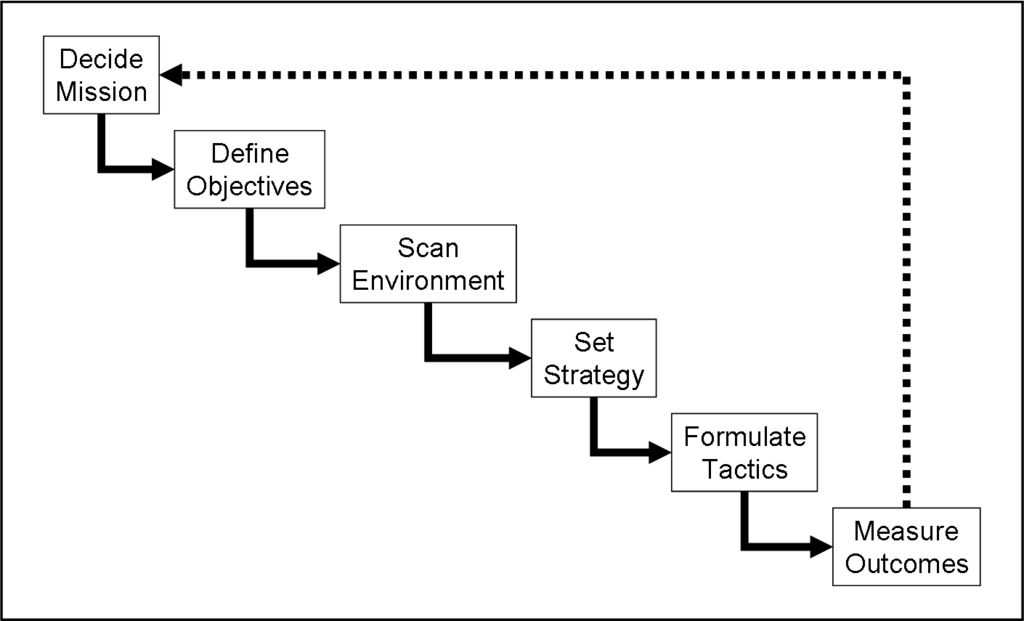
Effective implementation involves several key elements:
-
Clear Communication: Everyone in the organization, from a senior partner to a junior analyst, must understand the strategy and their role in it. If the strategy is to be the premier expert in a niche technology, analysts need to know their training should focus there.
-
Resource Allocation: The company must dedicate the necessary people, technology, and budget to strategic initiatives. A firm can't aim for differentiation in AI without investing heavily in R&D and top AI talent.
-
Organizational Structure: The company's structure must support its strategy. A firm focused on providing agile, responsive teams to startups may adopt a flat, decentralized structure, while one handling massive government contracts might need a more hierarchical and process-driven structure.
-
Performance Measurement: You can't manage what you don't measure. Key Performance Indicators (KPIs) must be aligned with the strategy. If the goal is customer intimacy, a key metric might be the rate of repeat business, not just the number of new clients.
For a tech consulting firm, alignment is everything. A strategy to be a low-cost leader fails if the firm keeps hiring expensive PhDs from top schools who expect to work on cutting-edge, high-budget projects.
Implementation isn't a single event. It's a continuous process of acting, learning, and adjusting as the market, technology, and competition evolve. Now let's see what you've learned about building and executing a strategy.
What is the primary difference between a business 'plan' and a 'strategy'?
A tech consulting firm learns that a key competitor has just patented a revolutionary new algorithm. In a SWOT analysis, how would this development be categorized?