Mastering Your Mind
Brain Anatomy
The Brain's Three Main Parts
The human brain is an incredibly complex organ, but we can understand its basic structure by dividing it into three main sections: the cerebrum, the cerebellum, and the brainstem. Each part has a distinct set of responsibilities, but they all work together seamlessly.
The cerebrum is the largest part of the brain and what most people picture when they think of a brain. It's responsible for higher-level functions like thought, language, and memory. It's divided into two halves, or hemispheres, a right and a left. These two sides are connected by a thick bundle of nerves called the corpus callosum, which lets them communicate.
The Four Lobes of the Cerebrum
The cerebrum's wrinkly outer layer, the cerebral cortex, is further divided into four distinct sections called lobes. Each lobe specializes in different tasks, acting like departments in a large company.
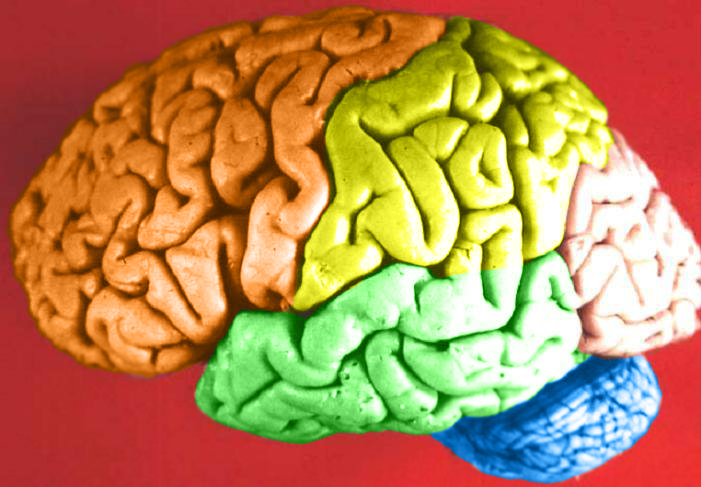
Frontal Lobe: Located at the front of your head, just behind your forehead, this lobe is your brain's command center. It manages complex cognitive processes like planning, problem-solving, decision-making, and controlling voluntary movements. It's also crucial for personality and social behavior.
Parietal Lobe: Situated behind the frontal lobe, the parietal lobe is responsible for processing sensory information. When you touch a hot stove or feel the texture of a piece of fabric, your parietal lobe is at work. It also plays a key role in spatial awareness and navigation, helping you understand where your body is in relation to the world around you.
Temporal Lobe: Found on the sides of your head, near your ears, the temporal lobe is the primary hub for processing sounds and understanding language. It also plays a vital role in forming and retrieving memories, which is why damage to this area can affect a person's ability to remember past events.
Occipital Lobe: At the very back of the brain is the occipital lobe. Its main job is to interpret visual information sent from your eyes. Everything you see, from colors and shapes to movement, is processed here.
Beyond the Cerebrum
While the cerebrum handles conscious thought, two other structures manage essential, often automatic, functions.
The cerebellum, which means "little brain" in Latin, is located at the back of the head beneath the occipital lobe. Its primary role is to coordinate voluntary movements, posture, balance, and coordination. When you ride a bike or type on a keyboard without thinking about each movement, you have your cerebellum to thank.
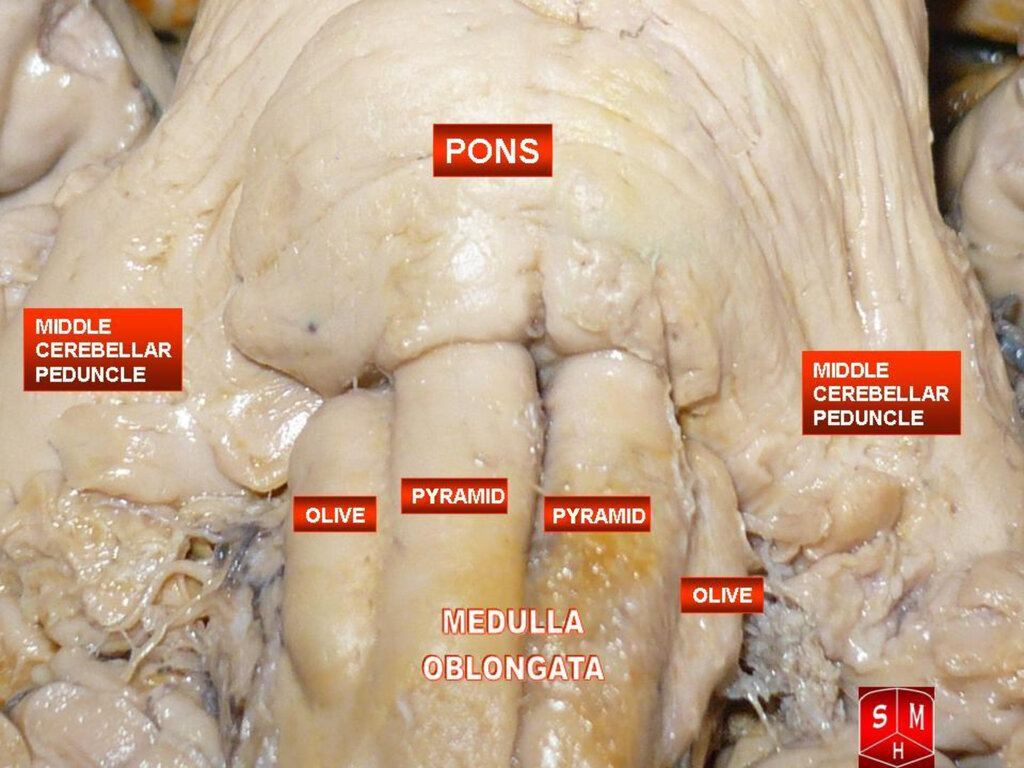
Finally, the brainstem connects the cerebrum and cerebellum to the spinal cord. It's the brain's most primitive part, responsible for regulating vital, unconscious functions. This includes breathing, heart rate, body temperature, and sleep cycles. It's the silent, tireless manager that keeps your body running.
Time to check what you've learned about the brain's anatomy.
Which part of the brain is primarily responsible for coordinating voluntary movements, balance, and posture, allowing you to do things like ride a bike?
After a head injury, a patient has difficulty understanding spoken language. Which lobe of the cerebrum was most likely damaged?
Understanding these fundamental parts provides a map for how the brain processes information and controls everything we do.