Mastering Your 3D Printer
3D Printing Technologies
A Family of Technologies
The term "3D printing" doesn't refer to a single process. It's an umbrella term for a group of additive manufacturing technologies. Each one builds objects layer by layer from a digital file, but they go about it in fundamentally different ways. The method you choose depends on the material, the required level of detail, and the object's final application.
Material Extrusion (FDM)
Fused Deposition Modeling, or FDM, is the most common and recognisable type of 3D printing. It works by feeding a thermoplastic filament through a heated extruder nozzle. The printer melts the plastic and deposits it in thin layers on a build platform, tracing the object's cross-section. Each layer fuses to the one below it as it cools and solidifies.
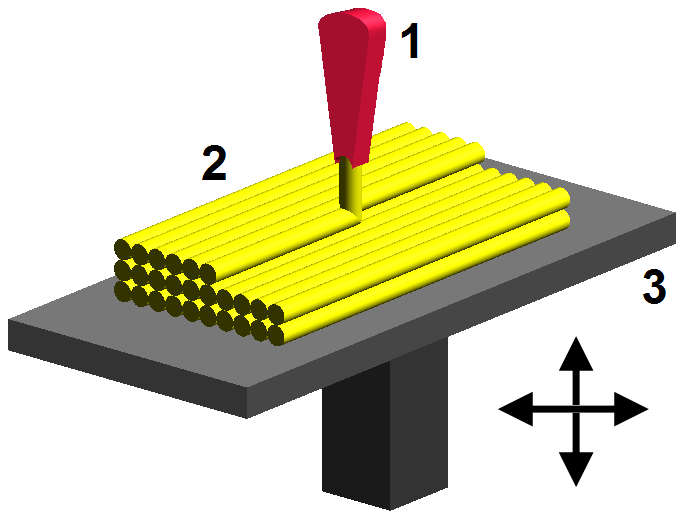
This method is popular for its simplicity, speed, and low cost, making it ideal for rapid prototyping and hobbyist projects. The trade-off is often in resolution and surface finish. The layered nature of the print is usually visible, and complex shapes may require support structures that need to be removed later.
Light and Liquid (SLA)
Vat Photopolymerization technologies like Stereolithography (SLA) take a different approach. Instead of melting plastic, SLA uses a vat of liquid photopolymer resin and a UV light source, typically a laser. The laser selectively traces a layer's pattern onto the surface of the resin, causing it to cure, or harden.
The build platform then moves by a single layer's thickness, and the process repeats until the entire object is formed.
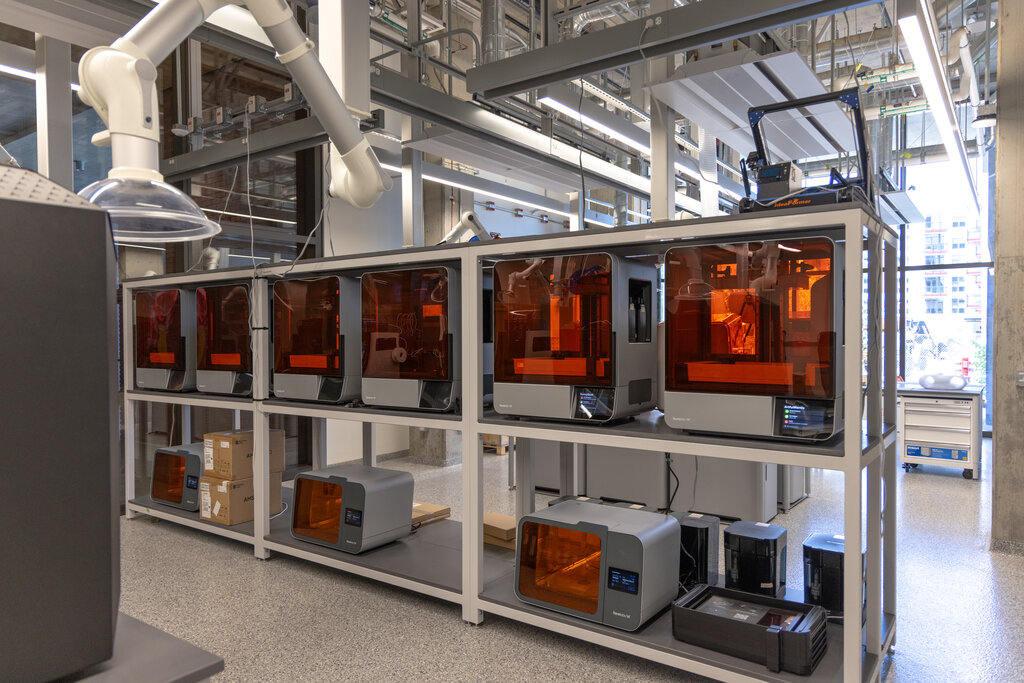
SLA is known for producing parts with extremely high resolution and a smooth surface finish, making it perfect for intricate models like jewellery or dental applications. However, the materials are more expensive and less durable than FDM thermoplastics, and post-processing often involves washing the print and curing it further in a UV chamber.
Powder and Lasers (SLS)
Powder Bed Fusion works by using a high-powered laser to fuse small particles of material together. In Selective Laser Sintering (SLS), the most common form, a laser sinters (heats and fuses) powdered polymer. The process starts with a thin layer of powder spread across the build platform. The laser scans the cross-section of the object, fusing the particles.
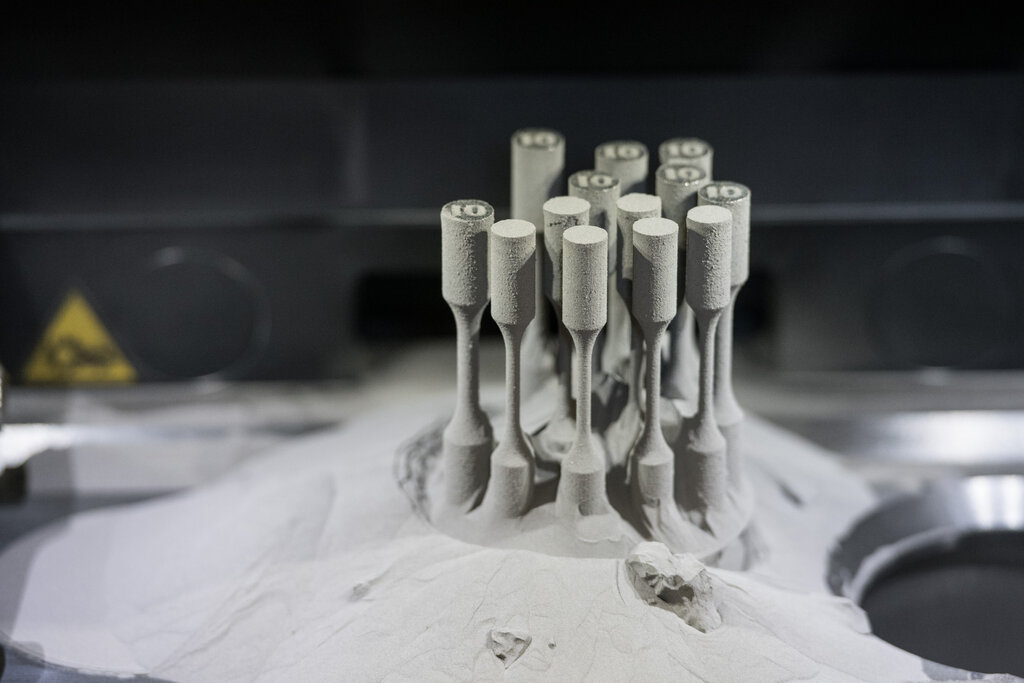
After a layer is complete, the platform lowers, and a new layer of powder is applied. A key advantage of SLS is that the surrounding unfused powder acts as a natural support for the object. This allows for the creation of complex, interlocking geometries that would be impossible with FDM or SLA without extensive support structures.
This technology is not limited to plastics; methods like Selective Laser Melting (SLM) and Direct Metal Laser Sintering (DMLS) use the same principle to create robust metal parts.
Other Key Methods
While FDM, SLA, and SLS are common, several other technologies serve specific industrial needs.
Binder Jetting: This process uses a printhead, similar to an inkjet printer, to deposit a liquid binding agent onto a bed of powder (which can be sand, metal, or ceramics). It can produce full-colour models by adding colour pigments to the binder, but the resulting parts often require post-processing to improve strength.
Material Jetting: This technology also uses a printhead to deposit droplets of photopolymer onto a build platform. These droplets are then instantly cured by UV light. Material jetting can produce highly accurate parts with a smooth finish and can even combine different materials and colours in a single print.
Sheet Lamination: This method builds objects by bonding layers of material together. The materials come in sheets, which can be paper, plastic, or metal foil. Each layer is cut to shape with a laser or blade and then bonded to the layer below it.
Directed Energy Deposition (DED): DED is often used for repairing or adding material to existing components. A nozzle, sometimes mounted on a multi-axis robotic arm, deposits molten material onto a surface. The material is melted as it's deposited, using a laser or electron beam. This process is common in high-value industries for creating large metal parts.
Each of these technologies opens up different possibilities for manufacturing, from creating full-colour prototypes to repairing critical industrial machinery.
Let's test your understanding of these different methods.
Which 3D printing technology works by melting and extruding a thermoplastic filament through a nozzle?
You need to create a prototype with very fine details and a smooth surface, like a piece of jewellery. Which technology would be the most suitable choice?
Understanding the principles, strengths, and weaknesses of each technology is the first step in mastering additive manufacturing.