Mastering Women's Tailoring and Structure
Bust and Torso Shaping
Sculpting with Fabric
Moving beyond basic seams, advanced tailoring is about architecture. You are no longer just joining flat pieces of fabric; you are sculpting a three-dimensional shell to precisely fit the contours of the human form. The primary tool for this is the dart, which transforms a 2D plane into a shape that can accommodate curves like the bust and waist.
Apex
noun
The highest point of a curve on the body, most commonly used to refer to the bust point. It serves as the pivotal location around which darts are positioned and rotated to create shape.
In a bodice block, all darts originate from the seam lines and point toward the apex, or bust point. While they stop just short of the apex to avoid creating a point on the finished garment, it remains their navigational centre. The real artistry begins when we move these darts around. This process, known as dart manipulation, allows you to change the design of a garment without altering its fundamental fit. A standard bust dart can be rotated to the shoulder, the armhole, or combined with a waist dart to create a different stylistic line.
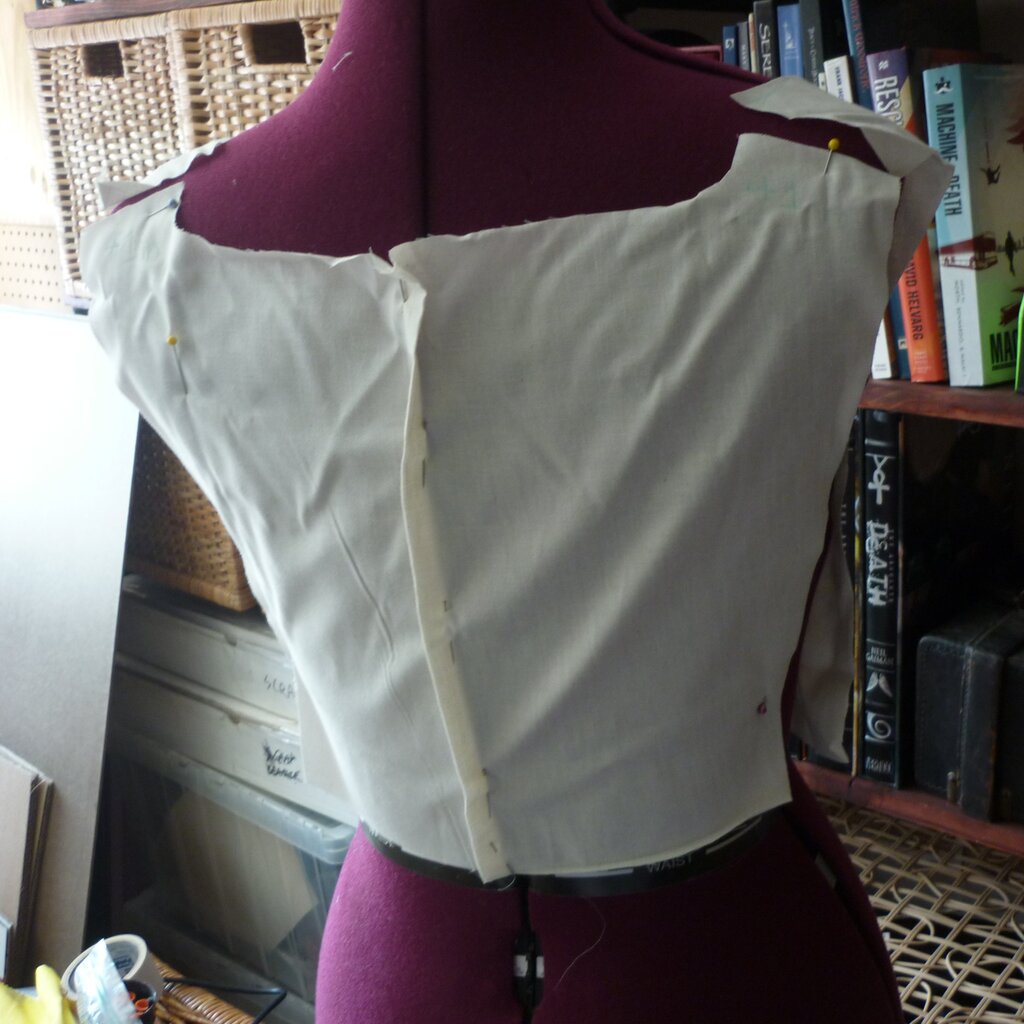
The trick to a test garment is to sew or baste or even pin just the main pieces of the garment together so you can try it on and see any areas that need adjusting before you sew any details.
For a truly bespoke fit, especially in structured jackets, simple straight darts are often insufficient. This is where contour darting comes into play. Instead of straight legs, these darts have curved lines that mirror the body's transitions from the bust, over the ribs, and into the waist. A well-placed contour dart, often called a "fish-eye" dart when it's in the middle of a panel, removes excess fabric much more effectively than a straight dart, creating a close, sculpted silhouette without puckering.
The Full Bust Adjustment
Commercial patterns are typically drafted for a B-cup size. When tailoring for a fuller bust, simply using a larger pattern size won't work, as it will make the garment too big in the shoulders and back. The solution is a Full Bust Adjustment (FBA), a crucial pattern alteration for structured garments.
The FBA adds width and length directly at the front of the pattern, localized around the bust apex, without altering the surrounding areas. The is the standard technique. It involves cutting the pattern along specific lines radiating from the apex and spreading the pieces apart. This opening adds the necessary room for the bust, which is then absorbed into a larger dart. This ensures the garment fits smoothly over the bust while keeping the waist, hips, and shoulders true to the intended size.
Maintaining Stability
All this shaping puts stress on the fabric. As you cut, spread, and introduce complex darts, you risk distorting the fabric's grainline. The grainline, the lengthwise direction of the weave, provides the garment's structural stability. It's crucial to ensure it remains perfectly vertical on the final pattern piece.
After performing an FBA or rotating darts, you must redraw the grainline, making sure it runs parallel to the centre front. In a jacket, a stable grainline prevents the fronts from twisting or sagging over time. This architectural integrity is what separates amateur sewing from professional tailoring. It ensures the garment hangs correctly and maintains its shape, regardless of the complex shaping required to fit the body.
Time to test your knowledge on shaping the torso.
What is the primary function of a dart in garment construction?
A dressmaker is fitting a bodice for a client and finds there is excess fabric between the bust and the waist, creating a baggy look. Which type of dart would be most effective for creating a close, sculpted silhouette in this area?
Mastering these techniques of dart manipulation and fitting adjustments is fundamental to creating garments that don't just cover the body, but celebrate its form.