Mastering Vocal Performance and Control
Advanced Breath Mechanics
Beyond Simple Inhaling
You already know how to breathe. But to sing professionally, you need to control that breath with precision. This isn't about taking in more air; it's about managing how that air is released. The goal is to create a steady, reliable column of air that supports your voice without creating tension in your throat.
This level of control comes from a dynamic relationship between your diaphragm, ribcage, and abdominal muscles. We'll move beyond the simple 'in and out' of breathing and into the art of creating consistent, managed air pressure. This is the foundation of vocal power and stamina.
The Essence of Appoggio
The cornerstone of advanced vocal breath management is a technique called . The word is Italian for “to lean” or “to support,” and that’s exactly what it feels like. It’s the sensation of “leaning into the breath.” This isn't a static holding position, but a dynamic balance of muscular engagement.
Instead of simply pushing air out with your abs, Appoggio involves managing the resistance of your inhalation muscles against your exhalation muscles. As you sing, your diaphragm naturally wants to rise and your ribcage wants to collapse. The Appoggio technique trains your intercostal muscles (the muscles between your ribs) and diaphragm to slow this process down. You maintain a feeling of expansion around your lower ribs and back, creating a controlled, steady release of air.
This diagram illustrates the difference. On the left, a singer exhales without support; the diaphragm rises quickly and the ribcage collapses, causing an unstable and unsupported sound. On the right, using Appoggio, the singer maintains ribcage expansion and controls the ascent of the diaphragm, resulting in a steady stream of air.
Pressure and Power
Why does this muscular battle matter? It's all about managing —the air pressure you build up directly beneath your vocal folds. Consistent subglottal pressure is what allows you to sustain long phrases, sing at any volume without strain, and maintain a stable pitch. If the pressure is inconsistent, your voice will waver or crack.
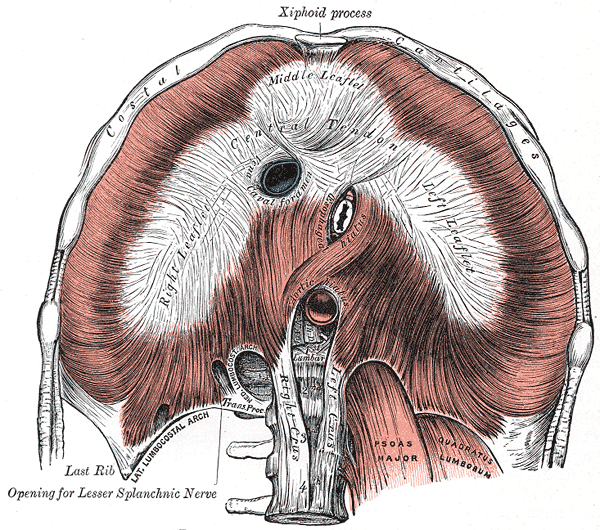
Your intercostal muscles are crucial for this. By consciously keeping your ribcage expanded laterally and in your back during a phrase, you prevent the lungs from collapsing too quickly. This creates a more stable 'container' for the air.
At the same time, your deep abdominal muscles and pelvic floor provide a gentle, inward pressure. This engagement supports the organs beneath the diaphragm, regulating its rate of return. Think of it like a hydraulic press: the diaphragm wants to push up, and your core provides a slow, steady counter-force. This coordination allows you to 'pace' your breath, rationing it out perfectly for a long, demanding musical phrase.
Efficient breath management is essential for fostering the musical growth of your singers.
Building Your Support
Understanding the theory is one thing; feeling it is another. Diaphragmatic resistance exercises help build the necessary muscular awareness and strength. These aren't about brute force, but about refined control.
One effective exercise is the controlled hiss. Inhale deeply, allowing your lower ribs to expand. Then, release the air on a very thin, steady 'ssss' sound. The goal is to make the hiss last as long as possible while remaining perfectly consistent in volume and quality. Place your hands on your lower ribs or back; you should feel them stay expanded for a surprisingly long time before they begin to move inward. This trains the muscles to resist the natural urge to collapse.
Another exercise involves dynamic changes. Sing a long, sustained note on a vowel like 'ah'. While holding the note, slowly crescendo from very soft to very loud, and then decrescendo back to soft. Your goal is to keep the pitch perfectly stable and the tone quality consistent. To do this, you'll have to precisely manage the subglottal pressure using your support system. When you get louder, your core engagement will increase to provide more pressure. As you get softer, you'll need to maintain that feeling of expansion to prevent the tone from becoming breathy or weak.
Mastering these mechanics decouples your throat from your breath source. Your larynx can finally relax, free to simply shape the sound, while the powerful muscles of your core do the hard work of supporting it.
Let's check your understanding of these advanced concepts.
What is the primary goal of advanced breathing techniques for singing, as described in the text?
The term 'Appoggio' describes a dynamic balance which is best characterised as:
By integrating these techniques into your practice, you'll move from being a singer who simply breathes to one who expertly manages the engine of their voice.