Mastering Transcranial Magnetic Stimulation
Introduction to TMS
Talking to the Brain with Magnets
Transcranial Magnetic Stimulation, or TMS, is a way to influence brain activity from outside the head, without any surgery. It uses powerful, focused magnetic fields to stimulate specific areas of the brain. Think of it as a conversation with your neurons, using magnetism as the language.
The idea isn't entirely new. It builds on the principle of electromagnetic induction, discovered by Michael Faraday in the 1830s. Faraday found that a changing magnetic field could create an electrical current in a nearby conductor. It took over 150 years, but in 1985, a team led by Anthony Barker applied this concept to the human brain, successfully using a magnetic pulse to make a thumb twitch. That experiment marked the birth of modern TMS.
How It Works
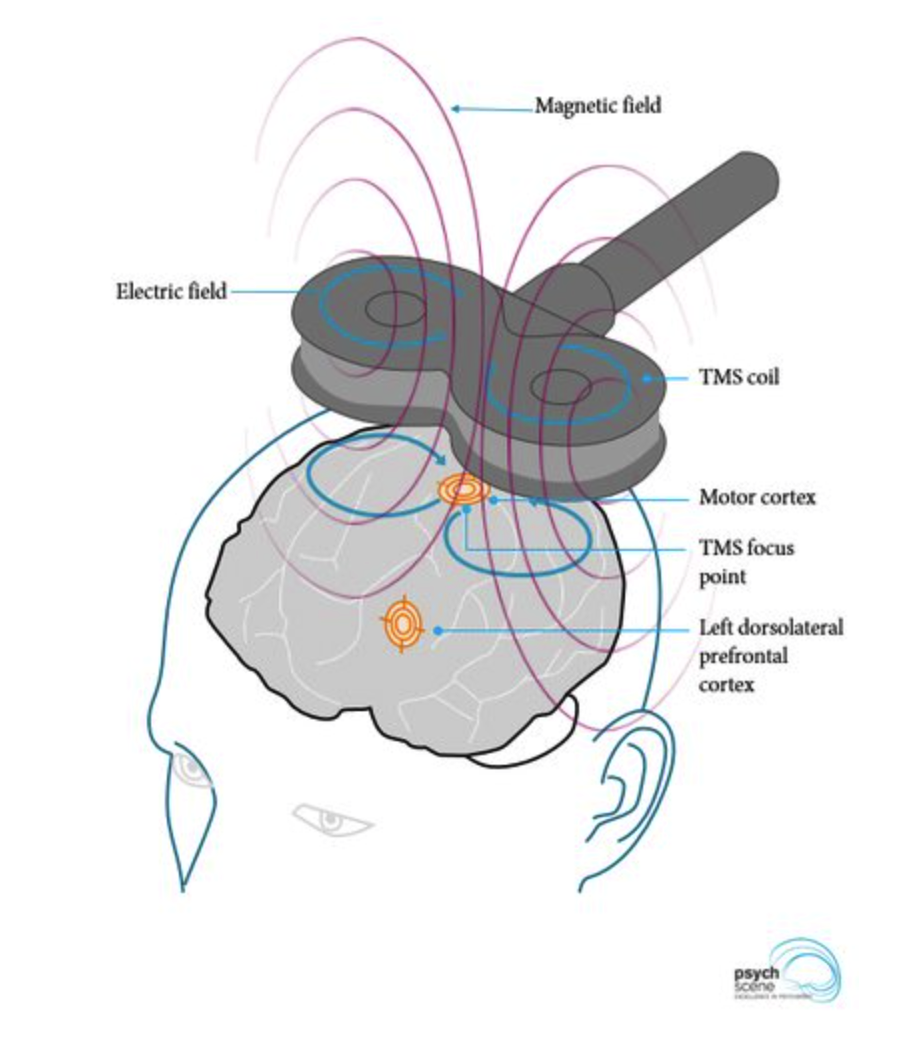
The core principle of TMS is surprisingly straightforward. A special device, often shaped like a paddle or a figure-eight, contains a coil of wire. When a strong, brief electrical current is passed through this coil, it generates a powerful magnetic field that pulses for a fraction of a second.
This magnetic field can pass harmlessly through your scalp and skull. But when it reaches the electrically conductive tissue of your brain, it works its magic. Just as Faraday predicted, the rapidly changing magnetic field creates a small, localized electrical current within the neurons. This induced current is just strong enough to activate the brain cells in that targeted area, causing them to fire as if they’d received a message from a neighboring neuron.
Essentially, TMS uses a magnetic key to unlock an electrical door in the brain, allowing us to temporarily turn a specific region on or off.
By precisely controlling the coil's position, researchers and doctors can select which part of the brain to stimulate, from the motor cortex that controls movement to the prefrontal cortex involved in mood and decision-making.
Different Pulses for Different Goals
TMS isn't a one-size-fits-all technique. The way the magnetic pulses are delivered changes their effect on the brain and determines how the technology is used.
| Type | Description | Primary Use |
|---|---|---|
| Single-pulse TMS | One magnetic pulse is delivered at a time. | Diagnostic and research tool. Used to map brain function, like finding the exact spot that controls the index finger. |
| Paired-pulse TMS | Two pulses are delivered in quick succession to the same brain area. | Researching brain circuitry. The first pulse primes the neurons, and the second tests their response, revealing how brain circuits communicate. |
| Repetitive TMS (rTMS) | A continuous train of pulses is delivered over several seconds or minutes. | Therapeutic applications. The repeated stimulation can produce longer-lasting changes in brain activity. |
The evolution from single-pulse to repetitive TMS (rTMS) marked a major turning point. While single pulses allowed us to momentarily probe the brain, rTMS offered a way to create more durable changes in neural activity. This opened the door for therapeutic applications, shifting TMS from a pure research tool to a potential treatment for various conditions.
The frequency of pulses in rTMS matters. Low-frequency stimulation (around 1 pulse per second) generally has an inhibitory effect, quieting down overactive brain cells. High-frequency stimulation (5 or more pulses per second) tends to have an excitatory effect, boosting activity in underactive regions. This ability to either turn up or turn down the dial on brain activity is what makes rTMS so versatile.
Now, let's test your understanding of these core concepts.
What is the fundamental physical principle that allows Transcranial Magnetic Stimulation (TMS) to work?
A researcher wants to increase the excitability of neurons in a specific, underactive brain region. Which type of repetitive TMS (rTMS) would be most appropriate?
From a lab curiosity to a clinical tool, TMS provides a powerful, non-invasive window into the brain's function.