Mastering the Product Teardown
Structural Deconstruction Frameworks
Beyond the Surface
A professional product teardown goes deeper than critiquing the user interface or experience. It's a structural analysis, like an architect studying blueprints. We move past what a product looks like to understand why it was built the way it was. This involves deconstructing it into its core components to see how they work together to solve a problem for both the user and the business.
The goal is to reverse-engineer the product strategy, not just its design.
The Job-to-be-Done Lens
The Jobs-to-be-Done (JTBD) framework is the starting point. Instead of focusing on user personas, we focus on the “job” the customer is trying to accomplish. For a teardown, we need to think in layers. Every product is hired to do a primary job, but it often handles secondary and tertiary jobs as well.
- Primary Job: The main task the user needs to complete. For a ride-sharing app, it's getting from point A to point B.
- Secondary Jobs: Related tasks that support the primary job. This could include scheduling a ride in advance or splitting the fare with a friend.
- Tertiary Jobs: Emotional or social goals. The user might want to feel safe during their ride, or project an image of being environmentally conscious by choosing an electric vehicle option.
Identifying these layers helps you understand the full scope of the value proposition. It reveals why certain features exist, even if they don't directly serve the main function.
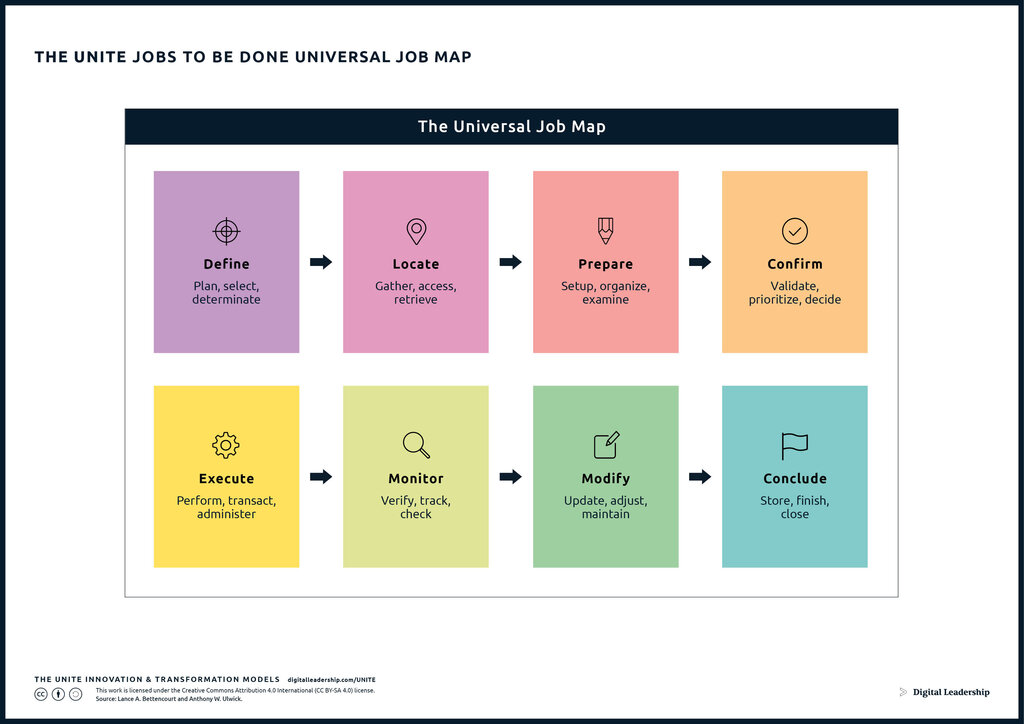
Thinking this way prevents a superficial analysis. You start seeing features not as isolated elements, but as deliberate solutions to specific parts of a customer's struggle.
Anatomy of a Feature
With the JTBD context established, we can dissect individual features. Every well-designed feature can be broken down into three core components:
- Business Goal: What is the company trying to achieve with this feature? It could be increasing revenue, improving retention, or driving user acquisition.
- User Motivation: What is the user's underlying reason for interacting with the feature? This connects directly to the JTBD. They might want to save time, reduce uncertainty, or connect with others.
- Technical Trigger: What is the specific action or event that initiates the feature's function? This is often a button click that makes an API call, a page load that fetches data, or a background process that sends a notification.
Let's take Spotify's "Discover Weekly" playlist. The business goal is to increase user retention by providing personalized value. The user motivation is to find new music without effort (the JTBD is "help me discover music I'll love"). The technical trigger is a scheduled, automated process that analyzes listening history and generates a new playlist each week.
Categorizing Features
By analyzing the anatomy of each feature, you can begin to categorize them. This helps prioritize your analysis and understand the product's strategic focus. Most features fall into one of three buckets.
| Category | Purpose | Example |
|---|---|---|
| Core Value | Directly solves the primary Job-to-be-Done. This is why the product exists. | Sending a message in a chat app. |
| Retention Hooks | Creates habits and encourages repeat usage, often by solving secondary jobs. | A 'streaks' feature in a language learning app. |
| Monetization Drivers | Directly generates revenue. | A 'premium subscription' tier that unlocks advanced features. |
A mature product will have a healthy mix of all three. An early-stage startup might be focused almost entirely on Core Value features. Mapping the product's features into these categories reveals its current strategic priorities and stage of development.
Finding the Aha Moment
The 'Aha Moment' is the point where a user first understands the product's core value. It’s when they realize how it can help them achieve their job. Identifying this moment is crucial because the entire onboarding flow is typically designed to guide users to it as quickly as possible.
You can often find it by looking for structural signals:
- Focus in Onboarding: What single action does the product's tutorial or initial empty state push you to perform?
- Activation Metrics: What key user action does the company likely track to define an 'active' user? For Facebook, it was connecting with 7 friends in 10 days. For a project management tool, it might be creating a first task.
- The Core Value Delivery: The Aha Moment is almost always tied to the delivery of the product's core value proposition.
Once a user experiences this moment, they've grasped the 'why'. The rest of the product's features—the retention hooks and monetization drivers—then have a foundation to build upon.
In a teardown, pinpointing this moment helps you understand the entire user journey's logic. Every screen, every button, and every prompt before that moment is designed to get the user there. Everything after it is designed to keep them coming back.