camera triangle
Welcome! You're in the right place—mastering this "triangle" is the single biggest step you can take toward capturing exactly what you see.
Before we jump in, to help me tailor this to your needs, are you completely new to photography, or do you have some experience with cameras?
I have some experience but want to master manual mode
It is great to hear you already have some experience! Moving to Manual Mode is where photography truly transforms from letting the camera make the artistic decisions to putting you in the director's chair.
The Three Pillars of Light
- : The physical opening inside your lens. It acts like the iris of an eye, dilating to let more light in or contracting to restrict it.
- : How long the camera's physical curtain stays open. This determines the duration of time that light is allowed to hit the sensor.
- : The sensitivity of your camera's sensor to light.

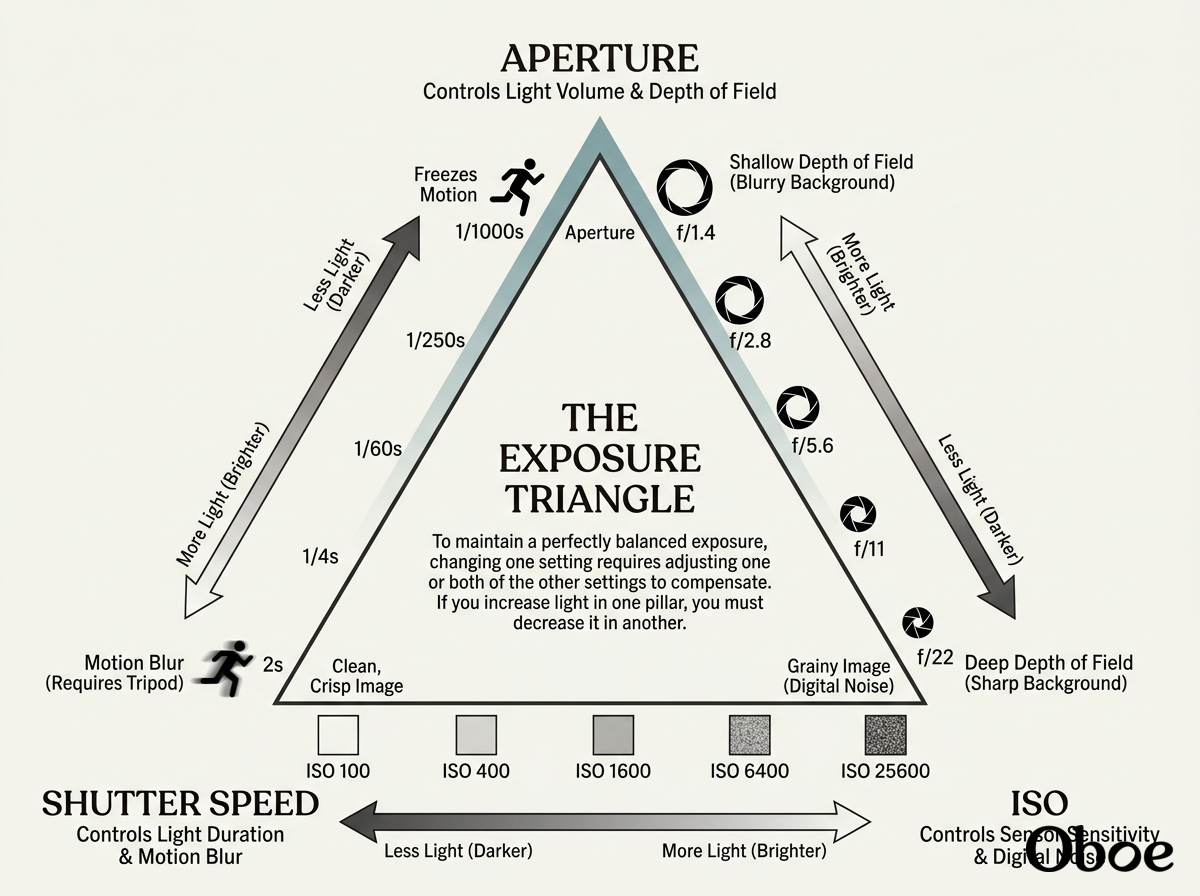
I've queued up a quick diagram to help you visualize how these three elements physically pull against one another to create a balanced exposure.
Once you feel comfortable with this basic setup, we can dive straight into the first pillar—aperture—to see exactly how it shapes your focus.