Mastering Structural Thinking
Introduction to Structural Thinking
Thinking in Systems
Many of us try to solve problems by breaking them into smaller pieces. This often works for simple issues, but it falls short when things get complicated. Structural thinking, or systems thinking, offers a different approach. Instead of just looking at the parts, it focuses on how they all connect and work together.
It’s the difference between looking at a single tree and understanding the entire forest. By seeing the bigger picture, you can spot patterns, understand relationships, and find more effective solutions. This way of thinking helps you tackle complex challenges in life and work by revealing the underlying structures that drive events.
Everything Is Connected
The first principle of structural thinking is interconnectedness. Nothing exists in a vacuum. Every part of a system affects and is affected by other parts, sometimes in ways that aren't immediately obvious. Think of a spider's web. Touching one strand sends vibrations across the entire structure.
In the same way, a decision in one department of a company can have ripple effects everywhere else. A price change in a product doesn't just affect sales; it influences marketing, customer support, and even supply chain logistics. Understanding these connections is the first step toward thinking structurally.
Seeing these connections helps you anticipate the consequences of actions and avoid creating new problems while trying to solve old ones.
The Wider View
Once you appreciate interconnectedness, the next step is to adopt a holistic perspective. This means zooming out to see the entire system at once. Instead of focusing on a single, problematic event, you look for the patterns of behavior that led to it. What forces are at play? What has been happening over time?
This wider view helps you understand the context surrounding a problem. It prevents you from getting bogged down in minor details and allows you to identify the root causes of issues, not just the symptoms.
A holistic view shifts the focus from blaming individuals for failures to understanding how the system itself may be flawed.
One key part of this wider view is understanding feedback loops. A feedback loop is a circular process where a system's output eventually circles back to become an input. There are two main types.
A reinforcing loop (or positive feedback) amplifies change. It creates exponential growth or collapse. Think of a viral video. The more people share it, the more visible it becomes, leading to even more shares.
A balancing loop (or negative feedback) seeks stability. It works to keep a system within a certain range. A thermostat is a perfect example. If the room gets too hot, the thermostat turns on the air conditioning to cool it down. If it gets too cold, it turns on the heat. The goal is to maintain equilibrium.
Identifying these loops helps you understand why systems behave the way they do and where you might intervene to change their behavior.
More Than the Sum of Its Parts
Finally, structural thinking embraces the concept of emergence. This is the idea that complex, surprising, and often intelligent behaviors can arise from the simple interactions of individual parts within a system. The overall system develops properties that its individual components do not have on their own.
Consider a flock of starlings. Thousands of birds fly in perfect, synchronized patterns without a leader. Each bird follows a few simple rules, like matching the speed and direction of its neighbors and avoiding collisions. From these simple individual behaviors emerges the breathtaking, coordinated dance of the flock. The same is true for ant colonies, brain function, and city traffic.
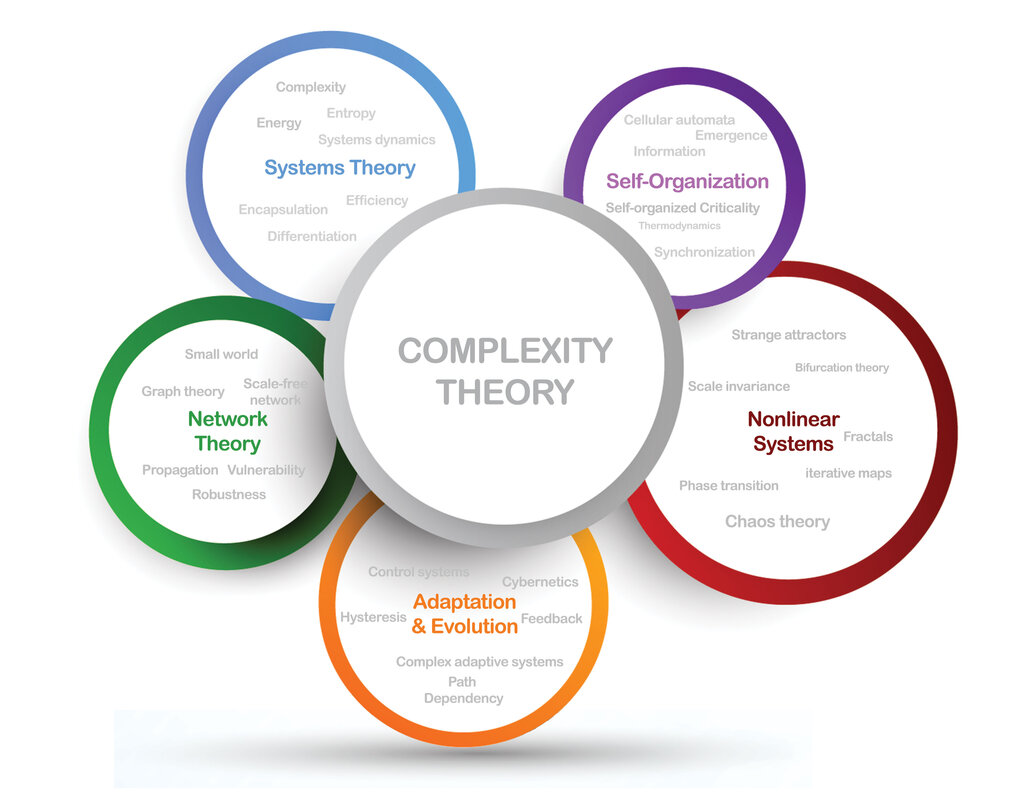
Emergence teaches us that you can't always understand a system by taking it apart. Sometimes, you have to observe it in action to see the whole picture. It's a reminder that the most powerful forces are often the result of countless small interactions.
Ready to check your understanding? Let's see what you've learned about thinking in systems.
What is the primary focus of structural thinking when analyzing a problem?
A social media platform's algorithm promotes posts that get a lot of engagement. This increased visibility leads to even more engagement, which causes the algorithm to promote the post further. What kind of feedback loop does this describe?
By understanding these core principles—interconnectedness, a holistic perspective, feedback loops, and emergence—you can begin to see the hidden structures that shape our world.