Mastering Software Defined Vehicles
Introduction to Software-Defined Vehicles
The Car That Upgrades Itself
For over a century, buying a car was a straightforward deal. You chose a model with the features you wanted, and that was it. The car you drove off the lot was, for the most part, the same car you'd be driving years later. Its capabilities were locked into its physical parts. If a new technology came out, you had to buy a new car to get it.
That model is changing fast. The automotive industry is undergoing a massive shift, moving from a world where hardware is king to one where software takes the lead. This new approach is creating what we call the Software-Defined Vehicle, or SDV.
A Software-Defined Vehicle is a vehicle where features and functions are primarily enabled through software, not hardware.
Think of it like the difference between a flip phone and a smartphone. A flip phone did what it was built to do: make calls and send texts. A smartphone, on the other hand, is a powerful piece of hardware whose true potential is unlocked by software. Through apps and operating system updates, your phone can gain new abilities, improve its performance, and fix security flaws, long after you've bought it.
SDVs apply this same logic to cars. The vehicle's core systems, from the infotainment screen to engine performance and safety features, are controlled by software that can be updated and reconfigured remotely.
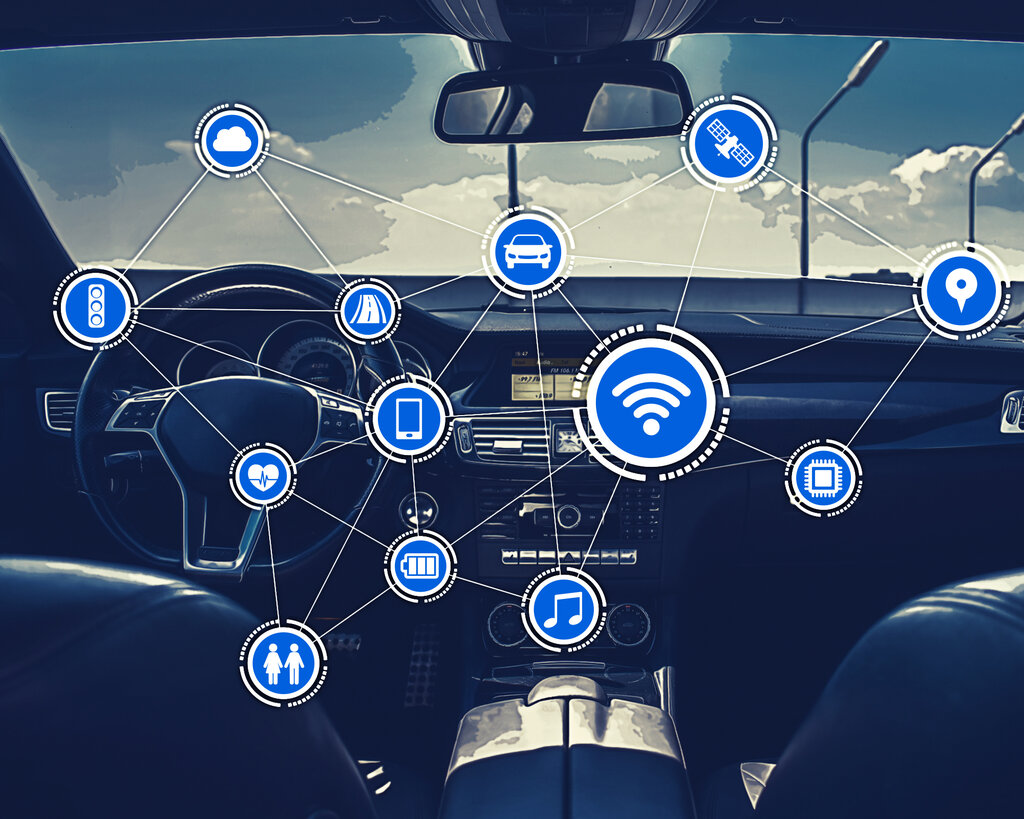
Why Go Software-First?
This shift isn't just about adding bigger touchscreens. It fundamentally changes what a car is and what it can become. The benefits are significant for both drivers and manufacturers.
In addition to advantages in processing power and weight savings, software-defined vehicles are easier to update over-the-air, a must-have feature since Tesla changed that paradigm.
The most powerful feature of an SDV is its ability to receive over-the-air (OTA) updates. Just like your phone gets a new OS version, a car can download and install new software wirelessly. This means your car can get better over time. An update could introduce a new navigation interface, improve your electric vehicle's battery efficiency to extend its range, or even enhance the performance of its driver-assist features.
This also means faster innovation. Traditionally, the automotive design cycle is long, taking years to bring a new model to market. With SDVs, manufacturers can develop and roll out new features in a fraction of the time. They can respond to customer feedback and changing market trends by pushing a software update, rather than waiting for the next hardware refresh.
A More Personal Ride
Software also unlocks a new level of personalization. An SDV can adapt to its owner's preferences in ways a traditional car never could. Imagine your car's digital dashboard reconfiguring itself based on who is driving, or the suspension settings automatically adjusting to your preferred driving style.
This opens the door to a whole ecosystem of in-car services. You could subscribe to premium features on demand, like an advanced driver-assistance package for a long road trip, or unlock a performance mode for a weekend drive. Your car becomes a platform for new experiences, much like a smartphone is a platform for apps.
Let's review the main ideas we've covered about Software-Defined Vehicles.
What is the key feature of a Software-Defined Vehicle (SDV) that allows it to improve after it has been purchased?
The text compares the transition from traditional cars to SDVs with the evolution from a flip phone to a smartphone. What is the core principle of this analogy?
The move to software-defined vehicles is more than a trend; it's the future of the automotive industry. It transforms the car from a static piece of machinery into a dynamic, connected device that evolves with its owner.