Mastering Scientific Literacy
Systematic Reading Workflow
Beyond Linear Reading
Reading a scientific paper from start to finish is rarely the best approach. It's like trying to understand a city by walking every single street in alphabetical order. A more effective strategy is to read with a purpose, focusing on deconstructing the paper's core argument efficiently. This involves a multi-pass approach, where you build your understanding layer by layer.
The goal is not just to read the paper, but to understand it, critique it, and decide if it's relevant to your own work.
The Three-Pass Approach
The three-pass approach is a structured method for dissecting a research paper. Each pass has a different objective, taking you from a high-level overview to a deep, critical understanding. This prevents you from getting bogged down in details before you've grasped the main point.
First Pass: The Overview
The first pass should take about five to ten minutes. The goal is to get a bird's-eye view of the paper. Think of it as looking at a map before you start a road trip. You're trying to identify the major landmarks, not the street names.
Start with the title and abstract. The abstract is your executive summary; it should outline the problem, the approach, and the main findings. Next, skim the introduction to understand the context and the specific question the authors are trying to answer. Then, jump straight to the conclusion or the beginning of the discussion section. This tells you how the authors interpret their own findings.
Finally, and most importantly, look at the figures, tables, and their captions. In many papers, the tell the core story more directly than the text. Can you understand the main result just by looking at the charts? After this pass, you should be able to state the paper's central claim and the main evidence for it.
Second & Third Passes: The Details
If the paper seems relevant after the first pass, it's time for the second. This time, read the paper in greater detail, but you can still skip parts you don't fully understand, like complex mathematical proofs. Your goal here is to grasp the paper's content. As you read, make notes in the margins, highlight key sentences, and question the author's assumptions. Pay close attention to the Methods section. Is the experimental setup sound? Could the results be interpreted differently?
During this pass, it's helpful to look up any unfamiliar terms or cited papers that seem central to the argument. For instance, if the authors build on a specific statistical model, you might need to find the original paper that introduced that model. This is also where you might encounter specific methodologies like a in a systematic review, which details how the researchers selected their studies.
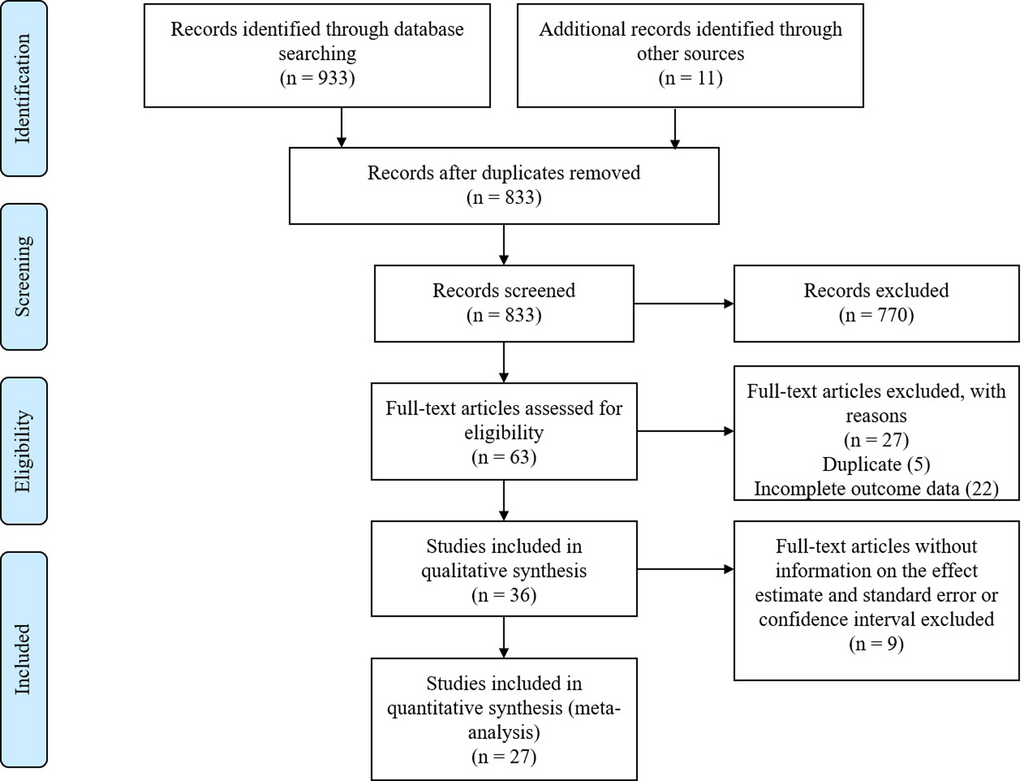
The third pass is for deep understanding. This requires you to mentally re-create the work. You should be able to summarize the paper's structure and its main contributions from memory. Challenge every assumption and identify its flaws and limitations.
By the end of the third pass, you should be able to articulate the paper's key innovations, its place within the broader literature, and potential directions for future work. You have not just read the paper; you have engaged with it on a professional level.
Let's test your understanding of this reading workflow.
What is the primary drawback of reading a scientific paper sequentially from beginning to end, according to the three-pass method?
During the first pass of reading a paper, which of the following actions is recommended?