Mastering Musical Dynamics and Composition
Extended Chord Theory
Beyond Triads
You already know that triads—built from a root, a third, and a fifth—are the foundation of harmony. But music often needs more complexity and emotional depth than simple major and minor chords can provide. To get that richness, we extend our chords by adding more notes.
The principle is the same as building a triad: we stack thirds. A triad is just two thirds stacked on top of each other (Root to 3rd, 3rd to 5th). To create an extended chord, we just keep going.
The Essential Seventh
The first and most common extension is the seventh chord. It's built by adding a third on top of the fifth of a triad. This new note is a seventh above the root. Seventh chords form the harmonic backbone of genres like jazz, R&B, and neo-soul.
There are three main types you'll encounter constantly:
- Major 7th (Maj7): This is a major triad with a major seventh. It has a dreamy, gentle sound. The interval formula is Root, Major 3rd, Perfect 5th, Major 7th (1-3-5-7).
- Minor 7th (m7): A minor triad with a minor seventh. It sounds mellow, thoughtful, and is a staple in jazz and soul. The formula is Root, Minor 3rd, Perfect 5th, Minor 7th (1-b3-5-b7).
- Dominant 7th (7): A major triad with a minor seventh. This is a crucial chord in Western music. It creates a strong sense of tension that wants to resolve to a tonic chord. Its formula is Root, Major 3rd, Perfect 5th, Minor 7th (1-3-5-b7).
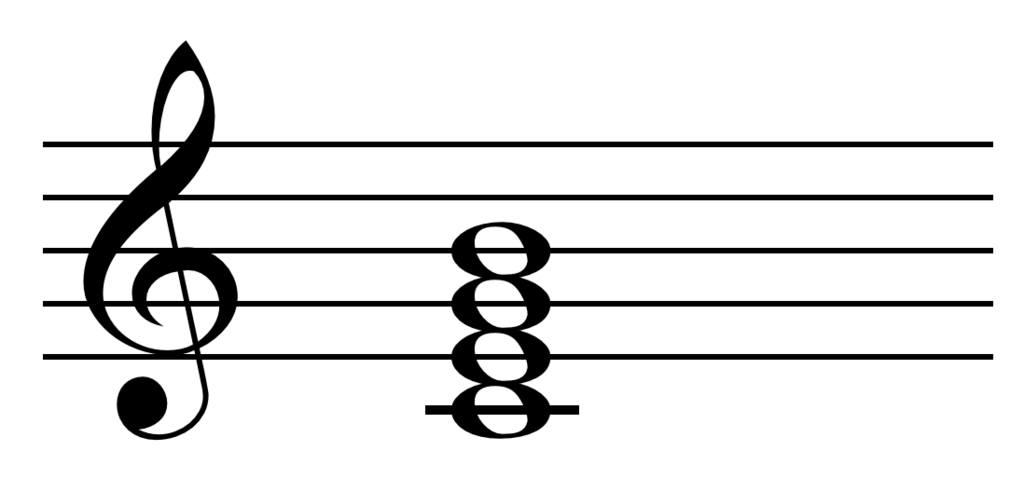
Listen for the distinct feel of each seventh chord. A C Major 7th (C-E-G-B) feels peaceful and open. A G Dominant 7th (G-B-D-F) feels restless, pulling your ear towards a C major chord.
Adding More Colour
Why stop at the seventh? We can continue stacking thirds to add even more complexity. These higher notes are called extensions or colour tones. They don't change the fundamental quality of the chord (major, minor, dominant) but add new shades of emotion.
The next note stacked on top of a seventh is the ninth. Above that, the eleventh, and finally, the thirteenth. Anything higher just repeats a chord tone at a higher octave (a 15th is just two octaves above the root).
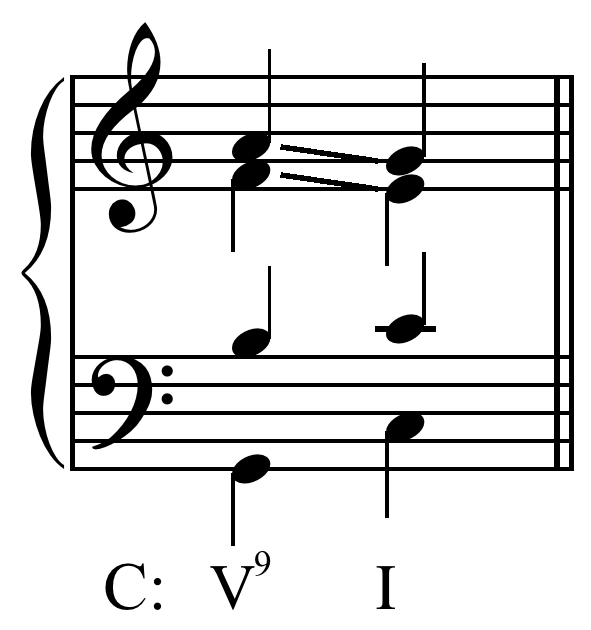
These extensions are most commonly added to dominant 7th chords to increase their tension and make the resolution more satisfying. A G9, G11, or G13 chord will resolve even more powerfully to C major. However, 9ths are frequently added to major and minor chords (Cmaj9, Am9) for extra richness.
Voicing and Voice Leading
If you try to play a Cmaj13 chord with all seven notes (C-E-G-B-D-F-A) at once on a piano, it will sound thick and muddy. This is where voicing comes in. Voicing is the art of arranging the notes of a chord, choosing which notes to play and in which octave.
In practice, you rarely play every note of a complex extended chord. The root is often played by the bass instrument, and the fifth is frequently omitted because it adds little colour. This leaves room for the more interesting notes: the 3rd, 7th, and the extensions.
A common voicing for G13 (G-B-D-F-A-C-E) might omit the root, fifth (D), eleventh (C), and even the ninth (A). A pianist might play just B-F-E in their right hand over a G in the bass. This pared-down version still clearly implies the G13 sound.
Good voicing aims for clarity. It spaces out the notes of a chord to let its character shine through, avoiding a cluttered sound.
Voice leading is about how the individual notes of one chord move to the notes of the next. Smooth voice leading makes chord progressions sound more connected and musical.
When using extensions, the goal is still to move each note as little as possible. The added colour tones create new opportunities for smooth melodic connections between chords.
Consider a simple ii-V-I progression in C major: Dm7 - G7 - Cmaj7.
Let's add some extensions: Dm9 - G13 - Cmaj9.
Notice how little the notes have to move. The F and A in the Dm9 voicing are held over into the G13. The C moves down a half step to B, and the E stays put. Then, to get to Cmaj9, each voice moves by just a step. This creates a beautifully smooth and logical flow.
By adding extensions and voicing them carefully, you can transform a simple progression into something harmonically rich and sophisticated.
How are extended chords, such as seventh and ninth chords, constructed from a basic triad?
A chord is built with the following intervals above the root: a Major 3rd, a Perfect 5th, and a Minor 7th. What type of chord is this?
Understanding these extended harmonies opens up a new world of musical expression, allowing you to move beyond basic structures and create more nuanced and compelling music.