Mastering Lucid Dreaming
Understanding Sleep Cycles
The Rhythms of Sleep
Sleep isn't like flipping a switch. When you fall asleep, your brain follows a predictable pattern, cycling through different stages all night long. Think of it as a journey with distinct landscapes. These stages are grouped into two main types: Non-Rapid Eye Movement (NREM) sleep and Rapid Eye Movement (REM) sleep.
Most of your night is spent in NREM sleep, which is broken down into three parts. Each has a unique role in helping your body and mind rest and recover.
The NREM Stages
Stage N1: Drifting Off This is the very light sleep you experience just as you're nodding off. Your heartbeat, breathing, and eye movements slow down, and your muscles relax. You might have mild twitches. It’s a short stage, and if someone nudges you, you'd probably say you weren't even asleep.
Stage N2: Settling In This is where you spend about half your total sleep time. Your body temperature drops, and your heart rate and breathing become even more regular. Your brain activity slows, but it's punctuated by brief bursts of electrical activity called sleep spindles and K-complexes. These are thought to help your brain process memories and shut out external sounds.
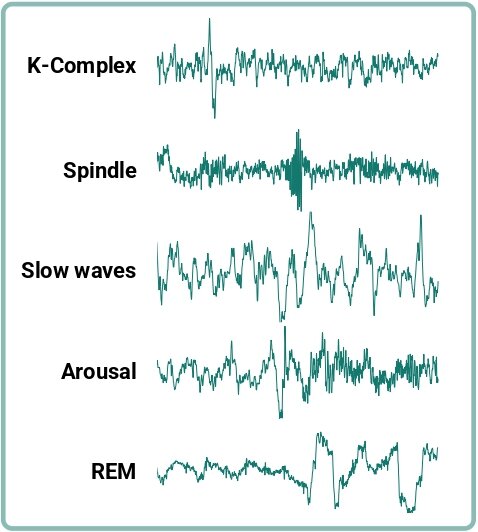
Stage N3: Deep Sleep This is the deepest stage of sleep, also known as slow-wave sleep. It’s much harder to wake someone from this stage, and if you do, they’ll likely feel groggy and confused. During N3, your body performs its most important restorative work, like repairing tissues, building bone and muscle, and strengthening the immune system. This is the stage that makes you feel truly refreshed in the morning.
The World of REM Sleep
After cycling through the NREM stages, you enter a completely different state: REM sleep. This stage is named for the rapid, darting movements your eyes make behind your closed eyelids. Internally, it’s a period of intense activity.
Your brainwaves during REM look surprisingly similar to when you're awake. Your breathing becomes faster and irregular, and your heart rate and blood pressure increase. Yet, your body is essentially paralyzed. The muscles in your arms and legs become temporarily unable to move, a feature that prevents you from acting out your dreams.
REM sleep is the stage most people associate with dreaming, although it is also possible to dream during NREM sleep.
The dreams in REM sleep are the ones we tend to remember best. They are typically more vivid, bizarre, and story-like compared to the simpler, more thought-like dreams that can occur in NREM stages.
A Night's Journey
You don't just go through these stages once. Throughout the night, you repeat the cycle about every 90 minutes. A typical first cycle looks something like this: you move from N1 to N2, then into N3 deep sleep. After that, you cycle back up through N2 before entering your first REM stage.
But the cycles aren't identical. As the night progresses, the structure of each cycle changes. In the first half of the night, you spend more time in deep N3 sleep. In the second half, the deep sleep stages become much shorter, and the REM stages get longer and longer. Your longest REM period, which can last up to an hour, often happens right before you wake up.
This pattern is why you’re more likely to wake up in the middle of a dream in the early morning. Since your REM stages are longer and your sleep is lighter, you have more opportunities for vivid dreaming and are closer to wakefulness. Understanding this rhythm can be the first step toward improving your dream recall. When you know that your most intense dreams happen late in your sleep period, you can make a conscious effort to remember them as soon as your alarm goes off.
Ready to check your knowledge? Let's see what you've learned about the journey you take every night.
In which stage of sleep does your body perform its most important restorative work, like repairing tissues and strengthening the immune system?
What is a key feature of REM sleep that distinguishes it from NREM stages?
By understanding this nightly pattern, you're better equipped to appreciate the complex and vital processes that happen while you're asleep.