Mastering Harmonic Foundations and Musical Analysis
Complex Scale Structures
Beyond the Basics of Minor
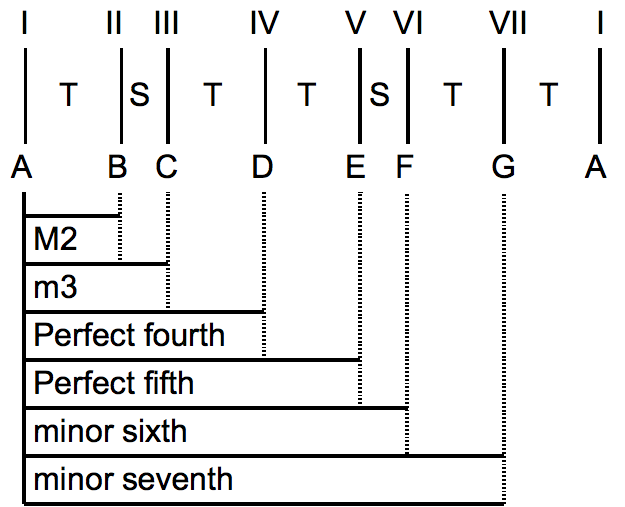
You already know how to build a major scale. The natural minor scale is just as straightforward. In fact, it uses the exact same notes as a major scale, just starting from a different place. If you take any major scale and start on its sixth note, you get its relative natural minor.
For example, the C major scale is C-D-E-F-G-A-B-C. Its sixth note is A. The A natural minor scale is A-B-C-D-E-F-G-A. Notice? Same notes, different starting point, which gives it a completely different mood.
The interval pattern for any natural minor scale is always: whole, half, whole, whole, half, whole, whole (W-H-W-W-H-W-W).
Creating Harmonic Tension
The natural minor scale is great, but it has one harmonic quirk. In major keys, the fifth chord (V) is major, and it creates a strong pull back to the tonic (I). This V-I resolution feels final and satisfying. In natural minor, the fifth chord is minor (v). A v-i progression sounds much weaker and less conclusive.
To solve this, composers started raising the seventh note of the minor scale by a half step. This single change turns the v chord into a major V chord. The raised seventh scale degree is called the leading tone because it pulls so strongly upward to the tonic note. This new scale is called the harmonic minor scale.
Let's look at A minor again. The natural minor is A-B-C-D-E-F-G-A. The harmonic minor is A-B-C-D-E-F-G#-A. That G# makes all the difference, creating a powerful E major chord (E-G#-B) as the V chord, which resolves beautifully to A minor.
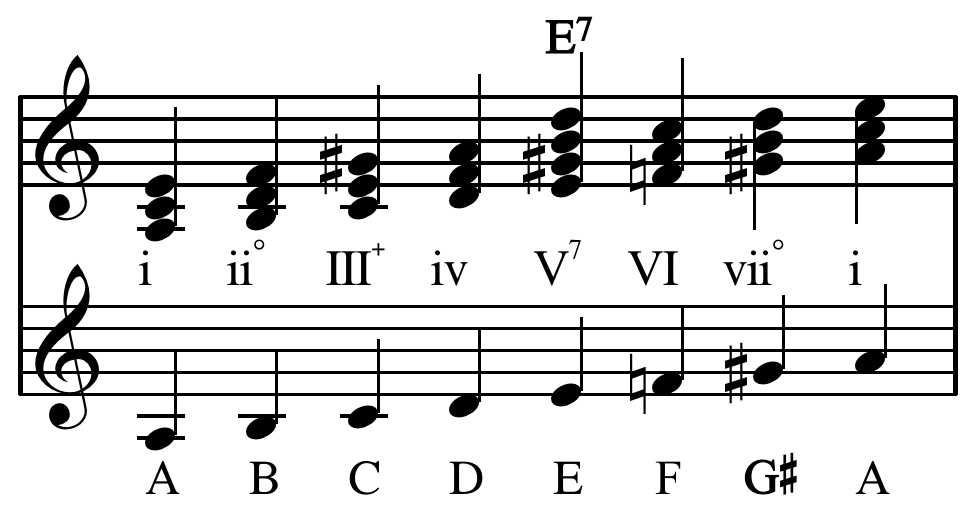
This fix creates a new issue, though. The gap between the 6th note (F) and the raised 7th (G#) is an augmented second, an interval of three half steps. Melodically, this can sound a bit jarring or exotic, which isn't always the desired effect.
Smoothing the Melody
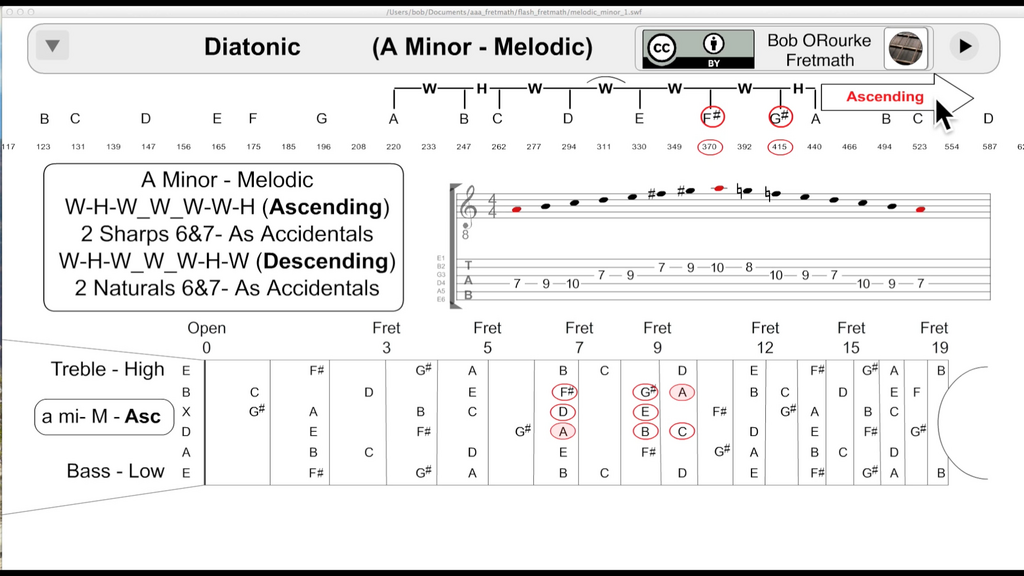
Enter the melodic minor scale. This scale is a clever compromise, designed specifically to create smooth melodic lines while keeping that strong V chord. It has a unique feature: it's different going up than it is coming down.
When ascending, the melodic minor scale raises both the 6th and 7th degrees. In A minor, this would be A-B-C-D-E-F#-G#-A. Raising the 6th (F to F#) closes the awkward augmented second gap from the harmonic minor, creating a smooth path to the leading tone and the tonic.
When descending, the pull of the leading tone isn't needed anymore because you're moving away from the tonic. So, the scale simply reverts to the natural minor. In A minor, the descending melodic minor is A-G-F-E-D-C-B-A. This dual personality is a trademark of classical music, especially in the works of composers like who mastered its use.
Function and Feeling
Each minor scale has a distinct purpose and emotional flavor. Choosing which one to use depends on the musical context, whether you're building chords (harmony) or writing a tune (melody).
| Scale Type | 6th Degree | 7th Degree | Primary Use |
|---|---|---|---|
| Natural Minor | Lowered | Lowered | Modal, folk-like melodies |
| Harmonic Minor | Lowered | Raised | Creating strong V-i harmony |
| Melodic Minor | Raised (asc) / Lowered (desc) | Raised (asc) / Lowered (desc) | Smooth ascending melodies |
Understanding these three forms of the minor scale moves you from just reading notes to understanding why they're chosen. You start to hear the tonal gravity at play—the push and pull that gives music its emotional weight.
Let's test your knowledge of these scale structures.
How is a natural minor scale formed from its relative major scale?
What is the primary harmonic reason for the creation of the harmonic minor scale?