Mastering GitHub Copilot Certification
Responsible AI
More Than Just a Tool
Generative AI tools can feel like magic, producing code, text, or images in seconds. But they aren't magic. They are complex pattern-matching systems trained on vast amounts of data from the internet. This means they are powerful, but also fundamentally limited and prone to error.
Treating an AI's output as fact without scrutiny is a major risk. The code it generates might be inefficient, insecure, or just plain wrong. Since these tools learn from existing data, they can also reproduce and even amplify human biases, leading to unfair or discriminatory outcomes.
Limitations and Hallucinations
One of the most well-known limitations of large language models is their tendency to "hallucinate." This happens when the AI generates information that is plausible-sounding but completely false. It's not lying; it's simply generating a statistically likely sequence of words without any understanding of truth or reality.
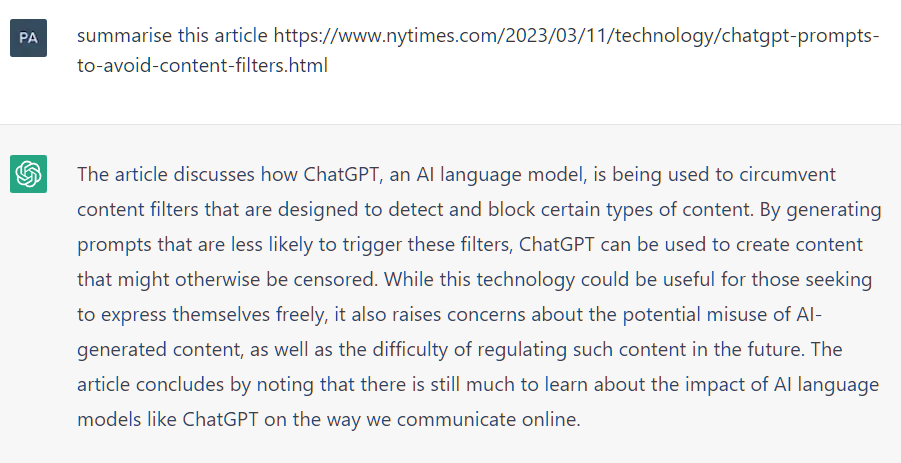
Beyond outright falsehoods, AI models can perpetuate subtle harms. If the data used to train a model contains biases against certain groups of people, the model will learn and replicate those biases. For example, an AI trained on historical hiring data might learn to favor candidates from specific demographics, even if that's not an intended outcome.
Privacy is another significant concern. When you use an AI tool, your inputs might be used to train future versions of the model. This creates a risk of exposing sensitive or proprietary information, even if personal details are stripped out.
An AI's output is a reflection of its training data. If the data is biased, the output will be biased. If the data contains errors, the output will contain errors.
The Human in the Loop
Because of these risks, you are the most important part of the process. You are the human in the loop, responsible for guiding the AI and validating its output. The AI is a collaborator, not an authority. You are always accountable for the final product.
Validating AI output means you must critically review everything it generates. Does the code work as expected? Does it introduce security vulnerabilities? Is it easy to maintain? Does it reflect any unintended biases? Never trust, always verify.
To guide your review, you can rely on a few core principles of ethical AI usage. These aren't just abstract ideas; they're practical guidelines for building better, safer software.
| Principle | What It Means in Practice |
|---|---|
| Accountability | You are responsible for the code you ship, regardless of whether an AI wrote it. |
| Fairness | Actively check for and mitigate biases in AI-generated code and logic. |
| Transparency | Understand the limitations of the tool you're using. Be clear about when and how AI was used in the development process. |
| Security | Always treat AI-generated code as untrusted. Scan it for vulnerabilities just as you would any other code. |
By keeping these risks and principles in mind, you can use AI tools effectively while minimizing potential harm. They are powerful assistants, but your critical judgment is what makes them truly useful.
Generative AI tools are best described as...
In the context of AI, what is a 'hallucination'?