Mastering Fine Furniture and Sustainable Woodworking
Advanced Joinery Techniques
The Mortise and Tenon
The mortise and tenon joint is the backbone of tables, chairs, and doors for a reason: it's incredibly strong. Its strength comes from a large glue surface and a mechanical lock that resists racking forces. Think of it as a precisely shaped post (the tenon) fitting into a perfectly matched hole (the mortise).
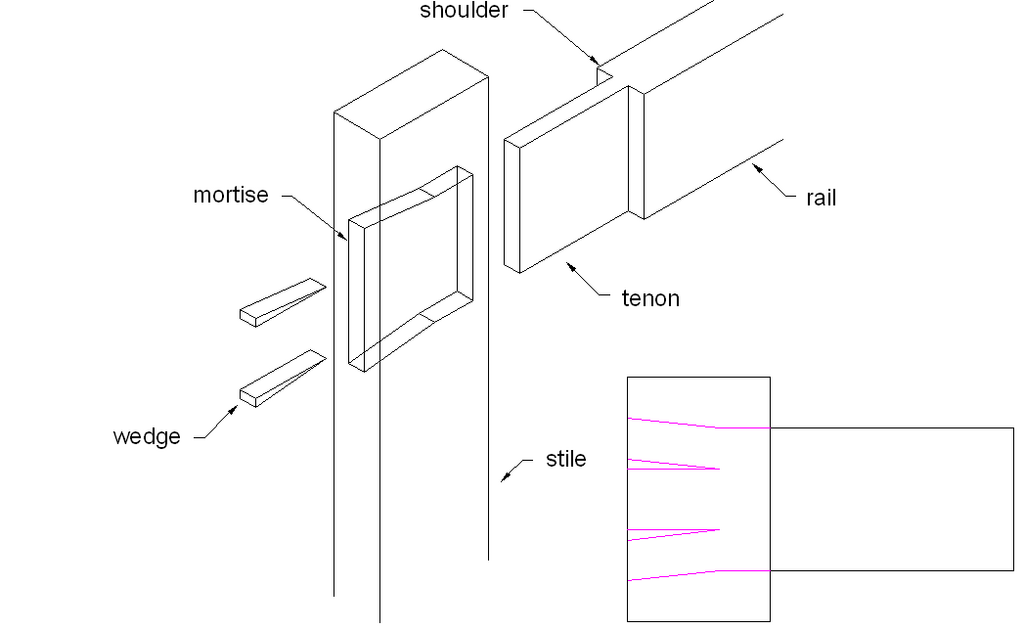
Getting the geometry right is crucial. A widely accepted guideline is the 'one-third rule,' where the tenon's thickness is one-third the thickness of the rail it's cut from. This rule provides an ideal balance. A tenon that's too thin is weak, while a tenon that's too thick leaves the mortised piece with dangerously thin walls, called cheeks, which can easily break under stress.
You can cut this joint by hand or with machines. Hand-cutting with saws and chisels offers a quiet, satisfying process and allows for custom, friction-fit joints. Machines like a dedicated mortiser or a router excel at speed and perfect repeatability, which is invaluable for making multiple matching parts, like the four legs of a table.
The mortise and tenon joint, often called the cornerstone of traditional woodworking, creates an incredibly strong connection by fitting a protruding tenon into a precisely carved mortise cavity.
For added strength and a decorative touch, consider a wedged through-tenon. In this variation, the tenon passes completely through the mortised piece and is locked in place by driving wedges into strategically placed kerf cuts. This not only makes the joint mechanically permanent but also creates a beautiful visual detail, especially when using a contrasting wood for the wedges.
The Dovetail Joint
Where the mortise and tenon excels at frame construction, the dovetail joint is the champion of case and box construction. Its interlocking pins and tails create a joint that is exceptionally resistant to being pulled apart. This makes it the premier choice for drawer boxes, chests, and cabinet carcasses.
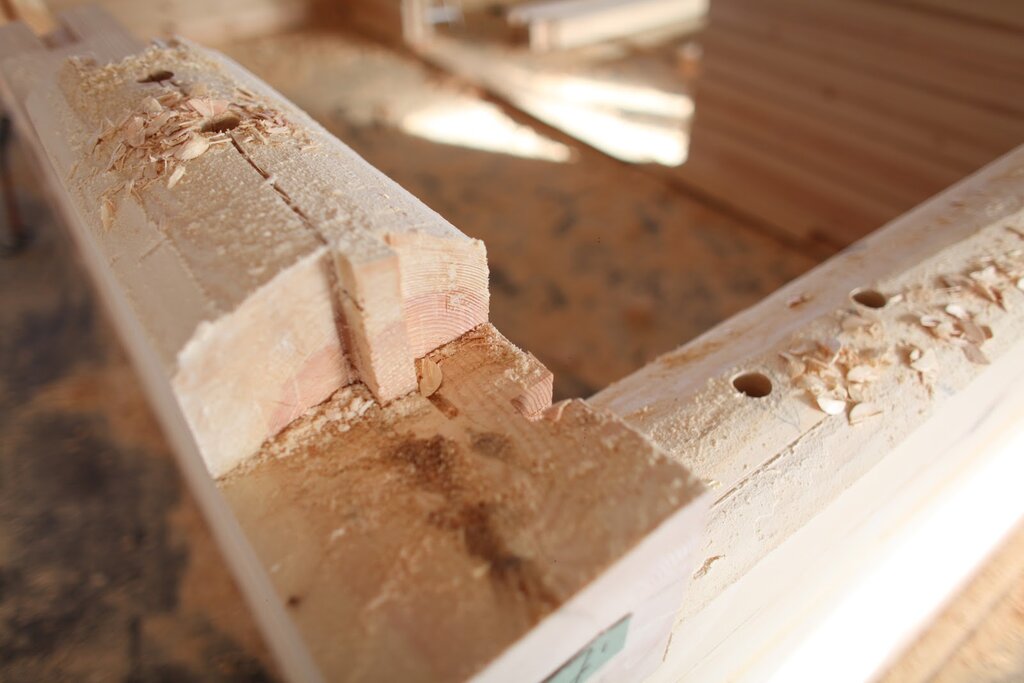
There are two main types: through dovetails, where the joinery is visible from both faces, and half-blind dovetails, where the joinery is visible from only one side. Through dovetails are often used for blanket chests and carcases, celebrating the craftsmanship. Half-blind dovetails are the standard for high-end drawer construction, hiding the joint from the drawer's front face.
A long-standing debate among woodworkers is whether to cut the pins or tails first. Cutting tails first is often considered easier for beginners, as the tails can be used to directly mark the pins. Cutting pins first is trickier to lay out but allows for finer adjustments and is preferred by some artisans for achieving a perfect fit. Ultimately, both methods can produce excellent results.
Proper grain orientation is critical for a durable dovetail joint. Wood expands and contracts across its width with changes in humidity, a process known as seasonal movement. For a drawer, the grain of the front, back, and sides should all run horizontally. This ensures all parts expand and contract in the same direction, preventing the joint from tearing itself apart over time.
Achieving the Perfect Fit
Regardless of the joint, the fit is everything. The goal for a glue joint isn't a force-fit that requires a sledgehammer. A proper fit tolerance allows the joint to be assembled by hand or with firm taps from a mallet. You should feel slight resistance as the pieces slide together.
This precise fit ensures there's enough room for a thin, even layer of glue without creating a hydraulic lock or starving the joint. A joint that's too tight will squeeze out all the glue, resulting in a weak bond. A joint that's too loose relies entirely on the glue to fill the gap, which is also a recipe for failure. Practice on scrap wood to dial in the feel of that perfect, snug fit.
Now, let's test your understanding of these advanced joinery principles.
What is the primary reason a mortise and tenon joint is so strong in frame construction like chairs and tables?
According to the 'one-third rule' for mortise and tenon geometry, what is the most likely risk of making the tenon significantly thicker than one-third of the rail?
Mastering these joints takes patience and practice. By focusing on precise layout, understanding the wood's properties, and aiming for the perfect fit, you can create furniture that is not only beautiful but will last for generations.