Mastering Evaluation Techniques
Introduction to Evaluation
What is Evaluation?
Evaluation is the process of figuring out if something is working. It’s a way to step back and ask: Did this project, program, or policy do what it was supposed to do? Was it worth the effort? How can we make it better next time?
Project evaluation is the systematic process of collecting, analyzing and interpreting data to determine the effectiveness and impact of a project.
Think of a chef tasting a soup while it's still cooking. They check the seasoning and adjust it before serving. That's a form of evaluation. Later, when the customers eat the soup and give their feedback, that's another form of evaluation.
Essentially, evaluation provides the evidence needed to make smart decisions. It helps us learn from our experiences, both good and bad, so we can improve what we do.
Two Key Types
While there are many ways to evaluate something, most methods fall into two main categories: formative and summative. The biggest difference between them is timing and purpose.
| Feature | Formative Evaluation | Summative Evaluation |
|---|---|---|
| Purpose | To improve or adjust | To judge the final outcome |
| Timing | During the process | At the end of the process |
| Feedback | Immediate and ongoing | A final assessment |
| Example | A teacher giving feedback on a draft essay | A final grade on the finished essay |
Formative evaluation is like that mid-cooking taste test. It’s done during a project to monitor progress and make changes along the way. The goal is to shape and refine.
Summative evaluation happens after the project is complete. It’s the final verdict. It measures the overall success and impact, helping you decide if the initiative was effective and should be continued or replicated.
Why Evaluation Matters
Evaluation isn't just about assigning a grade or a score. It’s a vital tool for learning and growth. By systematically assessing our efforts, we can identify what works and what doesn't. This allows organizations to allocate resources more effectively, justify their actions to stakeholders, and demonstrate their impact.
More importantly, it fuels continuous improvement. Without evaluation, we’re just guessing. We might repeat the same mistakes or miss opportunities to make our work more effective.
The most successful audio educational programs treat evaluation as an ongoing process rather than a one-time assessment.
This ongoing cycle of action and reflection is how individuals, teams, and entire organizations get better over time. It transforms experience into knowledge.
The Evaluation Process
A good evaluation follows a structured process. While the specific steps can vary, they generally involve planning what you'll measure, collecting the necessary information, analyzing it, and then sharing your findings to inform future decisions.
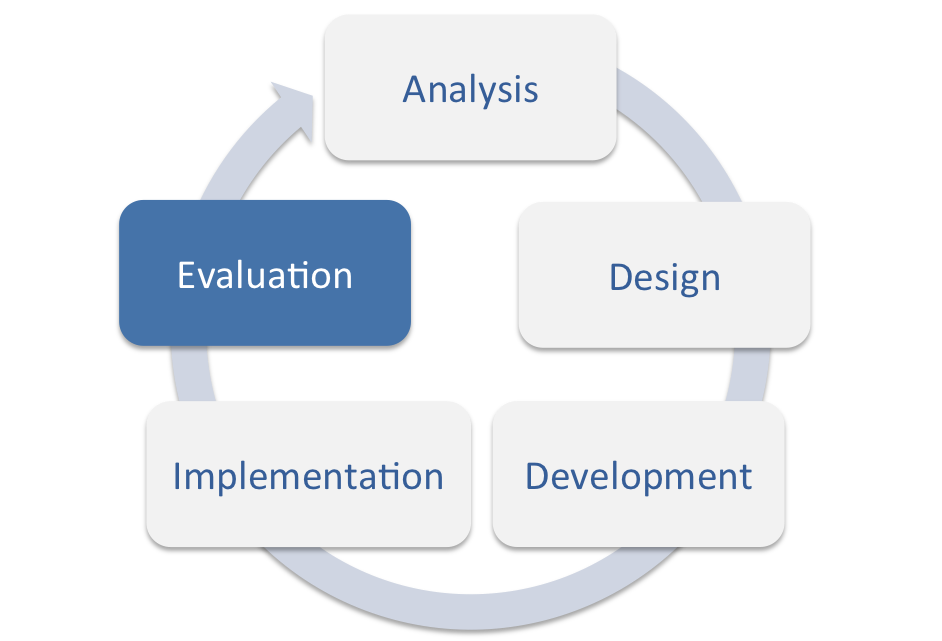
This cycle is often integrated into larger frameworks for project management or instructional design. For example, the ADDIE model, a common framework for creating educational programs, ends with an Evaluation phase that feeds back into the beginning of the process.
Let's review these core concepts.
What is the primary purpose of evaluation?
A chef tastes a soup while it's cooking to decide if it needs more salt. This is an example of a __________ evaluation.
Understanding what evaluation is, its different types, and why it's important is the first step toward using it to make better, more informed decisions.