Mastering Distributed System Design
Introduction to Distributed Systems
Beyond a Single Computer
Think about the last time you watched a movie on a streaming service, collaborated on a document online, or just searched for something on the web. You weren't interacting with just one computer. You were using a distributed system.
A distributed system [for us] consists of computer systems that are connected by networks and carry out some cooperative activity.
In simple terms, it's a group of separate computers that work together so closely that they appear as a single, powerful machine to the end user. They communicate and coordinate over a network to achieve a common goal. This is fundamentally different from a centralized system, where a single computer handles everything.
Why Go Distributed?
Building a system across multiple computers adds complexity, so there must be good reasons for it. The three main motivations are resource sharing, scalability, and fault tolerance.
Resource Sharing: This is the most straightforward benefit. A distributed system allows many users to share resources like printers, files, databases, or specialized hardware. Think of cloud storage services, where users from all over the world can access and share the same pool of data storage.
Scalability is the ability to handle a growing amount of work. A centralized system can only scale vertically by adding more power (CPU, RAM) to the single machine. This gets expensive and eventually hits a physical limit.
Distributed systems scale horizontally by adding more machines to the pool. If a website suddenly gets a surge in traffic, it can add more servers to distribute the load. This is often cheaper and has a much higher ceiling for growth.
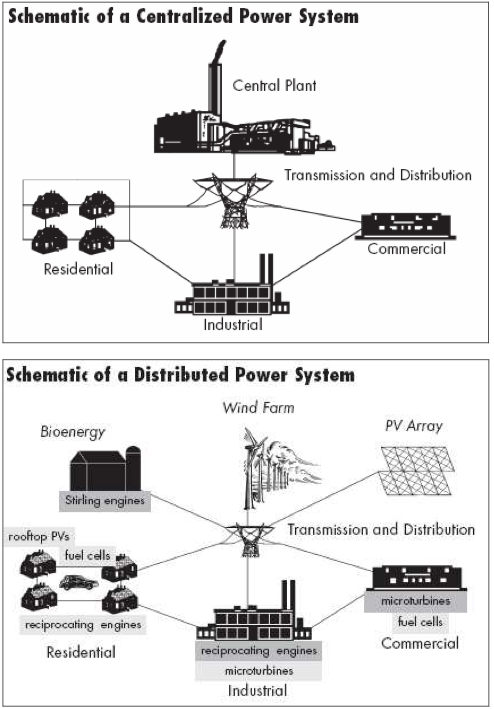
Fault Tolerance means the system can continue to operate even if some of its components fail. In a centralized system, if the main computer goes down, everything stops. In a distributed system, if one machine (or node) fails, the others can pick up the slack. The workload of the failed node is redistributed, and the overall system keeps running, often without the user even noticing a problem.
The Juggling Act
The benefits of distributed systems come with their own set of challenges. Two of the most important concepts to manage are concurrency and transparency.
Concurrency
noun
The property of a system where multiple computations are executing at the same time, and potentially interacting with each other.
In a distributed system, many different processes might be running on different machines at the same time. This is concurrency. Imagine two people trying to book the last seat on a flight. The system must be designed to correctly handle these simultaneous requests, ensuring that only one person gets the seat and the other gets a 'sold out' message. Without proper coordination, both might think they got the seat, or the seat might be lost entirely.
Transparency is the art of hiding the complexity. A key goal of a distributed system is to conceal the fact that it's made of many different computers. To the user, it should feel like they are interacting with a single, seamless application.
There are several types of transparency:
- Access Transparency: Users access remote resources in the same way they access local ones.
- Location Transparency: Users don't know where a resource is physically located.
- Failure Transparency: The system can hide failures of individual components, allowing users to continue their work uninterrupted.
- Migration Transparency: Resources can be moved to different locations without affecting how users interact with them.
Achieving this transparency is one of the hardest parts of building a good distributed system. It requires careful design to manage communication, handle failures, and keep everything synchronized behind the scenes.
What is the fundamental characteristic of a distributed system?
A company's website is experiencing a massive, unexpected increase in traffic. To handle the load, they add several new servers to their network. This is an example of __________.
These core ideas form the foundation of how modern, large-scale applications are built. Understanding them is the first step toward designing systems that are robust, scalable, and resilient.