Mastering DevOps
Introduction to DevOps
What is DevOps?
Traditionally, the people who build software (Developers) and the people who run it (Operations) worked in separate worlds. Developers wanted to release new features quickly, while the Operations team focused on keeping everything stable and reliable. This often created a bottleneck. A developer might finish a new feature, only to toss it over a metaphorical wall to the Ops team, who then had to figure out how to deploy and manage it. If something went wrong, the finger-pointing would begin.
This disconnect, often called the "wall of confusion," slowed everything down and created friction between teams.
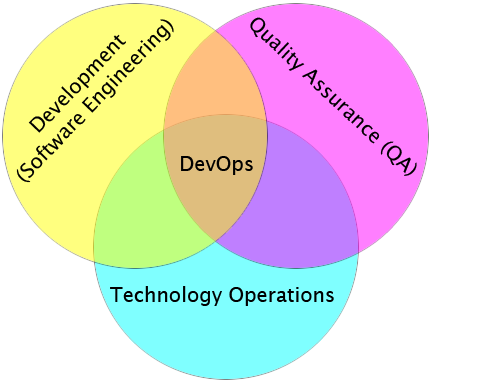
DevOps tears down that wall. It's not a specific job title or a piece of software, but a cultural shift and a set of practices that bring development (Dev) and operations (Ops) teams together. The goal is to shorten the software development lifecycle, from writing the first line of code to deploying it for users, while maintaining high quality.
DevOps
noun
A set of practices that combines software development (Dev) and IT operations (Ops) to shorten the development life cycle and provide continuous delivery with high software quality.
Think of it like a racing pit crew. The mechanics, engineers, and driver all work in perfect sync. They share the same goal: get the car back on the track as fast as possible. No one group blames another if something goes wrong; they work together to fix it. That's the essence of DevOps, applied to building and delivering software.
A Quick History
To understand why DevOps emerged, it helps to look at what came before. For a long time, software was built using the Waterfall model. This was a rigid, sequential process. First, you'd gather all the requirements. Then you'd design the entire system. Then you'd build it, test it, and finally, release it. Each phase had to be fully completed before the next could begin. This process could take months or even years, and by the time the software was released, the customer's needs might have already changed.
Around the early 2000s, the Agile methodology gained popularity as a response to the slowness of Waterfall. Agile focuses on iterative development. Instead of one massive release, teams work in short cycles, called sprints, to deliver small, working pieces of the software. This allows for constant feedback and makes it easier to adapt to changes.
But Agile mostly solved problems for the development team. It helped them build software faster, but it didn't address the deployment and operations side of things. The "wall of confusion" still stood. In 2009, at a conference in Belgium, a new conversation started about applying Agile principles to infrastructure and operations. The term "DevOps" was coined, and the movement began.
Core Principles
DevOps is guided by a few key ideas that shape how teams work together. While specific tools and practices can vary, these principles are universal.
| Principle | Description |
|---|---|
| Collaboration & Culture | This is the foundation. It means breaking down silos, encouraging shared ownership, and fostering communication between all teams involved in the software lifecycle. |
| Automation | Automate repetitive and error-prone tasks. This includes building code, running tests, and deploying software. The goal is a reliable, repeatable process. |
| Continuous Improvement | DevOps is not a one-time fix. It's a commitment to constantly learn, experiment, and find ways to improve the process. |
| Fast Feedback Loops | Create systems to quickly see the impact of changes. This includes monitoring application performance and gathering user feedback to guide future development. |
These principles work together to create a virtuous cycle. Better collaboration leads to smarter automation. Automation provides data for fast feedback. And that feedback fuels continuous improvement.
The main goal of DevOps is to automate and streamline workflows, ensure seamless collaboration between teams, and improve software delivery and reliability.
The Benefits of DevOps
Adopting a DevOps culture isn't just about making engineers happy, it has a direct impact on business goals. When development and operations are aligned, organizations can move much faster and more reliably.
Key benefits include:
-
Speed: Teams can deliver features to customers more frequently. Instead of a few big releases per year, it might be dozens of small releases every day. This speed allows a business to innovate and respond to market changes faster.
-
Reliability: With more frequent, smaller releases and automated testing, the quality of the software improves. When issues do occur, teams can identify and fix them more quickly, minimizing downtime and impact on users.
-
Efficiency: Automating the build and deployment pipeline frees up engineers from manual, tedious work. They can spend more time on creating value, like building new features or improving the system's architecture.
-
Security: By integrating security practices into the entire development pipeline from the very beginning (a practice sometimes called DevSecOps), teams can build more secure applications by default.
Ultimately, DevOps helps organizations build better products faster, creating a significant competitive advantage.
What is the primary goal of the DevOps cultural shift?
The text describes a "wall of confusion" between development and operations teams. What problem did this "wall" create?
DevOps is a fundamental shift in how teams approach software development, focusing on collaboration and efficiency to deliver value to users.