Mastering Daily Losartan Therapy
ARB Mechanism Basics
Targeting the Final Step
To understand how losartan works, we need to look at the Renin-Angiotensin-Aldosterone System (RAAS), the body's primary system for regulating blood pressure. When blood pressure drops, the kidneys release renin, setting off a chain reaction that ultimately produces a powerful hormone called Angiotensin II (Ang II).
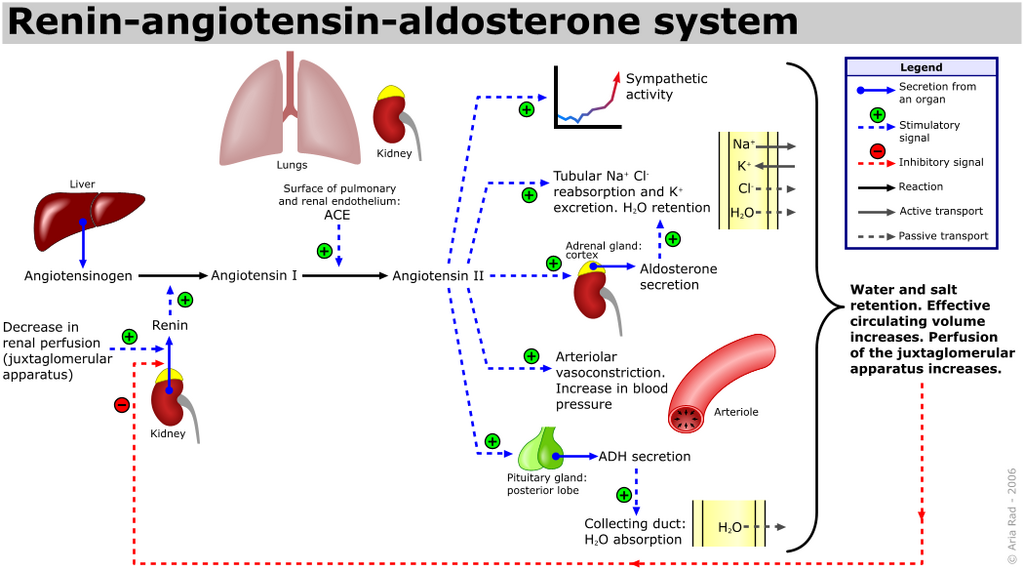
Ang II is the key player here. It acts like a master switch for increasing blood pressure. It does this by binding to specific sites on cells called AT1 receptors. When Ang II docks with an AT1 receptor, it triggers a series of events inside the cell, causing blood vessels to constrict (vasoconstriction) and prompting the adrenal glands to release aldosterone, a hormone that makes the body retain salt and water. Both actions drive blood pressure up.
Losartan is an Angiotensin II Receptor Blocker, or ARB. It works by selectively and competitively blocking the AT1 receptor. Think of it as a key that fits perfectly into the AT1 lock but doesn't turn it. By occupying the receptor, losartan prevents Angiotensin II from binding and initiating its pressor effects. It doesn't stop Ang II from being produced; it just stops it from being heard.
This blockade has a clear downstream effect. Inside vascular smooth muscle cells, the AT1 receptor normally signals through molecules like IP3 and DAG, which increase intracellular calcium levels. Calcium is the trigger for muscle contraction. By blocking this signal, losartan reduces intracellular calcium, causing the smooth muscles in the vessel walls to relax. This vasodilation lowers systemic blood pressure.
Furthermore, by blocking Ang II's effect on the adrenal glands, losartan inhibits the release of aldosterone and vasopressin. This leads to reduced sodium and water retention, further contributing to the drop in blood pressure.
A More Selective Approach
You might be familiar with another class of drugs that target the RAAS: ACE inhibitors. These drugs work one step earlier in the cascade, blocking the Angiotensin-Converting Enzyme (ACE) that produces Angiotensin II. While effective, ACE also has another job: breaking down a substance called . When ACE is inhibited, bradykinin levels can rise, leading to a persistent, dry cough in some patients.
ARBs like losartan bypass this issue entirely. Because they act directly on the AT1 receptor and don't interfere with the ACE enzyme, bradykinin metabolism remains unaffected. This fundamental difference in mechanism is why the characteristic "ACE cough" is not a side effect of ARBs.
From Pill to Powerhouse
Losartan itself is effective, but it gets a major boost after you take it. It's considered a prodrug, meaning the liver metabolizes it into a more active form. Through the action of cytochrome P450 enzymes (specifically CYP2C9 and CYP3A4), losartan is converted into its active 5-carboxylic acid metabolite, known as .
This metabolite is the real workhorse. E-3174 is 10 to 40 times more potent at blocking the AT1 receptor than losartan itself. Crucially, it also has a much longer half-life (6 to 9 hours, compared to 2 hours for losartan). This sustained activity is what provides smooth, 24-hour blood pressure control from a single daily dose.
Interestingly, losartan has a secondary effect. It can also act as a competitive antagonist of the thromboxane A2 receptor, which plays a role in platelet aggregation. This means it can mildly inhibit the clumping of platelets, though this effect is not its primary mechanism for controlling hypertension.
Time to review what we've covered about how losartan works.
What is the primary mechanism by which losartan lowers blood pressure?
The long-lasting, 24-hour blood pressure control from a single dose of losartan is primarily due to:
By selectively blocking the AT1 receptor and leveraging a potent, long-lasting metabolite, losartan provides effective blood pressure control without the side effects associated with ACE inhibition.