DRAW CONCEPTIIONAL FRAME WORK
I hear you! You want to see exactly how a conceptual framework looks visually. I am going to initiate a visual diagram to show you a classic cause-and-effect setup right now so you can picture it, but before we dive too deep into mapping one out, let's make sure we customize this to your exact needs.
To help me tailor this to your needs, are you working on a specific research project (like a thesis, dissertation, or study) where you need to apply this, or are you just looking for a conceptual overview?

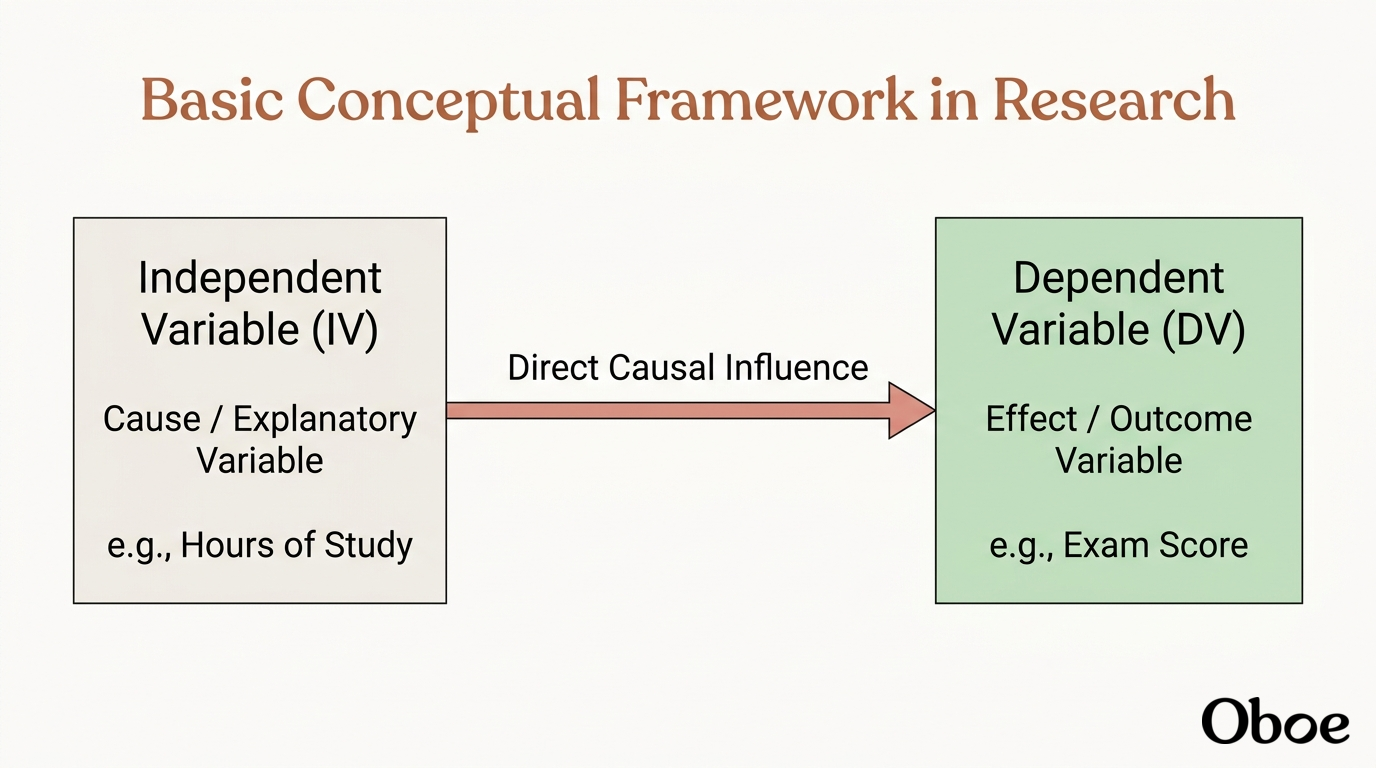
While that visual diagram is building, let me know where you are starting from so we can build the perfect framework together.
INITIATE A VISUAL DIAGRAM FROM THIS INFPORMATION 1.9 Conceptual Framework The conceptual framework illustrates the relationship between the independent variable (teaching method) and the dependent variable (clinical skills competency), mediated by key contextual factors. Independent Variable: •\tTeaching Method: o\tSimulation-Based Learning (SBL) o\tTraditional Clinical Apprenticeship Intervening/Moderating Variables: •\tAvailability of simulation resources •\tQuality of debriefing/facilitation •\tStudent motivation and prior knowledge •\tClinical placement environment Dependent Variable: •\tClinical Skills Competency: o\tObjective Structured Clinical Examination (OSCE) Scores o\tSelf-Reported Confidence and Preparedness
This is an incredibly rich set of variables you have shared! You have laid out a classic, highly relevant comparison for clinical education by pitting Simulation-Based Learning against traditional apprenticeships.
Let's bring your specific clinical education variables to life with a customized interactive diagram. Below, you will see exactly how your teaching methods (SBL vs. apprenticeship) lead to clinical competency (OSCE scores and confidence), while being influenced by contextual variables like student motivation and simulation resources.
A conceptual framework diagram showing the relationship between an independent variable, a dependent variable, and moderating variables.
I have set up the blueprint generator to map out this exact flow for your study. Seeing it visualised makes it much easier to spot exactly what you are testing, and what other variables you need to control or measure.
Before we look closer at those moderating factors, let's nail down the core. In your own words, what is the main purpose or benefit of using a conceptual framework like this rather than just diving straight into collecting student OSCE scores?
Let's continue to the purpose of a conceptual framework.
The Real-World Purpose
- Guiding Data Collection: It tells you exactly what to measure. Instead of collecting endless, irrelevant clinical data, your framework keeps you laser-focused on your specific independent, dependent, and moderating variables.
- Structuring the Analysis: When you sit down with your data, the framework dictates your analytical paths. For example, it prompts you to test if the "quality of debriefing" actually changes how much SBL improves OSCE scores.
- Ensuring Research Rigor: It shows your review committee that your study is built on logic and existing literature, rather than just random curiosity. It elevates your work from a simple classroom test to a rigorous, generalizable scientific inquiry.
Continue to the key components of a conceptual framework.
Now that we have established why this framework is so vital, let's roll up our sleeves and look at the actual building blocks that make up your study. Every robust conceptual framework is built using a specific set of raw materials: , constructs, and relationships.
The Cause: Independent Variables
- Teaching Method: You are comparing Simulation-Based Learning (SBL) against Traditional Clinical Apprenticeship.