Mastering Claude for Expert Code Engineering
Claude Overview
Meet Your AI Coding Partner
Most AI coding assistants feel like a super-smart autocomplete. They suggest the next line of code, find a missing semicolon, or explain a confusing function. They're helpful, but they're passive tools. You're still the one in charge, directing every move.
Claude, an AI model from Anthropic, is different. It's designed to be a collaborative partner. Think of it less like a smart keyboard and more like a junior developer you can delegate tasks to. This shift from tool to collaborator is built on a few key ideas.
Claude is Anthropic’s AI assistant known for its safety-first approach, excellent reasoning capabilities, and nuanced conversation skills.
Anthropic's focus is on creating AI that is helpful, harmless, and honest. This design philosophy means Claude is built not just to write code, but to understand the intent behind a request and communicate clearly about its process.
A Bigger Memory
One of Claude's defining features is its large "context window." This is like an AI's short-term memory. A small context window means the AI can only remember the last few lines of code or conversation. It might forget the purpose of a file it was just working on.
A large context window allows Claude to hold entire codebases, documentation, and conversation histories in its memory at once. It can see the big picture, understanding how a change in one file might affect another. This is crucial for complex software development, where everything is interconnected.
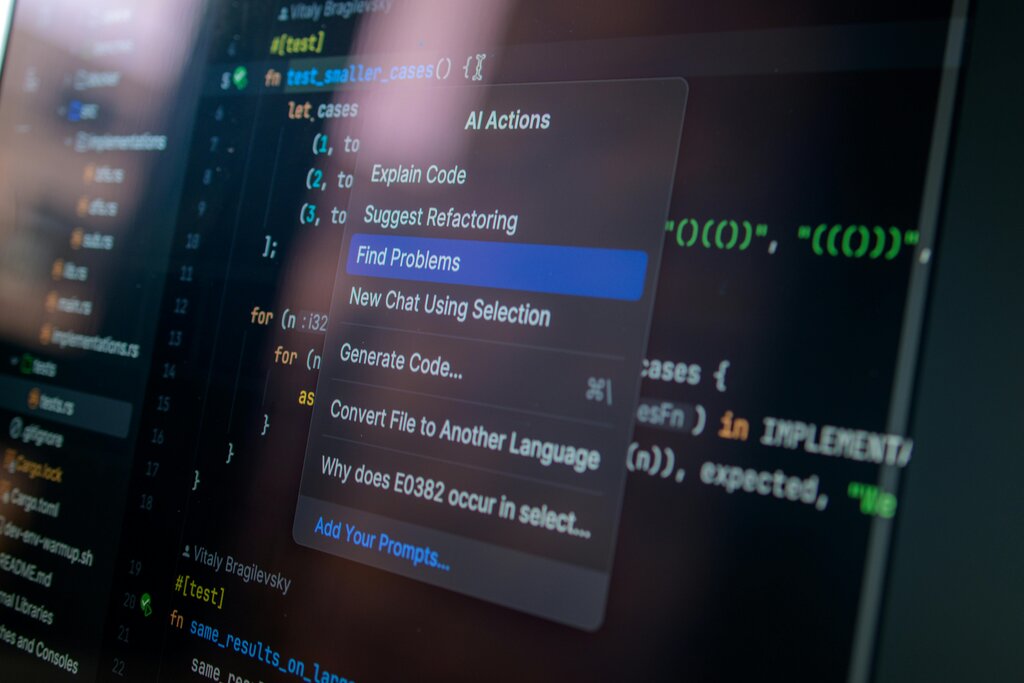
This expanded memory makes Claude much more effective than tools that only look at a small snippet of code. It can trace dependencies, maintain consistency across a project, and grasp high-level architectural goals. You're no longer just asking it to complete a line; you're asking it to reason about the entire project.
The Agentic Coder
The most significant leap is Claude's ability to perform "agentic" tasks. An agent is something that can take action to achieve a goal. An agentic coder doesn't just suggest code; it can create a plan, execute it, and adapt based on the results.
Imagine you ask it to add a new feature. An agentic Claude might:
- Plan: Identify which files need to be modified.
- Act: Write the necessary code in each file.
- Test: Run the project's test suite to see if the changes broke anything.
- Debug: If a test fails, it will read the error message and attempt to fix the bug it just introduced.
This isn't just code generation. It's an automated workflow.
Unlike simple autocomplete tools, Claude Code is an agentic coding assistant that connects to repositories, runs in terminals, and manages multi-step tasks.
Integrating into the Workflow
Claude isn't meant to be used in a separate chat window, isolated from a developer's work. It integrates directly into their environment. Tools like Claude Code run in the command-line terminal, giving the AI direct access to the files and tools a developer uses every day.
This tight integration means less context switching and less copy-pasting. A developer can stay in their editor and terminal, conversing with Claude in natural language to build, test, and refactor code. It streamlines the entire development process, letting engineers focus more on creative problem-solving and less on repetitive coding tasks.
Let's check your understanding of these concepts.
According to the text, how does Claude's role differ from a typical AI coding assistant?
What is the primary benefit of Claude's large 'context window' in software development?
By combining a deep understanding of code, a large memory for context, and the ability to act autonomously, Claude represents a fundamental shift in how developers can work with AI.