Mastering Claude Code Subagents
Subagent Architecture
Beyond the Monolithic Prompt
When working with AI agents, a common approach is to throw a complex task into a single, massive prompt. This works for simple jobs, but it quickly breaks down. The agent's context window gets cluttered with irrelevant details from earlier steps, performance degrades, and the agent loses focus. This problem is often called context rot—the gradual decay of an agent's effectiveness as its conversational history grows.
A more robust solution is to think like a manager, not just a prompter. Instead of one agent trying to do everything, you can use a primary agent to coordinate a team of specialized assistants. This is the core idea behind subagent architecture.
The Orchestrator-Worker Model
Subagent architecture in Claude Code follows a classic design pattern: Orchestrator-Worker. The main Claude session you interact with acts as the Orchestrator. Its job is to understand the high-level goal, break it down into smaller, concrete subtasks, and delegate them to specialized Workers. These Workers are the subagents.
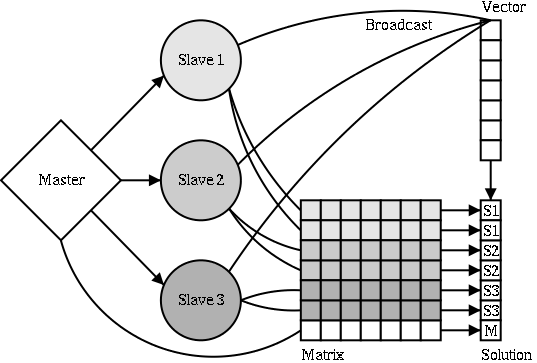
Each subagent is an entirely new, independent instance of Claude. It’s spawned as a separate process with its own clean context window, a specific system prompt defining its role, and a limited set of tools. This isolation is crucial. The 'Test Runner' subagent doesn't need to know about the 'Database Schema' subagent's work. They each focus on their own job and report back to the Orchestrator.
This modular approach allows for parallel execution. While one subagent writes code, another can be running tests, dramatically speeding up complex development workflows.
This design pattern isn't just about efficiency; it's about clarity. By assigning specific roles—like Architect, Coder, or Validator—you create a predictable and auditable system. Each agent has a clear responsibility, making the overall process easier to debug and manage.
A Subagent's Life
Delegating work to a subagent isn't just a fancy prompt. It's a structured process initiated by the Orchestrator using a specific instrument: the Task tool.
Here’s how the lifecycle unfolds:
-
Delegation: The Orchestrator identifies a self-contained subtask. It calls the
Tasktool, providing a detailed prompt that defines the subagent's goal, role, and any necessary context. -
Instantiation: A new, isolated Claude instance is created. It receives its unique system prompt and a restricted set of tools. For example, a 'file linter' subagent might only have read access to files, while a 'code writer' has read/write permissions.
-
Execution: The subagent works autonomously within its own execution loop. It reasons, uses its assigned tools, and works towards its goal, completely separate from the main agent's context window.
-
Reporting: Once finished, the subagent returns its result—code, analysis, a boolean
true/false, etc.—back to the Orchestrator. -
Synthesis: The Orchestrator receives the result as an observation. It integrates this new information into its main context and decides on the next step.
Subagents are lightweight Claude instances with their own: Context window — Isolated from the main agent System prompt — Specialized for specific tasks Tool permissions — Controlled access to capabilities Model selection — Independent model choice
This lifecycle ensures that the main agent's context remains clean and focused on high-level orchestration. It only deals with the outcomes of subtasks, not the messy details of their execution. This is the key to maintaining state and sanity in complex, multi-step engineering projects.
Let's check your understanding of these architectural concepts.
What is the primary problem that subagent architecture is designed to solve in complex AI tasks?
In the Orchestrator-Worker design pattern, what is the main responsibility of the Orchestrator agent?