Mastering Cartoon Drawing
Basic Shapes
Building with Shapes
Every character you see, from a simple stick figure to a complex animated hero, starts with the same building blocks: basic shapes. Trying to draw a complete character from scratch can be intimidating. Where do you even begin? The secret is to stop seeing a 'character' and start seeing the simple shapes that form it.
Artists often break complex shapes into simpler geometric forms—cubes, spheres, cylinders, and pyramids—to understand and render objects from various angles.
Think of it like building with toy blocks. You don't start with a detailed castle; you start by placing a cube here and a cylinder there. In drawing, circles, ovals, and rectangles are your blocks. They help you map out the character's proportions and pose before you commit to any final lines. This underlying structure is called a construction framework, and it's the skeleton that holds your drawing together.
By starting this way, you can easily adjust the size of the head, the length of the arms, or the width of the body without having to erase a detailed drawing. It's all about getting the foundation right first.
From Shape to Figure
Let's build a simple character using this method. The goal isn't to create a masterpiece, but to see how shapes combine to create a recognizable figure.
The Head: Start with a circle or an oval. This is the simplest way to establish the character's head. An oval can suggest a more realistic head shape, while a perfect circle often feels more cartoony and friendly.
The Body: Attach a larger shape below the head for the torso. A big rectangle can create a blocky, strong character. An oval might suggest a softer, rounder character. A triangle can even be used for characters with broad shoulders and a narrow waist.
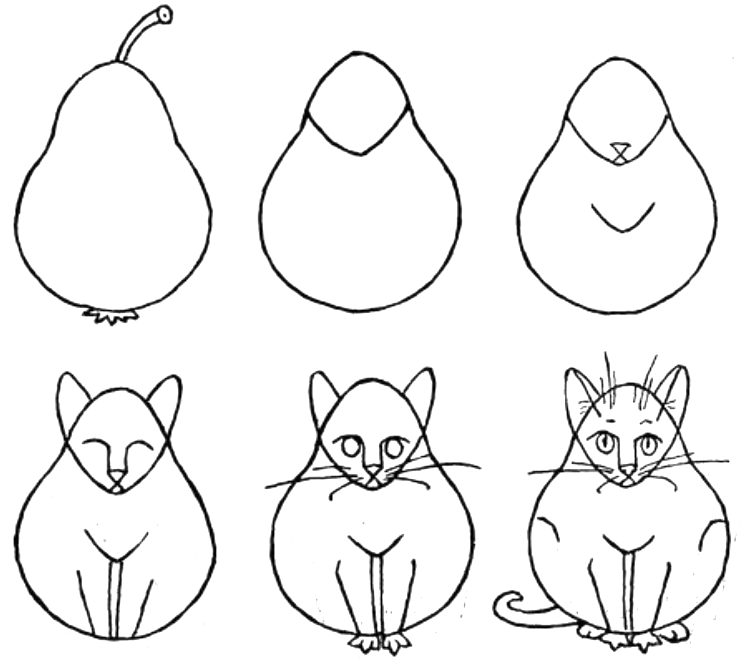
The Limbs: Now, add the arms and legs. Long, skinny rectangles are perfect for this. You can also use ovals for a more rounded, tube-like appearance. Don't worry about hands or feet yet. Just focus on placing the limbs and getting their length right in relation to the body.
Once these basic shapes are in place, you have a solid framework. You've figured out the character's basic proportions and structure. From here, you can start connecting the shapes with smoother lines and adding details.
Combining a circle for a head, a rectangle for a body, and thinner rectangles for limbs gives you an instant blueprint for any basic character.
Ready to test your understanding of these foundational ideas?
What is a 'construction framework' in the context of drawing a character?
What is the primary advantage of starting a character drawing with basic shapes?
Practice breaking down everyday objects and characters into their simplest forms. This habit will make starting any new drawing feel much more manageable.