Mastering Advanced Pythonic Principles
Pythonic Data Structures
Beyond Sequential Data
You're likely familiar with lists, which store items in a specific order. To find an item, you might have to check every single element until you get a match. This is fine for small collections, but for large datasets, it's incredibly slow. This is where hash-based structures like dictionaries and sets come in.
They trade a little memory for a massive speed boost, especially for lookups, insertions, and deletions. Instead of searching sequentially, they use a hash function to compute an index, or "bucket," where an item should be stored. This allows them to access elements in what's called constant time, or . This means the time it takes to find an item doesn't grow as the collection gets larger. It's like looking up a word in a dictionary by its letter instead of reading the whole book.
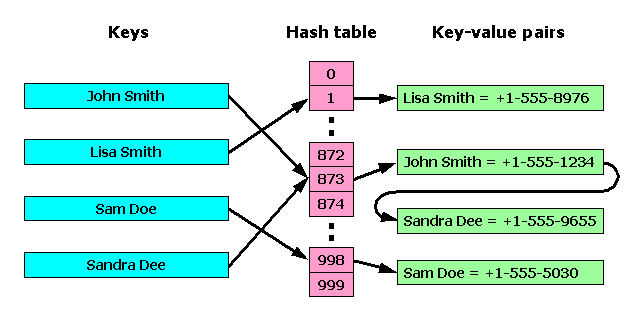
This direct-access capability is the secret behind the performance of dictionaries and sets. The hash function takes a key (like a string or number) and converts it into an integer that corresponds to a location in memory. When you want to retrieve the value, Python simply re-runs the hash function on the key, finds the location instantly, and grabs the data. This is why dictionary keys must be immutable—their hash value can never change.
Advanced Dictionaries
Dictionary comprehensions are a concise, Pythonic way to create dictionaries. They follow a similar pattern to list comprehensions but create key-value pairs. This is perfect for transforming existing data into a dictionary without writing a multi-line for loop.
# Example: Create a dictionary mapping names to their lengths
names = ['alice', 'bob', 'charlie']
name_lengths = {name: len(name) for name in names}

# Output: {'alice': 5, 'bob': 3, 'charlie': 7}
print(name_lengths)

# Example: Create a dictionary from two lists
keys = ['a', 'b', 'c']
values = [1, 2, 3]
my_dict = {k: v for k, v in zip(keys, values)}

# Output: {'a': 1, 'b': 2, 'c': 3}
print(my_dict)
For more complex data, you can nest dictionaries inside other dictionaries. This allows you to create hierarchical data structures, like a collection of user profiles where each profile is itself a dictionary of attributes.
# A nested dictionary to store user data
users = {
    'user_123': {
        'name': 'Alice',
        'email': 'alice@example.com',
        'permissions': ['read', 'write']
    },
    'user_456': {
        'name': 'Bob',
        'email': 'bob@example.com',
        'permissions': ['read']
    }
}

# Accessing nested data
print(users['user_123']['email'])
# Output: alice@example.com
A common problem when working with dictionaries is the KeyError that occurs when you try to access a key that doesn't exist. The collections module offers powerful dictionary subclasses to handle this and other common tasks.
The defaultdict is a lifesaver. It's like a regular dictionary, but if you try to access a missing key, it automatically creates a default value for it instead of raising an error. This is incredibly useful for grouping or counting items.
from collections import defaultdict

# Group words by their first letter
words = ['apple', 'ant', 'ball', 'bat', 'cat']

# When a new key is accessed, it's created with an empty list
by_letter = defaultdict(list)

for word in words:
    by_letter[word[0]].append(word)

# Output:
# defaultdict(<class 'list'>,
# {'a': ['apple', 'ant'], 'b': ['ball', 'bat'], 'c': ['cat']})
print(by_letter)
print(by_letter['a']) # ['apple', 'ant']
print(by_letter['z']) # [] (an empty list is created, no KeyError)
Another useful tool is Counter, which is a dictionary subclass designed for counting hashable objects. It simplifies the process of tallying items in a sequence, a task that would otherwise require a defaultdict(int) or a manual loop with checks.
from collections import Counter

# Count word frequencies
sentence = "the quick brown fox jumps over the lazy dog"
words = sentence.split()

word_counts = Counter(words)

# Output:
# Counter({'the': 2, 'quick': 1, 'brown': 1, ...})
print(word_counts)

# You can easily find the most common items
print(word_counts.most_common(1)) # [('the', 2)]
The Power of Sets
Sets are unordered collections of unique, immutable elements. Like dictionaries, they are hash-based, which makes them extremely fast for checking if an element is present. Their two primary use cases are eliminating duplicate items from a list and performing efficient membership testing.
For example, checking if item in my_list gets slower as my_list grows. But if item in my_set takes the same, nearly instantaneous amount of time, no matter if the set has 10 items or 10 million.
Sets also provide powerful methods for data analysis based on mathematical set theory. You can quickly find all items shared between two sets (intersection), combine all unique items from both (union), or find items that exist in one set but not the other (difference).
set_a = {1, 2, 3, 4}
set_b = {3, 4, 5, 6}

# Union: all unique elements from both sets
# Operator: |  Method: .union()
print(set_a | set_b)  # {1, 2, 3, 4, 5, 6}

# Intersection: elements that are in both sets
# Operator: &  Method: .intersection()
print(set_a & set_b)  # {3, 4}

# Difference: elements in set_a but not in set_b
# Operator: -  Method: .difference()
print(set_a - set_b)  # {1, 2}

# Symmetric Difference: elements in either set, but not both
# Operator: ^  Method: .symmetric_difference()
print(set_a ^ set_b)  # {1, 2, 5, 6}
Performance and Memory
So why not use dictionaries and sets for everything? The main trade-off is memory. Hashing requires extra space. A hash table must have empty slots to function efficiently, so a set or dictionary will always consume more memory than a list containing the same elements.
A list stores only its elements, one after another. A set, however, stores its elements in a hash table that is typically only partially full. This overhead is the price you pay for performance. When choosing a data structure, consider your primary use case.
- If you need to maintain insertion order and frequently access items by index, a list is best.
- If you need fast key-based lookups and a way to associate values with keys, a dictionary is the clear choice.
- If you need to ensure uniqueness, eliminate duplicates, or perform membership tests, a set is the most efficient option.
What is the primary advantage of using a dictionary or set over a list for looking up an item?
Why is it a requirement for dictionary keys to be immutable?
Choosing the right data structure is a key step in writing efficient, readable, and Pythonic code. By moving beyond basic lists, you can solve complex problems more elegantly and handle large datasets with ease.