Managing Long-Term PPI Side Effects
PPI Pathophysiology
Beyond the Burn: The Ripple Effects of Long-Term PPI Use
Proton Pump Inhibitors (PPIs) are highly effective for short-term relief of acid-related disorders. They work by shutting down the proton pumps (H+/K+ ATPase) in the stomach's parietal cells, drastically reducing acid secretion. However, what begins as a temporary solution can often turn into a long-term habit, a phenomenon known as the prescribing cascade. This is where the intended short course of therapy extends indefinitely, often without a clear ongoing medical need.
Proton pump inhibitors (PPIs) are commonly prescribed for gastrointestinal disorders, but prolonged inappropriate use can lead to significant adverse effects and increased healthcare costs.
A significant reason for this prolonged use is rebound acid hypersecretion. When a person tries to stop taking a PPI, the stomach, which has adapted to the medication, can overproduce acid. This causes a painful flare-up of symptoms, leading the person to believe they still need the drug, thus restarting the cycle.
Rebound acid hypersecretion (RAHS) is the recurrence of symptoms due to an increase in gastric acid secretion above pre-treatment levels after stopping PPI therapy3.
Gastrin and Cellular Growth
The body's systems are built on feedback loops. The stomach's acid production is regulated by a hormone called gastrin. When stomach acid levels are low (high pH), specialized G-cells in the stomach are stimulated to release more gastrin. Gastrin, in turn, signals parietal cells to produce more acid.
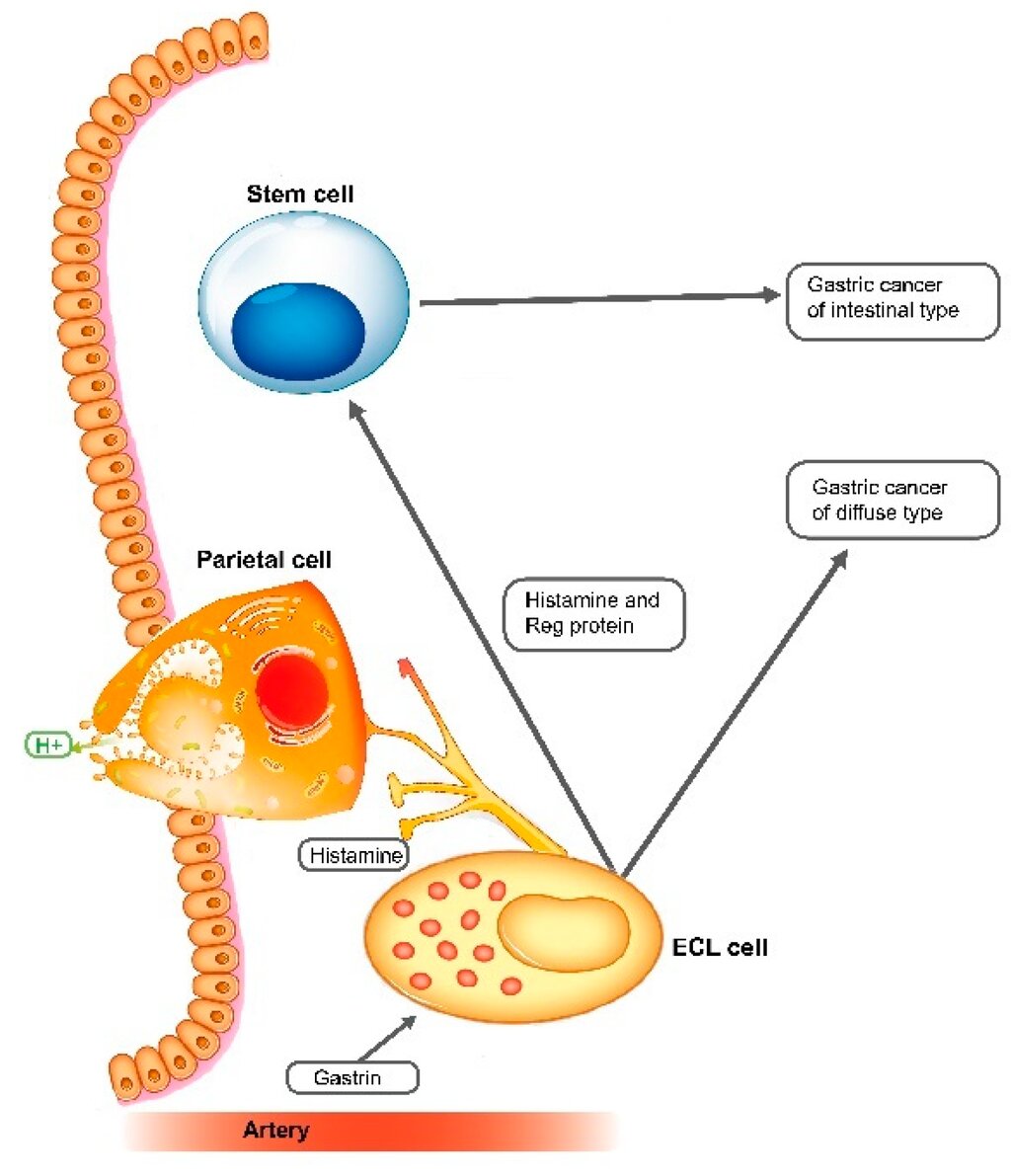
Chronic PPI use breaks this feedback loop. By persistently suppressing acid, PPIs cause the body to release large amounts of gastrin continuously. This condition is known as and it has significant downstream consequences.
One of the main effects of high gastrin levels is a trophic, or growth-promoting, stimulus on gastric mucosal cells. This leads to an increase in the number of both parietal cells and a condition called hyperplasia. The increased mass of acid-producing cells further exacerbates the potential for rebound hyperacidity if the PPI is stopped. The growth of ECL cells is also monitored, as they are involved in the pathways of some rare gastric tumors.
The Acid Gap and Its Systemic Impact
Stomach acid does more than just digest food. It acts as a critical first line of defense against ingested pathogens and plays a key role in nutrient absorption. The profound and persistent suppression of acid from long-term PPI use creates what can be called an 'Acid Gap,' altering the body's systemic homeostasis.
A less acidic stomach environment is less hostile to bacteria and other microbes. This can increase the risk of certain infections, such as Clostridioides difficile ('C. diff') and community-acquired pneumonia, as more pathogens survive the journey through the GI tract.
If someone takes a PPI, does not have acid in their stomach and gets exposed to salmonella, they are more likely to get symptoms from that exposure than someone who has stomach acid.
Furthermore, gastric acid is essential for cleaving certain nutrients from food, making them available for absorption. The most well-documented effects of long-term PPI use are on the absorption of vitamin B12 and minerals like iron, calcium, and magnesium. Acid is required to release B12 from dietary proteins and to solubilize mineral salts. Without sufficient acid, absorption of these critical micronutrients is impaired, potentially leading to deficiencies over time.
Given these effects, it is crucial to use PPIs for the shortest duration necessary and at the lowest effective dose. For patients who require long-term therapy, understanding these physiological changes allows for monitoring and managing potential downstream consequences.
What is the primary mechanism of action for Proton Pump Inhibitors (PPIs)?
The phenomenon where a person experiences a painful flare-up of acid-related symptoms after discontinuing PPIs, leading them to restart the medication, is known as: